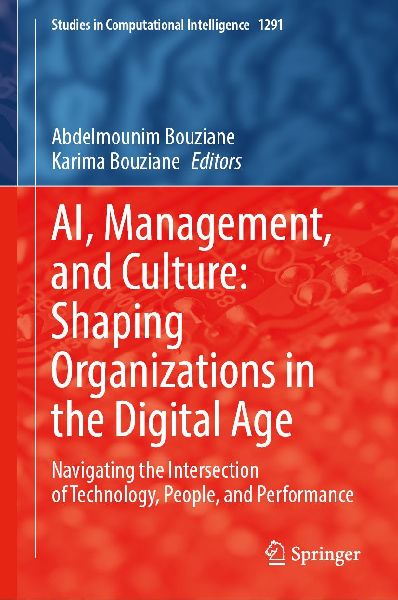
AI, Management, and Culture: Shaping Organizations in the Digital Age
Abdelmounim Bouziane (Hrsg.)
Gebunden, Englisch
213,99 €
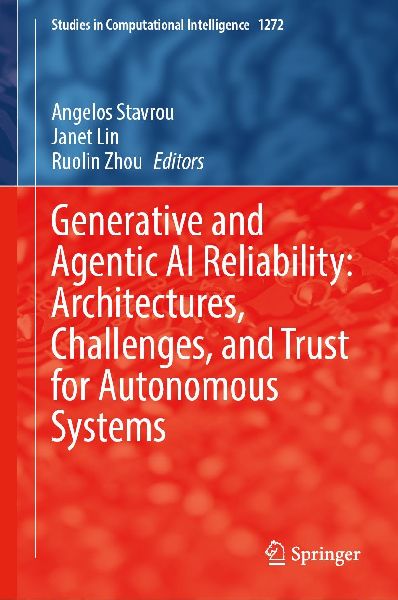
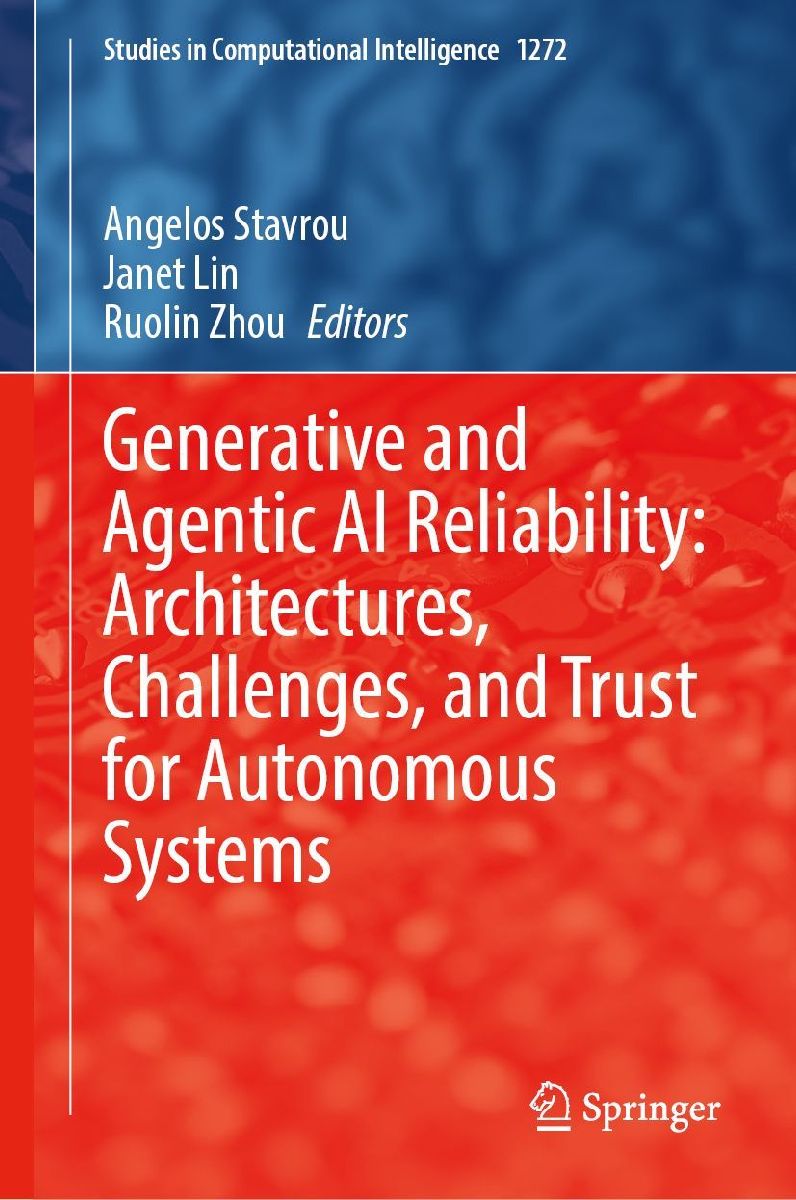
Herausgegeben von: Angelos Stavrou, Herausgegeben von: Janet Lin, Herausgegeben von: Ruolin Zhou
Aus der Reihe Studies in Computational Intelligence
This book offers a unique and timely contribution to the intersection of agentic AI, reliability engineering, and system trustworthiness.
This book addresses both sides of the reliability challenge: how to ensure the reliability of agentic AI systems (with autonomy, planning, and goal-directed behavior), and how agentic AI can be used to enhance the reliability of critical infrastructure and industrial systems (e.g., energy, transportation, manufacturing).
It introduces a layered architectural framework that connects technical design (models, execution, cognition) with system-level trust and explainability. This book outlines how awareness and transparency can be engineered into each layer, supporting dependable human-AI collaboration. Beyond technical detail, the book helps researchers, practitioners, and policymakers understand both the barriers and enabling factors for adopting agentic AI in real-world reliability-critical domains.
It draws on examples from sectors like power systems, autonomous transportation, and predictive maintenance. This book includes a survey and critical analysis of the current state of regulatory frameworks and standards organizations (e.g., IEEE, ISO, EU AI Act), highlighting gaps and aligning recommendations with the evolving compliance landscape.
This book provides an interdisciplinary bridge between AI development, systems reliability engineering, and AI policy/ethics communities—making it relevant for a wide audience across academia, industry, and regulatory bodies.
Dr. Angelos Stavrou is a Virginia Tech Innovation Campus founding Professor and the Entrepreneurship activities lead. He is also a member of the Bradley Department of Electrical & Computer Engineering at Virginia Tech.
Dr. Stavrou is a serial entrepreneur and the founder of Quokka, Kryptowire Labs, Aether Argus, and Impedyme Inc. Quokka is a VC-baked Mobile Security company with a more than 200M valuation. In addition, Dr. Stavrou has served as a principal investigator on research awards from NSF, DARPA, IARPA, DHS, AFOSR, ARO, ARL, and ONR. He has written more than 150 peer-reviewed conference and journal articles. Stavrou received his M.Sc. in Electrical Engineering, M.Phil., and Ph. D. (with distinction) in Computer Science, all from Columbia University.
Dr. Janet (Jing) Lin is an associate professor (Docent) at Luleå University of Technology, Sweden, specializing in reliability engineering and trustworthy AI for safety-critical and autonomous systems. She has held formal adjunct appointments and invited guest professorship roles at several universities.
Dr. Lin holds senior leadership roles within the IEEE Reliability Society, serving as Vice President for Membership (2023–2024) and Vice President for Publications (from 2025). She founded the IEEE Reliability Society Sweden–Norway Joint Chapter in 2021 and has served as its Chair since its establishment. In 2024, she received the Annual Reliability Engineer of the Year award in recognition of her contributions to reliability engineering.
Her research addresses reliability-centered innovation across the system lifecycle, including asset management, RAMS/RAM4S, prognostics and health management (PHM), and decision support for safety-critical and autonomous systems. Her work contributes to advancing trustworthy and dependable AI methods for industrial and critical infrastructure applications.
Dr. Ruolin Zhou is an Associate Professor in the Department of Electrical and Computer Engineering at the University of Massachusetts Dartmouth. Her research includes software defined radio (SDR), AI/ML for wireless communications with a particular focus on electromagnetic spectrum (EMS) awareness and operation, and cyber-EMS security. She is a recipient of the 2024 IEEE Region 1 Outstanding Teaching in an IEEE Area Award, the Best Team Award of the 2020–2021 AFRL SDR Beyond 5G University Challenge, and the Best Demo Award of the IEEE Global Communications Conference (GLOBECOM) in 2010. Dr. Zhou serves as the 2025-2026 Vice President for Technical Activities within the IEEE Reliability Society (RS), the RS liaison on IEEE Women in Engineering, a steering committee member of the IEEE Future Networks Technical Community (FNTC) and IEEE Internet of Things Technical Community (IoT TC), a co-chair of the IEEE Future Networks Empowerment through Mentorship (FNEM) program.
Standardversand: 1 bis 3 Werktage, 3,99 €, kostenlos ab 35 €
Liefergebiet: Deutschland
Rücksendung: 14 Tage Widerrufsrecht. Bei einem Widerruf tragen Sie die Kosten der Rücksendung. Bei einer Falschlieferung oder einem Fehler von uns erstatten wir Ihnen das Rückporto. Den Widerruf erklären Sie über den Knopf „Vertrag widerrufen“ im Fuß der Seite.
Abdelmounim Bouziane (Hrsg.)
Gebunden, Englisch
213,99 €
Pedro Yobanis Piñero Pérez (Hrsg.)
Gebunden, Englisch
213,99 €
Tü¿-Szabó Boldizsár (Hrsg.)
Gebunden, Englisch
181,89 €
Anu Gokhale (Hrsg.)
Gebunden, Englisch, 2 Ausgaben
ab 246,09 €
Christophe Kolski (Hrsg.)
Gebunden, Englisch, 2 Ausgaben
ab 213,99 €
Zu diesem Titel gibt es noch keine Bewertung. Bewerten kann, wer ihn bei uns gekauft hat.