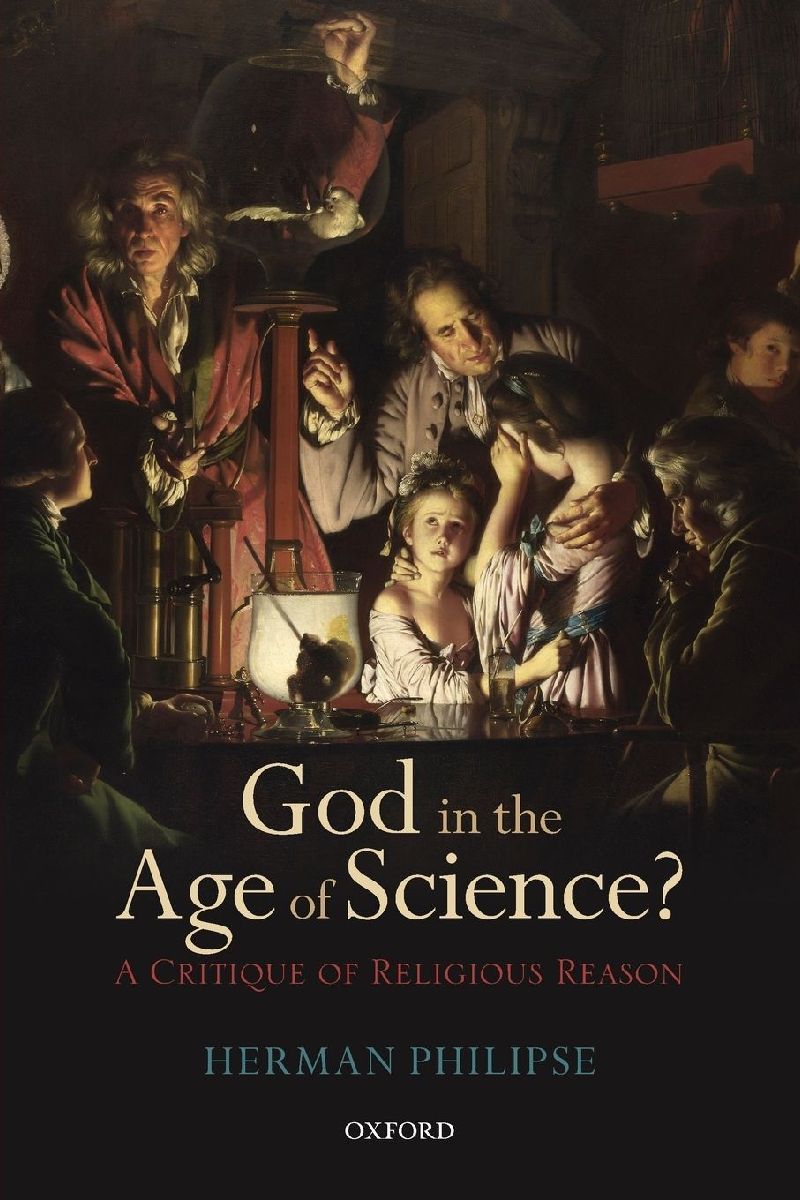
God in the Age of Science?
A Critique of Religious Reason
von Herman Philipse
- Einband
- Kartoniert
- Seiten
- 392
- Sprache
- Englisch
- Erschienen
- Februar 2014
- Verlag
- Oxford University Press(UK)
Buchbeschreibung
God in the Age of Science? is a critical examination of strategies for the philosophical defence of religious belief.
The main options may be presented as the end nodes of a decision tree for religious believers. The faithful can interpret a creedal statement (e.g. 'God exists') either as a truth claim, or otherwise. If it is a truth claim, they can either be warranted to endorse it without evidence, or not.
Ganze Beschreibung lesenWeniger anzeigen
Finally, if evidence is needed, should its evidential support be assessed by the same logical criteria that we use in evaluating evidence in science, or not? Each of these options has been defended by prominent analytic philosophers of religion.
In part I Herman Philipse assesses these options and argues that the most promising for believers who want to be justified in accepting their creed in our scientific age is the Bayesian cumulative case strategy developed by Richard Swinburne. Parts II and III are devoted to an in-depth analysis of this case for theism.
Using a 'strategy of subsidiary arguments', Philipse concludes (1) that theism cannot be stated meaningfully; (2) that if theism were meaningful, it would have no predictive power concerning existing evidence, so that Bayesian arguments cannot get started; and (3) that if the Bayesian cumulative case strategy did work, one should conclude that atheism is more probable than theism. Philipse provides a careful, rigorous, and original critique of theism in the world today.
Inhaltsverzeichnis
- Preface
- Part I. Natural Theology
- 1: The Priority of Natural Theology
- 2: The Rise, Fall, and Resurrection of Natural Theology
- 3: The Reformed Objection to Natural Theology
- 4: Refutation of the Reformed Objection
- 5: The Rationality of Natural Theology
- 6: A Grand Strategy
Ganzes Inhaltsverzeichnis anzeigen (22 Einträge)Weniger anzeigen
- Part II. Theism as a Theory
- 7: Analogy, Metaphor, and Coherence
- 8: God's Necessity
- 9: The Predictive Power of Theism
- 10: The Immunization of Theism
- Part III. The Probability of Theism
- 11: Ultimate Explanation and Prior Probability
- 12: Cosmological Arguments
- 13: Arguments from Order to Design
- 14: Other Inductive Arguments
- 15: Religious Experience and the Burden of Proof
- Conclusion
- References
- Index
Details
- Erscheinungstermin
- Februar 2014
- Kategorie
- Fremdsprachige Bücher
- Einband
- Kartoniert
- Seiten
- 392
- Sprache
- Englisch
- Verlag
- Oxford University Press(UK)
- Format
- 23,4 × 15,6 cm
- Dicke
- 2,2 cm
- Gewicht
- 594 g
- EAN / ISBN-13
- 9780198701521
Über Herman Philipse
Professor Herman Philipse is Professor of Philosophy at the University of Utrecht, The Netherlands.
Mehr über Herman PhilipseWeniger anzeigen
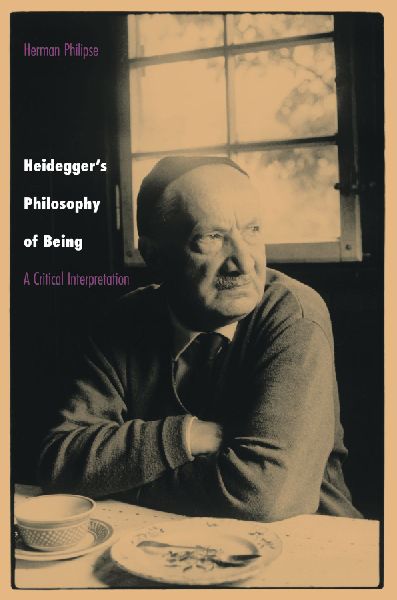
He has held positions at the University of Louvain and the University of Leyden, and studied philosophy at the University of Leyden, University of Oxford, University of Paris IV, and University of Cologne. He has written numerous articles on modern philosophy and epistemology, and his most recent books are Atheïstisch manifest (Prometheus, 1995, 1998; new edition Bert Bakker, 2004), Heidegger's Philosophy of Being: A Critical Interpretation (Princeton University Press, 1998), and Filosofische polemieken (Bert Bakker, 2009).
Versand und Rückgabe
Standardversand: 1 bis 3 Werktage, 3,99 €, kostenlos ab 35 €
Liefergebiet: Deutschland
Rücksendung: 14 Tage Widerrufsrecht. Bei einem Widerruf tragen Sie die Kosten der Rücksendung. Bei einer Falschlieferung oder einem Fehler von uns erstatten wir Ihnen das Rückporto. Den Widerruf erklären Sie über den Knopf „Vertrag widerrufen“ im Fuß der Seite.
Hersteller und ProduktsicherheitOxford University Press(UK)
Oxford University Press(UK)
Europaallee 1
36244 Bad Hersfeld
Deutschland
gpsr@libri.de
Verantwortliche Person in der EU
Libri GmbHEuropaallee 1
36244 Bad Hersfeld
Deutschland
gpsr@libri.de
Mehr von Herman Philipse
Ähnliche Titel


Bewertungen
Zu diesem Titel gibt es noch keine Bewertung. Bewerten kann, wer ihn bei uns gekauft hat.
So prüfen wir Bewertungen
Eine Bewertung kann bei uns nur abgeben, wer den Titel über sein Kundenkonto bei uns gekauft hat. Jede Bewertung ist fest mit der zugehörigen Bestellung verknüpft; anders kommt sie technisch gar nicht zustande. Deshalb trägt jede angezeigte Bewertung den Hinweis „Verifizierter Kauf". Wir zeigen positive wie negative Bewertungen und löschen nur bei Rechtsverstößen. Für Bewertungen gibt es keine Gegenleistung.
34,50 €Voraussichtlich 2. bis 4. Dez.