
Entitlement and the Affectional Bond
Melvin J. Lerner (Hrsg.)
Kartoniert, Englisch, 2 Ausgaben
ab 106,99 €
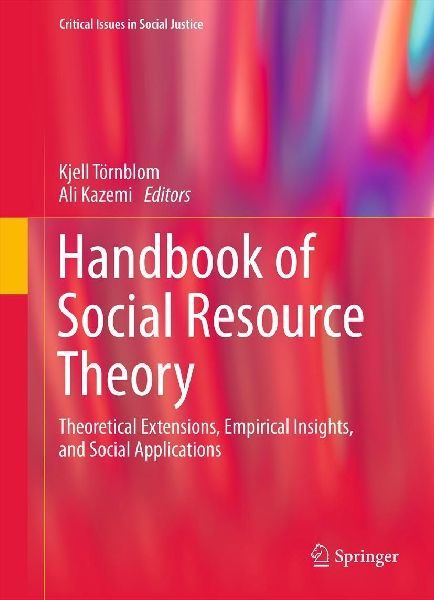
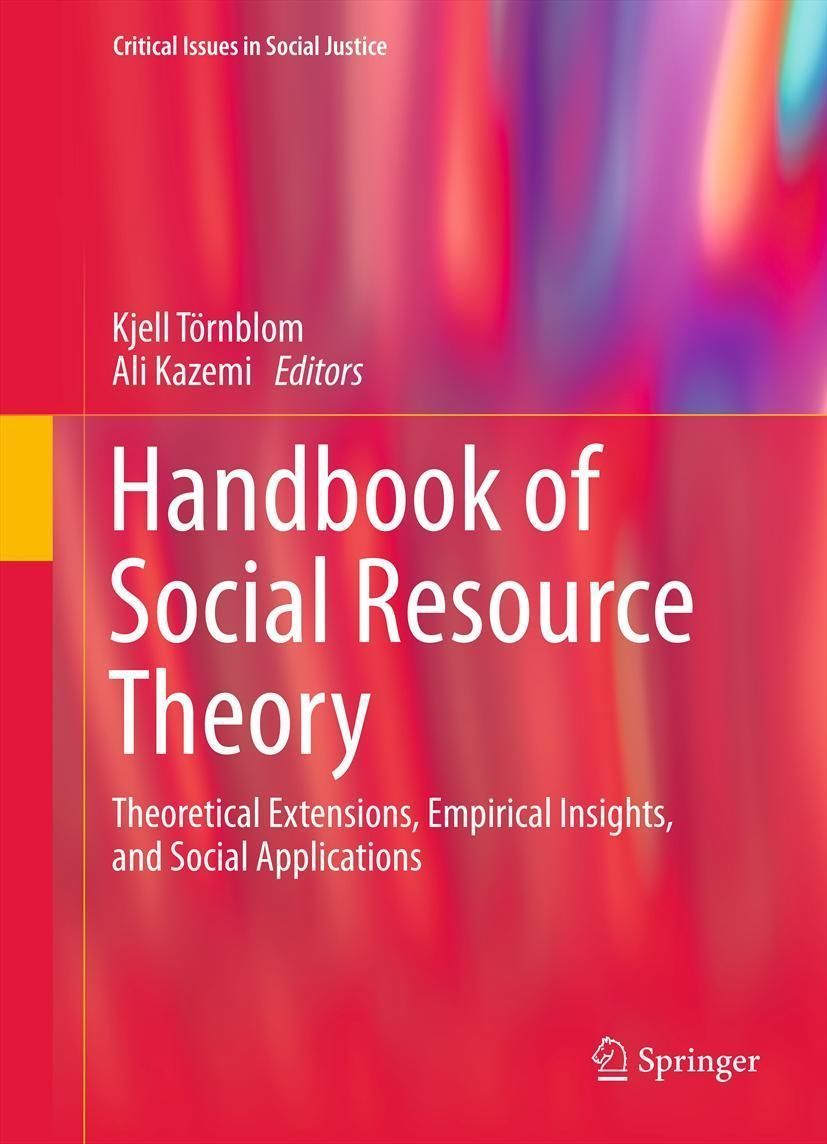
Theoretical Extensions, Empirical Insights, and Social Applications
Herausgegeben von: Kjell Törnblom, Herausgegeben von: Ali Kazemi
Aus der Reihe Critical Issues in Social Justice
Our lives as human beings are characterized by production and use of social resources, material (e.g., money and physical possessions) as well as immaterial (such as love, knowledge, and power).
Distribution and exchange of these resources are central to individuals¿ physical and mental health and quality of life.
Over the past four decades, Social Resource Theory (SRT) has evolved to build vital links between social psychology and public policy, providing a valuable lens for understanding and addressing social class, inequality, and injustice.
The recent conceptual and theoretical developments and future prospects of this robust field are on full display in this Handbook of Social Resource Theory. An international, interdisciplinary panel of experts expands on the pioneering work of the late Dr. Uriel Foa and his wife Edna Foa, starting with the basic structure of SRT.
The Handbook includes integrations of SRT with other social scientific frameworks, analyses of organizational and cultural issues, reports of empirical research using various methods, as well as applications to different areas including: Social justice Quality of life
Interpersonal relationships
Social dilemmas
Stress management
Work satisfaction
Cognitive development
Consumer behavior
Cross-cultural behavior
Covering human social transactions from the interpersonal to the intercultural levels, the Handbook of Social Resource Theory extends this relevant line of study to enhance the work of social psychologists, sociologists, anthropologists, political scientists, and public policy makers. ¿The Handbook presents the basic tenets of the social resource theory originated from the late Uriel Foa and provides a
Ali Kazemi received his Ph. D. in Psychology from Gothenburg University and is Associate Professor of Social Psychology and Dean for the Faculty Board of Education, Health and Social Sciences at University of Skövde in Sweden.
His dissertation on fairness in social dilemmas received the 'Best 2007 Dissertation Award'. He has been the incumbent of several academic positions at the Universities of Skövde, Gothenburg, and Jönköping, as well as at the Swedish National Road and Transport Research Institute. He has conducted and published basic and applied research within the areas of social justice, well-being, decision making in social dilemmas, and attitude and behavior change. Kazemi has authored/co-edited four books, serves on the editorial board of the International Journal of Conflict and Reconciliation, and is the Editor-in-Chief with Törnblom for Social Justice Research.
Kjell Törnblom received his Ph. D. from the University of Missouri-Columbia where Uriel Foa was one of his teachers at the doctoral program in social psychology. They have since collaborated on several publications. Törnblom has co-edited three books (e.g., Distributive and Procedural Justice: Research and Social Applications, with Riël Vermunt) and a number of theme issues of Social Justice Research for which he and Ali Kazemi are now Editors-in-Chief. Törnblom's research on social justice, resource theory, conflict, intergroup relations, and theory integration has been published in various professional journals and as book chapters. He has held positions at universities in the US, Sweden and Canada, is now a Professor Emeritus and also affiliated as a guest researcher with ETH (Swiss Federal Institute of Technology Zurich).
Standardversand: 1 bis 3 Werktage, 3,99 €, kostenlos ab 35 €
Liefergebiet: Deutschland
Rücksendung: 14 Tage Widerrufsrecht. Bei einem Widerruf tragen Sie die Kosten der Rücksendung. Bei einer Falschlieferung oder einem Fehler von uns erstatten wir Ihnen das Rückporto. Den Widerruf erklären Sie über den Knopf „Vertrag widerrufen“ im Fuß der Seite.
Melvin J. Lerner (Hrsg.)
Kartoniert, Englisch, 2 Ausgaben
ab 106,99 €
Detlev Fetchenhauer (Hrsg.)
Gebunden, Englisch, 2 Ausgaben
ab 106,99 €
Vincent Tin Sing Law (Hrsg.)
Kartoniert, Englisch, 2 Ausgaben
ab 106,99 €
Zu diesem Titel gibt es noch keine Bewertung. Bewerten kann, wer ihn bei uns gekauft hat.