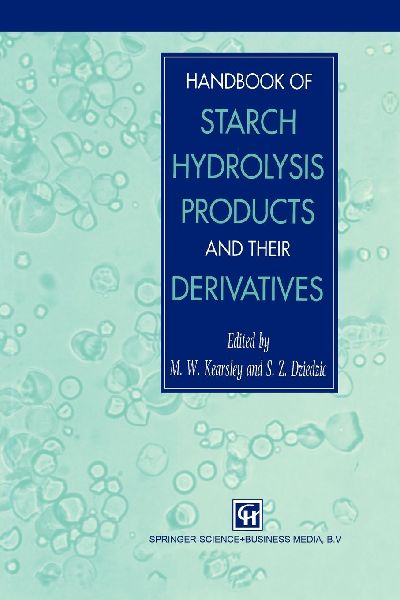
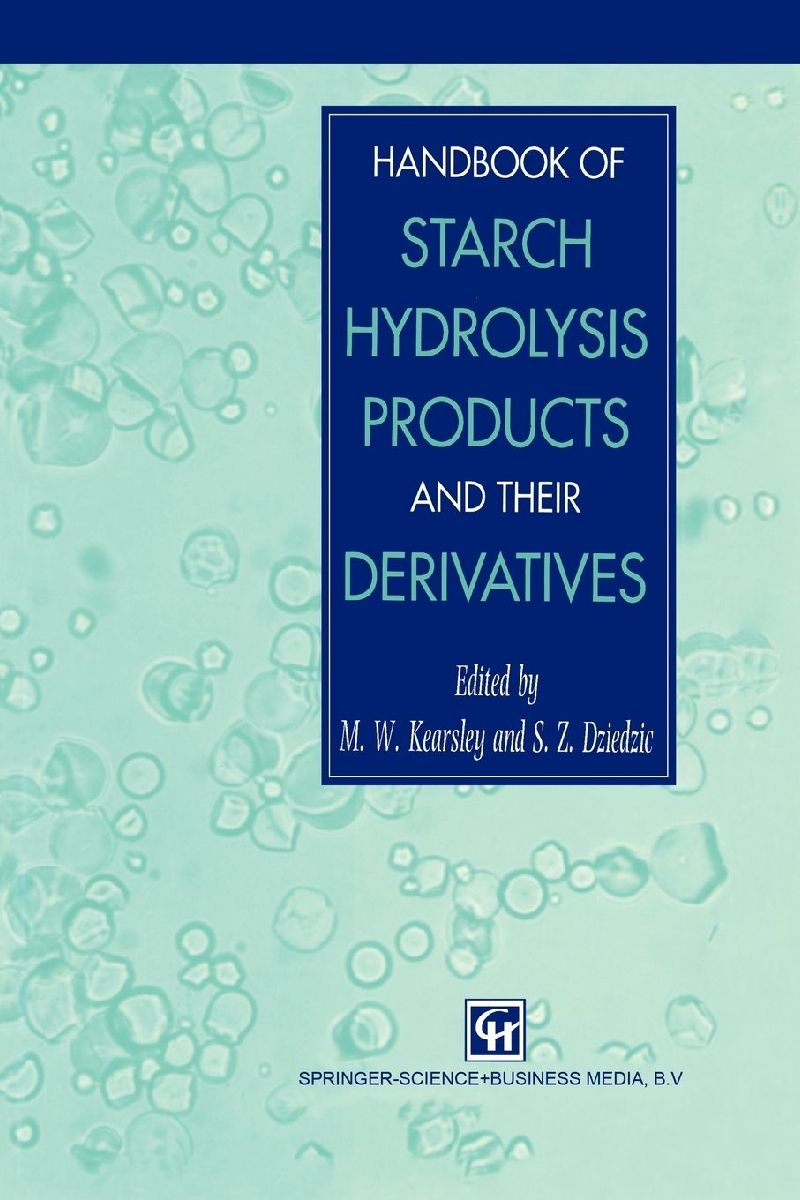
Handbook of Starch Hydrolysis Products and their Derivatives
von M. W. Kearsley und S. Z. Dziedzic
- Einband
- Kartoniert
- Seiten
- 296
- Sprache
- Englisch
- Erschienen
- September 2012
- Verlag
- Springer
Buchbeschreibung
Starch hydrolysis products are arguably the most versatile of all food sugar ingredients because they can be designed to meet many different nutritional and technological requirements.
This book covers all aspects of starch production, from its hydrolysis to the analysis of the finished product. In addition, the most important derivatives of starch hydrolysis products are described and their applications in the food and, increasingly pharmaceutical industries are detailed.
Ganze Beschreibung lesenWeniger anzeigen
This book is essential reading for industrial food scientists and technologists, particularly those in processing and will be of interest to those involved in the formulation of pharmaceutical products. It is also a valuable reference source for food scientists and nutritionists in academic research institutes.
Inhaltsverzeichnis
- 1 The technology of starch production
- 1.1 Introduction
- 1.2 Glucose syrups
- 1.3 Starch
- 1.4 Industrial starch recovery
- 1.5 Conclusion
- 2 Enzymatic production of glucose syrups
- 2.1 Introduction
Ganzes Inhaltsverzeichnis anzeigen (95 Einträge)Weniger anzeigen
- 2.2 Enzymes for starch modification
- 2.3 Processing and enzymology
- 2.4 The future
- 2.5 Conclusions
- Acknowledgements
- References
- 3 Maltodextrins
- 3.1 Introduction
- 3.2 Maltodextrin production
- 3.3 Properties of maltodextrins
- 3.4 Analysis of maltodextrins
- 3.5 Applications of maltodextrins in food and related areas
- 3.6 Maltodextrin fat replacers
- 3.7 Specific examples of maltodextrin food applications
- 3.8 Cyclodextrins
- 3.9 Conclusions
- References
- 4 Analysis of glucose syrups
- 4.1 Introduction
- 4.2 Traditional physical and chemical analyses
- 4.3 Determinations using chromatographic methods
- References
- 5 Physical and chemical properties of glucose syrups
- 5.1 Introduction
- 5.2 Dextrose equivalent (DE)
- 5.3 Degree of polymerisation (DP)
- 5.4 Characterisation of glucose syrups
- 5.5 Baumé
- 5.6 Bodying agent
- 5.7 Brix (degrees Brix)
- 5.8 Boiling point elevation and freezing point depression
- 5.9 Carbohydrate composition
- 5.10 Colour formation
- 5.11 Fermentability
- 5.12 Foam development and stabilization
- 5.13 Glaze formation
- 5.14 Humectancy
- 5.15 Hygroscopicity
- 5.16 Molecular weight and DE
- 5.17 Nutritive solids
- 5.18 Osmotic pressure and water activity
- 5.19 Prevention of crystallisation
- 5.20 Refractive index
- 5.21 Solubility
- 5.22 Specific heat
- 5.23 Specific rotation
- 5.24 Sweetness
- 5.25 Viscosity
- 5.26 Conclusions
- References
- 6 Polyols from starch
- 6.1 Introduction - What are polyols?
- 6.2 Polyols and their legal status
- 6.3 General points in the method of manufacture
- 6.4 Physical and chemicalproperties of polyols
- 6.5 Organoleptic properties of polyols
- 6.6 Nutritional aspects of polyols
- 6.7 Applications of polyols
- 6.8 Conclusion
- References
- 7 Physiology, metabolism and tolerance of digestible and low-digestible carbohydrates
- 7.1 Introduction
- 7.2 Carbohydrate digestion
- 7.3 Low digestible carbohydrates
- 7.4 Intestinal fermentation and tolerance
- 7.5 Use of low digestible carbohydrates in confectionery products
- Acknowledgements
- References
- 8 Glucose syrups in the fermentation industries
- 8.1 Introduction
- 8.2 Production of food ingredients and additives
- 8.3 Use of syrups in brewing
- 8.4 Summary
- References
- 9 Use of glucose syrups in the food industry
- 9.1 Introduction
- 9.2 Properties of glucose syrups
- 9.3 Confectionery
- 9.4 Dextrose monohydrate in sugar confectionery
- 9.5 Dextrose applications in sugar confectionery
- 9.6 Preserves
- 9.7 Ice cream and frozen desserts
- 9.8 Bakery products
- 9.9 Glucose syrup in savoury sauces, tomato sauces and salad dressings
- 9.10 Coffee whiteners
- 9.11 Dried glucose syrup or maltodextrins (dried starch hydrolysates)
- 9.12 Conclusions
Details
- Erscheinungstermin
- September 2012
- Kategorie
- Fremdsprachige Bücher
- Einband
- Kartoniert
- Seiten
- 296
- Sprache
- Englisch
- Verlag
- Springer
- Format
- 23,5 × 15,5 cm
- Dicke
- 1,7 cm
- Gewicht
- 452 g
- EAN / ISBN-13
- 9781461359029
Versand und Rückgabe
Standardversand: 1 bis 3 Werktage, 3,99 €, kostenlos ab 35 €
Liefergebiet: Deutschland
Rücksendung: 14 Tage Widerrufsrecht. Bei einem Widerruf tragen Sie die Kosten der Rücksendung. Bei einer Falschlieferung oder einem Fehler von uns erstatten wir Ihnen das Rückporto. Den Widerruf erklären Sie über den Knopf „Vertrag widerrufen“ im Fuß der Seite.
Hersteller und ProduktsicherheitSpringer Nature Customer Service Center GmbH
Springer Nature Customer Service Center GmbH
Europaplatz 3
69115 Heidelberg
Deutschland
ProductSafety@springernature.com
Ähnliche Titel


Basic Protocols in Foods and Nutrition
Cinthia Baú Betim Cazarin (Hrsg.)
Kartoniert, Englisch, 2 Ausgaben
ab 165,84 €
Bewertungen
Zu diesem Titel gibt es noch keine Bewertung. Bewerten kann, wer ihn bei uns gekauft hat.
So prüfen wir Bewertungen
Eine Bewertung kann bei uns nur abgeben, wer den Titel über sein Kundenkonto bei uns gekauft hat. Jede Bewertung ist fest mit der zugehörigen Bestellung verknüpft; anders kommt sie technisch gar nicht zustande. Deshalb trägt jede angezeigte Bewertung den Hinweis „Verifizierter Kauf". Wir zeigen positive wie negative Bewertungen und löschen nur bei Rechtsverstößen. Für Bewertungen gibt es keine Gegenleistung.
160,49 €Voraussichtlich 2. bis 4. Dez.