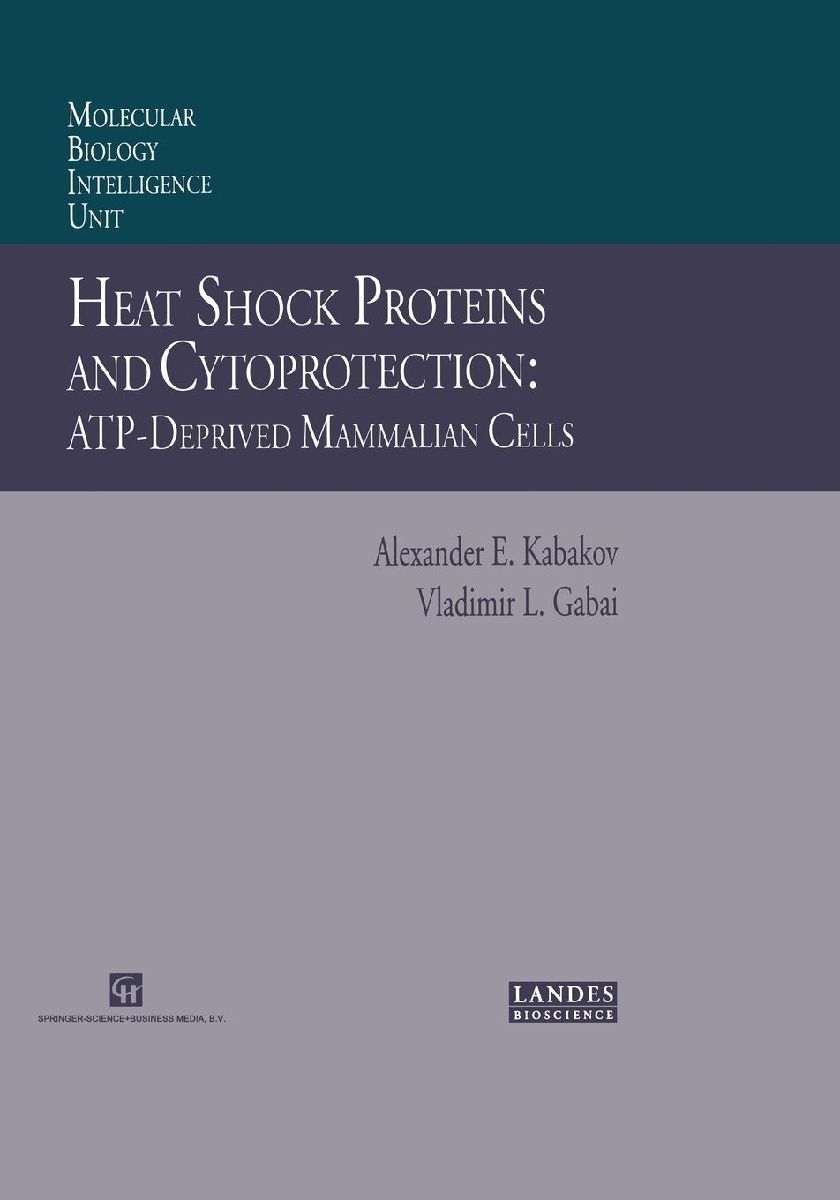
Heat Shock Proteins and Cytoprotection
Atp-Deprived Mammalian Cells
von Alexander E. Kabakov und Vladimir L. Gabai
Aus der Reihe Molecular Biology Intelligence Unit
- Einband
- Kartoniert
- Seiten
- 256
- Sprache
- Englisch
- Erschienen
- Oktober 2012
- Verlag
- Springer
Buchbeschreibung
1. Heat Shock Proteins and the Regulation of Heat Shock Gene Expression in Eukaryotes.- 1.1. The Family of Stress Proteins and Molecular Chaperones.- 1.2. The Regulation of Heat Shock Gene Expression in Eukaryotes.
Ganze Beschreibung lesenWeniger anzeigen
- Concluding Remarks.- 2. ATP Homeostasis, Ionic Balance and Cell Viability.- 2.1. ATP Homeostasis in Mammalian Cells.- 2.2. Cell Viability and ATP Depletion.- 2.3. Significance of Ionic Imbalance for the Death of ATP-Depleted Cells.- 2.4. Mitochondrial Dysfunction and Damage During Ischemia.
- Concluding Remarks.- 3. "Proteotoxicity" of ATP Depletion: Disruption of the Cytoskeleton, Protein Aggregation and Involvement of Molecular Chaperones.- 3.1. The Cytoskeleton Under ATP Deprivation.- 3.2. Protein Aggregation in Energy-Deprived Cells.- 3.3. How Do Heat Shock Proteins Respond to ATP Depletion?.
- Concluding Remarks.- 4. ATP Depletion as Inducer of Heat Shock Protein Expression.- 4.1. Anoxia and Mitochondrial Inhibitors Activate HSP Gene Expression.- 4.2. Ischemia-Induced HSP Synthesis in the Heart.- 4.3. Stress Protein Expression in Post-Ischemic Brain.- 4.4. Ischemia-Induced Stress Protein Synthesis in Other Normal Tissues and Tumor Cells.- 4.5. Possible Mechanisms of HSP Accumulation After ATP Depletion.
- Concluding Remarks.- 5. Heat Shock Proteins and Cardioresistance to Ischemia.- 5.1. Heat Shock-Induced Cardioresistance to Ischemia/Reperfusion Injury.- 5.2. The Role of Myocardial HSPs in Ischemie Preconditioning.- 5.3. The Cardioresistance Induced by Other Stimuli Can Also Be Associated with HSPs.- 5.4. Evidence for the Involvement of HSP70 in Cardioprotection.- 5.5. Are Other Stress Proteins Cardioprotective?.
- Concluding Remarks.- 6. Involvement of Heat Shock Proteins in Protection of Various Normal and Tumor Cells from Ischemic Insult.- 6.1. HSPsand Ischemic Tolerance in the Brain.- 6.2. Ischemic Tolerance in the Kidney.- 6.3. HSPs and Protection from Ischemia of Other Organs and Tissues.- 6.4..
- Concluding Remarks.- 7. What Are the Mechanisms of Heat Shock Protein-Mediated Cytoprotection Under ATP Deprivation?.- 7.1. Two Paradigms of Cell Tolerance to ATP Deprivation: Reduced Injury During the Stress and the Improved Post-Stress Recovery.- 7.2. Chaperoning Under ATP Depletion as a Special Function of HSP70.- 7.3. How Other Stress Proteins Might Maintain the Viability of ATP-Deprived Cells.- 7.4. How Do HSPs Protect Cells against Necrosis during ATP Depletion?.- 8. Mechanisms of Heat Shock Protein-Mediated Protection from Ischemia-Induced Apoptosis.- 8.1. HSPs and Triggering of Apoptosis in Ischemic Cells.- 8.2. HSPs and Transduction of the Apoptotic Signal.- 8.3. HSPs and the Execution of Apoptosis.- 9. Conclusions and Perspectives.- 9.1. Adaptation to Energy Starvation on The Molecular Level.- 9.2. Heat Shock Proteins and Ischemia: Significance for Medicine.
- Concluding Remarks.
Inhaltsverzeichnis
- 1. Heat Shock Proteins and the Regulation of Heat Shock Gene Expression in Eukaryotes
- 1.1. The Family of Stress Proteins and Molecular Chaperones
- 1.2. The Regulation of Heat Shock Gene Expression in Eukaryotes
- Concluding Remarks
- 2. ATP Homeostasis, Ionic Balance and Cell Viability
- 2.1. ATP Homeostasis in Mammalian Cells
- 2.2. Cell Viability and ATP Depletion
- 2.3. Significance of Ionic Imbalance for the Death of ATP-Depleted Cells
Ganzes Inhaltsverzeichnis anzeigen (48 Einträge)Weniger anzeigen
- 2.4. Mitochondrial Dysfunction and Damage During Ischemia
- Concluding Remarks
- 3. "Proteotoxicity" of ATP Depletion: Disruption of the Cytoskeleton, Protein Aggregation and Involvement of Molecular Chaperones
- 3.1. The Cytoskeleton Under ATP Deprivation
- 3.2. Protein Aggregation in Energy-Deprived Cells
- 3.3. How Do Heat Shock Proteins Respond to ATP Depletion?
- Concluding Remarks
- 4. ATP Depletion as Inducer of Heat Shock Protein Expression
- 4.1. Anoxia and Mitochondrial Inhibitors Activate HSP Gene Expression
- 4.2. Ischemia-Induced HSP Synthesis in the Heart
- 4.3. Stress Protein Expression in Post-Ischemic Brain
- 4.4. Ischemia-Induced Stress Protein Synthesis in Other Normal Tissues and Tumor Cells
- 4.5. Possible Mechanisms of HSP Accumulation After ATP Depletion
- Concluding Remarks
- 5. Heat Shock Proteins and Cardioresistance to Ischemia
- 5.1. Heat Shock-Induced Cardioresistance to Ischemia/Reperfusion Injury
- 5.2. The Role of Myocardial HSPs in Ischemie Preconditioning
- 5.3. The Cardioresistance Induced by Other Stimuli Can Also Be Associated with HSPs
- 5.4. Evidence for the Involvement of HSP70 in Cardioprotection
- 5.5. Are Other Stress Proteins Cardioprotective?
- Concluding Remarks
- 6. Involvement of Heat Shock Proteins in Protection of Various Normal and Tumor Cells from Ischemic Insult
- 6.1. HSPsand Ischemic Tolerance in the Brain
- 6.2. Ischemic Tolerance in the Kidney
- 6.3. HSPs and Protection from Ischemia of Other Organs and Tissues
- 6.4
- Concluding Remarks
- 7. What Are the Mechanisms of Heat Shock Protein-Mediated Cytoprotection Under ATP Deprivation?
- 7.1. Two Paradigms of Cell Tolerance to ATP Deprivation: Reduced Injury During the Stress and the Improved Post-Stress Recovery
- 7.2. Chaperoning Under ATP Depletion as a Special Function of HSP70
- 7.3. How Other Stress Proteins Might Maintain the Viability of ATP-Deprived Cells
- 7.4. How Do HSPs Protect Cells against Necrosis during ATP Depletion?
- 8. Mechanisms of Heat Shock Protein-Mediated Protection from Ischemia-Induced Apoptosis
- 8.1. HSPs and Triggering of Apoptosis in Ischemic Cells
- 8.2. HSPs and Transduction of the Apoptotic Signal
- 8.3. HSPs and the Execution of Apoptosis
- 9. Conclusions and Perspectives
- 9.1. Adaptation to Energy Starvation on The Molecular Level
- 9.2. Heat Shock Proteins and Ischemia: Significance for Medicine
- Concluding Remarks
Details
- Erscheinungstermin
- Oktober 2012
- Kategorie
- Fremdsprachige Bücher
- Einband
- Kartoniert
- Seiten
- 256
- Sprache
- Englisch
- Verlag
- Springer
- Reihe
- Molecular Biology Intelligence Unit
- Format
- 25,4 × 17,8 cm
- Dicke
- 1,5 cm
- Gewicht
- 489 g
- EAN / ISBN-13
- 9781461377528
Versand und Rückgabe
Standardversand: 1 bis 3 Werktage, 3,99 €, kostenlos ab 35 €
Liefergebiet: Deutschland
Rücksendung: 14 Tage Widerrufsrecht. Bei einem Widerruf tragen Sie die Kosten der Rücksendung. Bei einer Falschlieferung oder einem Fehler von uns erstatten wir Ihnen das Rückporto. Den Widerruf erklären Sie über den Knopf „Vertrag widerrufen“ im Fuß der Seite.
Hersteller und ProduktsicherheitSpringer Nature Customer Service Center GmbH
Springer Nature Customer Service Center GmbH
Europaplatz 3
69115 Heidelberg
Deutschland
ProductSafety@springernature.com
Mehr aus der Reihe Molecular Biology Intelligence Unit



Bewertungen
Zu diesem Titel gibt es noch keine Bewertung. Bewerten kann, wer ihn bei uns gekauft hat.
So prüfen wir Bewertungen
Eine Bewertung kann bei uns nur abgeben, wer den Titel über sein Kundenkonto bei uns gekauft hat. Jede Bewertung ist fest mit der zugehörigen Bestellung verknüpft; anders kommt sie technisch gar nicht zustande. Deshalb trägt jede angezeigte Bewertung den Hinweis „Verifizierter Kauf". Wir zeigen positive wie negative Bewertungen und löschen nur bei Rechtsverstößen. Für Bewertungen gibt es keine Gegenleistung.
106,99 €Voraussichtlich 1. bis 3. Dez.