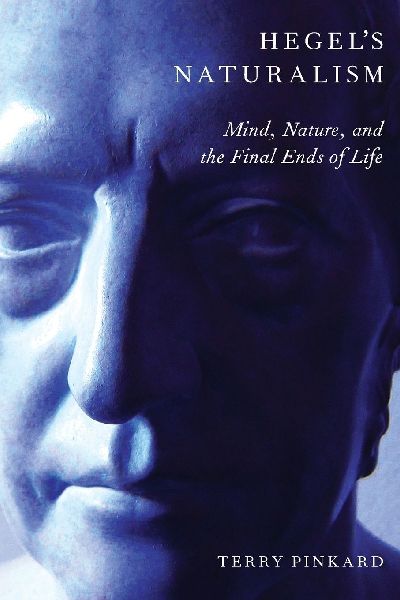
Hegel's Naturalism
Mind, Nature, and the Final Ends of Life
von Terry Pinkard
- Einband
- Kartoniert
- Seiten
- 228
- Sprache
- Englisch
- Erschienen
- Oktober 2013
- Verlag
- Oxford University Press
Buchbeschreibung
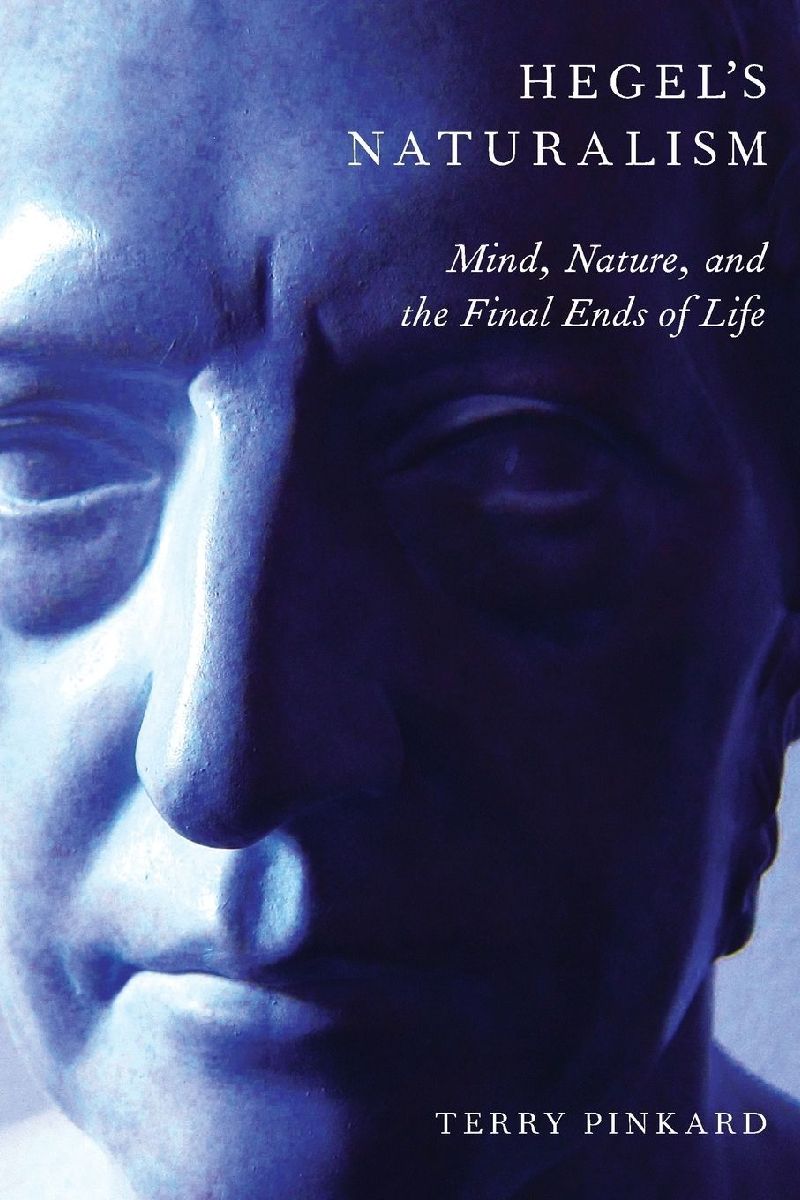
Terry Pinkard draws on Hegel's central works as well as his lectures on aesthetics, the history of philosophy, and the philosophy of history in this deeply informed and original exploration of Hegel's naturalism.
As Pinkard explains, Hegel's version of naturalism was in fact drawn from Aristotelian naturalism: Hegel fused Aristotle's conception of nature with his insistence that the origin and development of philosophy has empirical physics as its presupposition.
Ganze Beschreibung lesenWeniger anzeigen
As a result, Hegel found that, although modern nature must be understood as a whole to be non-purposive, there is nonetheless a place for Aristotelian purposiveness within such nature.
Such a naturalism provides the framework for explaining how we are both natural organisms and also practically minded (self-determining, rationally responsive, reason-giving) beings. In arguing for this point, Hegel shows that the kind of self-division which is characteristic of human agency also provides human agents with an updated version of an Aristotelian final end of life.
Pinkard treats this conception of the final end of "being at one with oneself" in two parts. The first part focuses on Hegel's account of agency in naturalist terms and how it is that agency requires such a self-division, while the second part explores how Hegel thinks a historical narration is essential for understanding what this kind of self-division has come to require of itself.
In making his case, Hegel argues that both the antinomies of philosophical thought and the essential fragmentation of modern life are all not to be understood as overcome in a higher order unity in the "State." On the contrary, Hegel demonstrates that modern institutions do not resolve such tensions any more than a comprehensive philosophical account can resolve them theoretically.
The job of modern practices and institutions (and at a reflective level the task of modern philosophy) is to help us understand and live with precisely the unresolvability of these oppositions. Therefore, Pinkard explains, Hegel is not the totality theorist he has been taken to be, nor is he an "identity thinker," à la Adorno. He is an anti-totality thinker.
Inhaltsverzeichnis
- Preface
- Introduction
- Part One
- Chapter 1: Disenchanted Aristotelian Naturalism
- A: Hegel's Aristotelian Turn
- 1: Animal Life
- 2: The Inwardness of Animal Life
- B: From Animal Subjectivity to Human Subjectivity
Ganzes Inhaltsverzeichnis anzeigen (46 Einträge)Weniger anzeigen
- C: Animal Life and the Will
- Chapter 2: Self-Consciousness in the Natural World
- A: Animal and Human Awareness
- B: Consciousness of the World
- C. Self-Consciousness
- 1: Being at Odds with Oneself in Desire
- 2: The Attempt at Being at One with Oneself as Mastery Over Others
- 3. Masters, Slaves and Freedom
- 4: The Truth of Mastery and Servitude
- 5: Objectivity, Intuition and Representation
- Part Two
- Chapter 3: The Self-Sufficient Good
- A: Actualized Agency: The Sublation of Happiness
- B: The Actually Free Will
- C: The Impossibility of Autonomy and the "Idea" of Freedom
- D. Being at One with Oneself as a Self-Sufficient Final End
- Chapter 4: Inner Lives and Public Orientation
- A. Failure in Forms of Life
- B. The Phenomenology of a Form of Life
- C. Greek Tensions, Greek Harmony
- D: Empire and the Inner Life
- Chapter Five: Public reasons, Private Reasons
- A. Enlightenment and Individualism
- B: Morality and Private Reasons
- C. Ethical Life and Public Reasons
- Chapter Six: The Inhabitable Alienation of Modern Life
- A: Alienation as Uninhabitability
- 1: Diderot's Dilemma
- 2: Civil Society and the Balance of Interests
- 3: Making the Sale and Getting at the Truth
- B: Power: the Limits of Morality in Politics
- 1. Bureaucratic Democracy?
- 2: The Nation State?
- Chapter Seven: Conclusion: Hegel as a Post-Hegelian
- A. Self-Comprehension
- 1: Hegelian Amphibians
- 2: Second Nature and Wholeness
- B: Final Ends?
Details
- Erscheinungstermin
- Oktober 2013
- Kategorie
- Fremdsprachige Bücher
- Einband
- Kartoniert
- Seiten
- 228
- Sprache
- Englisch
- Verlag
- Oxford University Press
- Format
- 23,4 × 15,6 cm
- Dicke
- 1,4 cm
- Gewicht
- 395 g
- EAN / ISBN-13
- 9780199330072
Über Terry Pinkard
Terry Pinkard is Professor of Philosophy at Georgetown University; author of German Philosophy 1760-1860: The Legacy of Idealism, Hegel: A Biography and Hegel's Phenomenology: The Sociality of Reason; …
Mehr über Terry PinkardWeniger anzeigen
Terry Pinkard is Professor of Philosophy at Georgetown University; author of German Philosophy 1760-1860: The Legacy of Idealism, Hegel: A Biography and Hegel's Phenomenology: The Sociality of Reason; and editor of Heinrich Heine on the History of Religion and Philosophy in Germany.
Versand und Rückgabe
Standardversand: 1 bis 3 Werktage, 3,99 €, kostenlos ab 35 €
Liefergebiet: Deutschland
Rücksendung: 14 Tage Widerrufsrecht. Bei einem Widerruf tragen Sie die Kosten der Rücksendung. Bei einer Falschlieferung oder einem Fehler von uns erstatten wir Ihnen das Rückporto. Den Widerruf erklären Sie über den Knopf „Vertrag widerrufen“ im Fuß der Seite.
Hersteller und ProduktsicherheitOxford University Press
Oxford University Press
Europaallee 1
36244 Bad Hersfeld
Deutschland
gpsr@libri.de
Verantwortliche Person in der EU
Libri GmbHEuropaallee 1
36244 Bad Hersfeld
Deutschland
gpsr@libri.de
Mehr von Terry Pinkard



Ähnliche Titel

The Concept of Drive in Classical German Philosophy
Manja Kisner (Hrsg.)
Gebunden, Englisch, 2 Ausgaben
ab 139,09 €


Bewertungen
Zu diesem Titel gibt es noch keine Bewertung. Bewerten kann, wer ihn bei uns gekauft hat.
So prüfen wir Bewertungen
Eine Bewertung kann bei uns nur abgeben, wer den Titel über sein Kundenkonto bei uns gekauft hat. Jede Bewertung ist fest mit der zugehörigen Bestellung verknüpft; anders kommt sie technisch gar nicht zustande. Deshalb trägt jede angezeigte Bewertung den Hinweis „Verifizierter Kauf". Wir zeigen positive wie negative Bewertungen und löschen nur bei Rechtsverstößen. Für Bewertungen gibt es keine Gegenleistung.
66,20 €Voraussichtlich 2. bis 4. Dez.