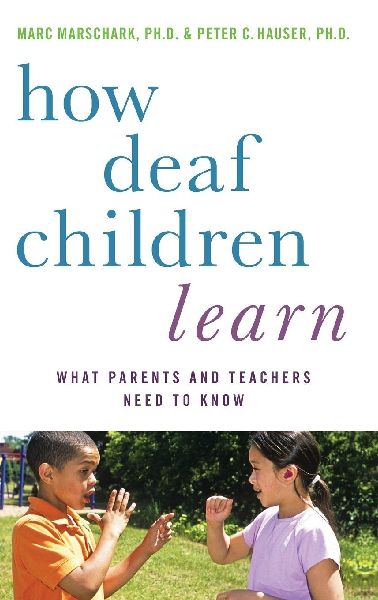
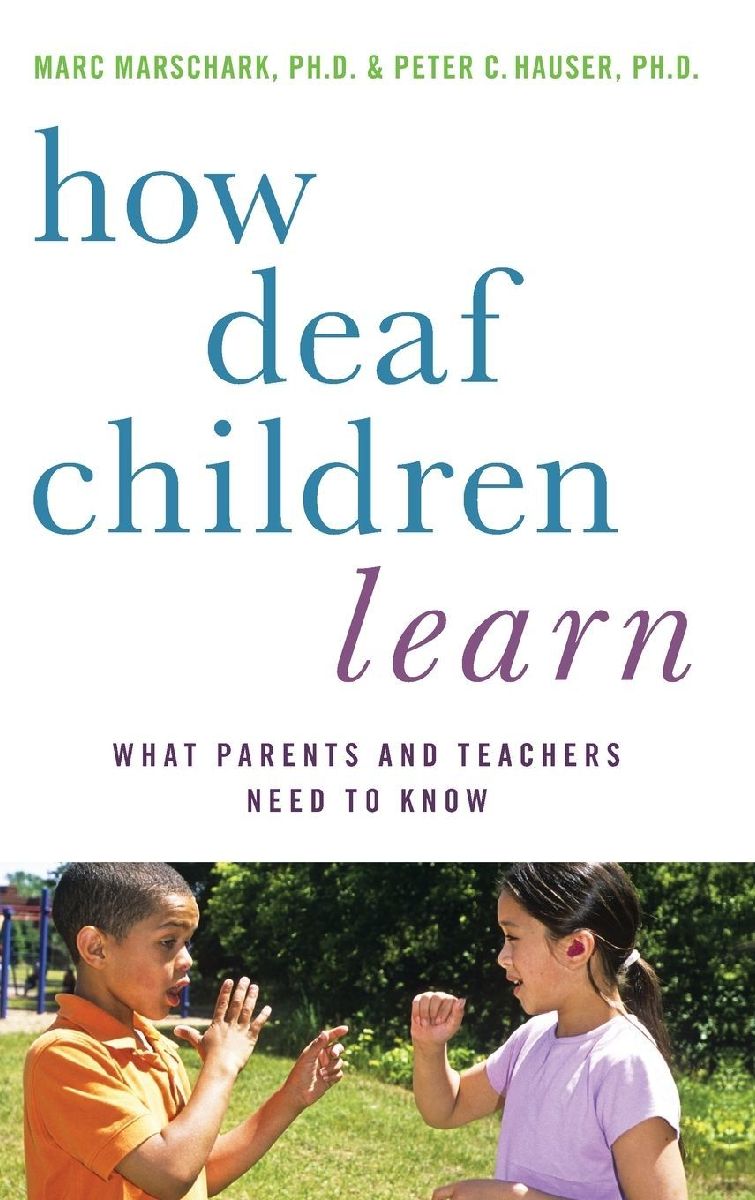
How Deaf Children Learn
What Parents and Teachers Need to Know /
von Marc Marschark und Peter C. Hauser
Aus der Reihe Perspectives on Deafness
- Einband
- Gebunden
- Seiten
- 168
- Sprache
- Englisch
- Erschienen
- Dezember 2011
- Verlag
- OXFORD UNIV PR
Buchbeschreibung
How can parents and teachers most effectively support the language development and academic success of deaf and hard-of-hearing children?
Will using sign language interfere with learning spoken language? Should deaf children be placed in classrooms with hearing children? Are traditional methods of teaching subjects such as reading and math to hearing children appropriate for deaf learners?
Ganze Beschreibung lesenWeniger anzeigen
As many parents and teachers will attest, questions like these have no easy answers, and it can be difficult for caring adults to separate science from politics and fact from opinion in order to make informed decisions about how to help deaf children learn.
In this invaluable guide, renowned authorities Marc Marschark and Peter Hauser highlight important new advances in scientific and educational research that can help parents and teachers of students with significant hearing loss. The authors stress that deaf children have strengths and needs that are sometimes very different from those who can hear.
Consequently, if deaf students are to have full academic access and optimal educational outcomes, it is essential that parents and teachers learn to recognize these differences and adjust their teaching methods to them. Marschark and Hauser explain how the fruits of research conducted over the last several years can markedly improve educational practices at home and in the classroom, and they offer innovative strategies that parents and teachers can use to promote learning in their children.
The result is a lively, accessible volume that sheds light on what it means to be a deaf learner and that provides a wealth of advice on how we can best support their language development, social skills, and academic success.
Inhaltsverzeichnis
- 1. What It's All About- Who Are We and What Are We Doing Here?- Alternative Perspectives on Educating Deaf Students- Using This Book- Notes, Confessions, and Acknowledgments-
- 2. Introduction to Deaf Children- Navigating Issues- Those Who Ignore History...- Terms of Endearment (or Not)- Differences versus Deficiencies- Final Words-
- 3. On Hearing and Not Hearing- Understanding Hearing- Hearing Aids- Everything You Always Wanted to Know About Cochlear Implants- Final Words-
- 4. Language and Communication- Understanding Language- From Communication to Language- Signed Languages and Visual Communication Systems- Spoken Communication- Final Words-
- 5. Family and Peers: Foundations of Learning- Education Begins at Home- Social Interactions: Foundations for Learning- Early Intervention- Moving from Home to School- Social-Emotional Growth during the School Years- Last Words-
- 6. Deaf Cognition- Are Deaf Children As Smart As Hearing Children?- Do Deaf Individuals See Better?- Does Sign Language Have an Effect on Words about-
- 7. Learning and Memory- Cognition and Learning: From Darkness to Enlightenment- Learning- Memory- Final Words-
- 8. Problem Solving and Knowledge- Experience and Conceptual Development- Integration and Organization of Knowledge- Final Words-
Ganzes Inhaltsverzeichnis anzeigen (12 Einträge)Weniger anzeigen
- 9. Reading- The Challenge of Learning to Read- What Can We Do about Deaf Students' Reading Achievement?- A Few Words about Writing- Final Words-
- 10. Doing Math: Foundations- Understanding Number- Understanding Mathematics during the School Years- Improving Mathematics Performance by Deaf Children- Final Words-
- 11. The Deaf Education Classroom- Options in Deaf Education Programming- Assessment and Classroom Placement- Classroom Diversity- The Classroom- Deaf Education Professionals- Final Words-
- 12. Where Do We Go from Here?- A Journey of 1000 Miles Begins with a Single Step- The More Things Change the More They Stay the Same- There Are Differences and Then There Are Differences- What We Know and What We Need to Know- Final Final Words- Additional Reading- References- Index
Details
- Erscheinungstermin
- Dezember 2011
- Kategorie
- Fremdsprachige Bücher
- Einband
- Gebunden
- Seiten
- 168
- Sprache
- Englisch
- Verlag
- OXFORD UNIV PR
- Reihe
- Perspectives on Deafness
- Format
- 24,0 × 16,1 cm
- Dicke
- 1,4 cm
- Gewicht
- 373 g
- EAN / ISBN-13
- 9780195389753
Autorenporträt
Marc Marschark is a Professor at the National Technical Institute for the Deaf, where he is Director of the Center for Education Research Partnerships. Peter C.
Mehr über die Autorin oder den AutorWeniger anzeigen
Hauser is Associate Professor at the National Technical Institute for the Deaf, where he is director of the Deaf Studies Laboratory.
Versand und Rückgabe
Standardversand: 1 bis 3 Werktage, 3,99 €, kostenlos ab 35 €
Versandbeginn: in der Regel am selben oder am nächsten Werktag
Liefergebiet: Deutschland
Rücksendung: 14 Tage Widerrufsrecht. Bei einem Widerruf tragen Sie die Kosten der Rücksendung. Bei einer Falschlieferung oder einem Fehler von uns erstatten wir Ihnen das Rückporto. Den Widerruf erklären Sie über den Knopf „Vertrag widerrufen“ im Fuß der Seite.
Hersteller und ProduktsicherheitOXFORD UNIV PR
OXFORD UNIV PR
Europaallee 1
36244 Bad Hersfeld
Deutschland
gpsr@libri.de
Verantwortliche Person in der EU
Libri GmbHEuropaallee 1
36244 Bad Hersfeld
Deutschland
gpsr@libri.de
Mehr von Marc Marschark



Oxford Handbook of Deaf Studies, Language, and Education, Volume 1
Marc Marschark (Hrsg.)
Gebunden, Englisch
188,90 €

Ähnliche Titel

Integrating Primitive Reflexes Through Play and Exercise
Kokeb Girma McDonald
Kartoniert, Englisch
16,90 €

Integrating Primitive Reflexes Through Play and Exercise
Kokeb Girma McDonald
Kartoniert, Englisch
24,60 €

A Parents' Guide to Special Education for Children with Visual Impairments
Susan Laventure (Hrsg.)
Kartoniert, Englisch
48,50 €

Development of Medical Garments and Apparel for the Elderly and the Disabled
Ng Sau-Fun
Kartoniert, Englisch, 2 Ausgaben
ab 41,30 €
Bewertungen
Zu diesem Titel gibt es noch keine Bewertung. Bewerten kann, wer ihn bei uns gekauft hat.
So prüfen wir Bewertungen
Eine Bewertung kann bei uns nur abgeben, wer den Titel über sein Kundenkonto bei uns gekauft hat. Jede Bewertung ist fest mit der zugehörigen Bestellung verknüpft; anders kommt sie technisch gar nicht zustande. Deshalb trägt jede angezeigte Bewertung den Hinweis „Verifizierter Kauf". Wir zeigen positive wie negative Bewertungen und löschen nur bei Rechtsverstößen. Für Bewertungen gibt es keine Gegenleistung.
49,60 €Voraussichtlich 27. Nov. bis 1. Dez.