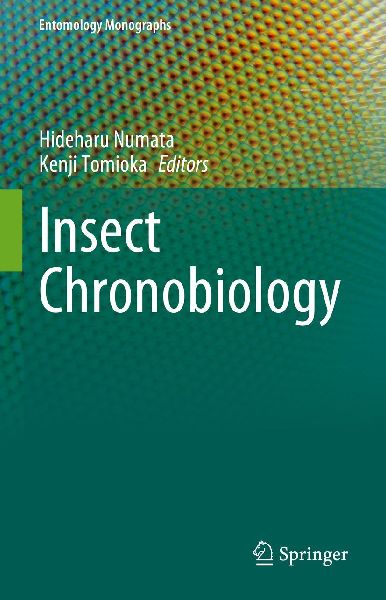
Insect Chronobiology
Herausgegeben von: Hideharu Numata, Herausgegeben von: Kenji Tomioka
Aus der Reihe Entomology Monographs
- Einband
- Gebunden
- Seiten
- 372
- Sprache
- Englisch
- Erschienen
- April 2023
- Verlag
- Springer
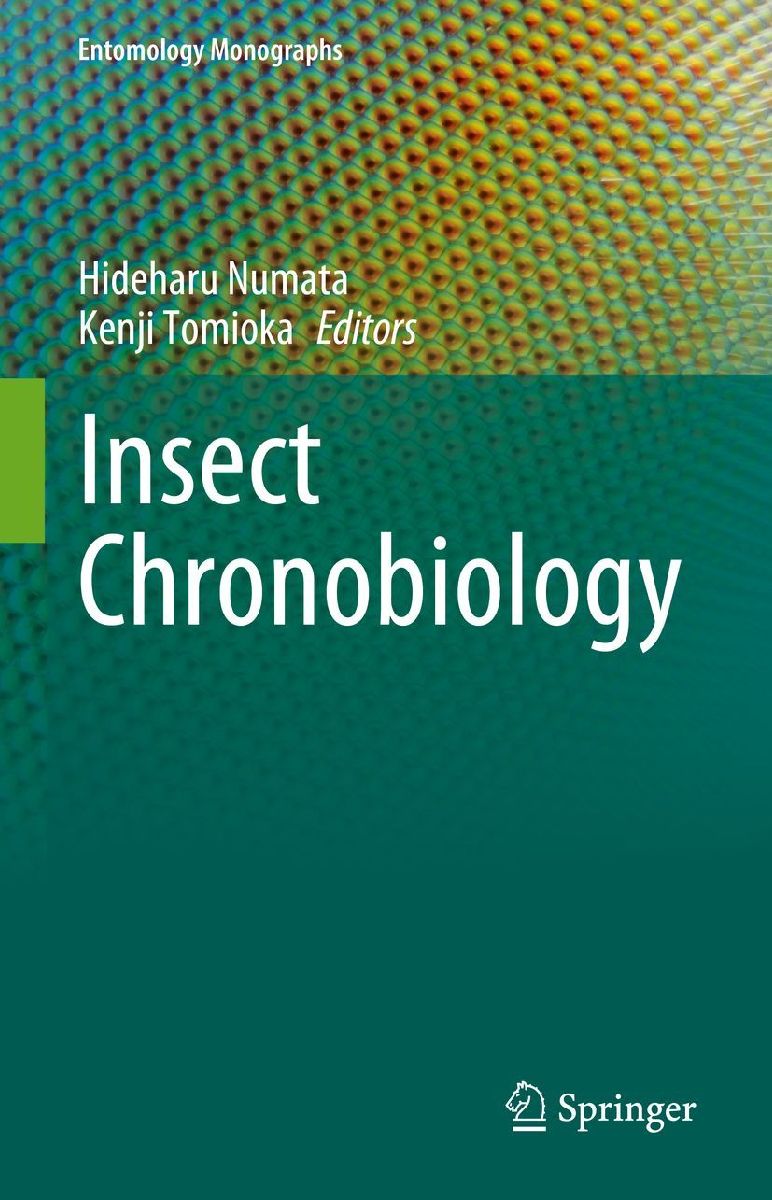
Buchbeschreibung
This book reviews the physiological mechanisms of diverse insect clocks, including circadian clock, lunar clock, tidal clock, photoperiodism, circannual rhythms and others.
It explains the commonality and diversity of insect clocks, focusing on the recent advances in their molecular and neural mechanisms. In the history of chronobiology, insects provided important examples of diverse clocks.
Ganze Beschreibung lesenWeniger anzeigen
The first report of animal photoperiodism was in an aphid, and the time-compensated celestial navigation was first shown in the honeybee.
The circadian clock was first localized in the brain of a cockroach. These diverse insect clocks also have some common features which deserve to be reviewed in a single book. The central molecular mechanism of the circadian clock, i.e., the negative feedback loop of clock genes, was proposed in Drosophila melanogaster in the 1990s and later became the subject of the Nobel Prize in Physiology or Medicine in 2017. Thereafter, researches on the molecular and neural mechanisms in diverse insect clocks other than the Drosophila circadian clock also advanced appreciably.
Various new methods including RNAi, NGS, and genome editing with CRISPR-Cas9 have become applicable in these researches. This book comprehensively reviews the physiological mechanisms in diverse insect clocks in the last two decades, which have received less attention than the Drosophila circadian clock.
The book is intended for researchers, graduate students, and highly motivated undergraduate students in biological sciences, especially in entomology and chronobiology.
Inhaltsverzeichnis
- Chapter 1. Historical survey of chronobiology with reference to studies in insects
- Part I. Circadian rhythms
- Chapter 2. General features of circadian rhythms
- Chapter 3. Photic entrainment of circadian rhythms
- Chapter 4. Molecular mechanism of the circadian clock
- Chapter 5. Neural mechanism of the circadian clock
- Chapter 6. Peripheral circadian clock
- Chapter 7. Circa-bidian rhythm
Ganzes Inhaltsverzeichnis anzeigen (18 Einträge)Weniger anzeigen
- Chapter 8. Circadian rhythms in social insects
- Chapter 9. Environmental adaptation and evolution of circadian rhythms
- Part II. Other types of insect rhythms and photoperiodism
- Chapter 10. Lunar and tidal rhythms
- Chapter 11. Circannual rhythms
- Chapter 12. General features of photoperiodism
- Chapter 13. Molecular mechanism of photoperiodism
- Chapter 14. Neural mechanism of photoperiodism
- Chapter 15. Seasonal timer in aphids
- Chapter 16. Time-compensated celestial navigation
Details
- Erscheinungstermin
- April 2023
- Kategorie
- Fremdsprachige Bücher
- Einband
- Gebunden
- Seiten
- 372
- Sprache
- Englisch
- Verlag
- Springer
- Reihe
- Entomology Monographs
- Format
- 24,1 × 16,0 cm
- Dicke
- 2,5 cm
- Gewicht
- 739 g
- EAN / ISBN-13
- 9789819907250
Über Hideharu Numata (Hrsg.)
Hideharu Numata is an Emeritus Professor and a Program-Specific Professor at Kyoto University, Japan.
Mehr über Hideharu Numata (Hrsg.)Weniger anzeigen
He was a Professor at the Graduate School of Science, Osaka City University, Japan, in 1998-2009, and the Graduate School of Science, Kyoto University, in 2009-2021. His research interests include physiological mechanisms for seasonal adaptations in insects, e.g., photoperiodism and circannual rhythm. He was the President of the Entomological Society of Japan in 2013-2014, and a Councilor of International Congress of Entomology in 2008-2016. He was the Editor-in-Chief of Entomological Science in 2010-2011 and Zoological Science in 2020-2021. Kenji Tomioka is an Emeritus Professor and a Program-Specific Professor of Okayama University, Japan. He was a Professor at Department of Biology, Faculty of Science, Yamaguchi University, Japan in 1995-2003, and the Graduate School of Natural Science and Technology, Okayama University, in 2003-2021. His research interests include molecular and neural basis of insect circadian rhythms and photoperiodism. He has been a member of the editorial board of Journal of Insect Physiology since 1992, Zoological Science since 2003, Zoological Letters since 2014, and Physiological Entomology since 2015.
Versand und Rückgabe
Standardversand: 1 bis 3 Werktage, 3,99 €, kostenlos ab 35 €
Liefergebiet: Deutschland
Rücksendung: 14 Tage Widerrufsrecht. Bei einem Widerruf tragen Sie die Kosten der Rücksendung. Bei einer Falschlieferung oder einem Fehler von uns erstatten wir Ihnen das Rückporto. Den Widerruf erklären Sie über den Knopf „Vertrag widerrufen“ im Fuß der Seite.
Hersteller und ProduktsicherheitSpringer Nature Customer Service Center GmbH
Springer Nature Customer Service Center GmbH
Europaplatz 3
69115 Heidelberg
Deutschland
ProductSafety@springernature.com
Mehr aus der Reihe Entomology Monographs


Ähnliche Titel
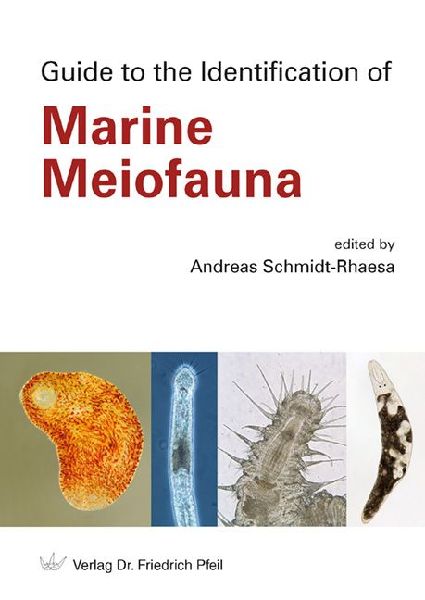
Guide to the Identification of Marine Meiofauna
Andreas Schmidt-Rhaesa (Hrsg.)
Gebunden, Englisch
68,00 €


Distribution atlas of grasshoppers and praying mantis in Germany
Thomas Fartmann
Gebunden, Englisch
58,00 €
Bewertungen
Zu diesem Titel gibt es noch keine Bewertung. Bewerten kann, wer ihn bei uns gekauft hat.
So prüfen wir Bewertungen
Eine Bewertung kann bei uns nur abgeben, wer den Titel über sein Kundenkonto bei uns gekauft hat. Jede Bewertung ist fest mit der zugehörigen Bestellung verknüpft; anders kommt sie technisch gar nicht zustande. Deshalb trägt jede angezeigte Bewertung den Hinweis „Verifizierter Kauf". Wir zeigen positive wie negative Bewertungen und löschen nur bei Rechtsverstößen. Für Bewertungen gibt es keine Gegenleistung.
192,59 €Voraussichtlich 4. bis 8. Dez.