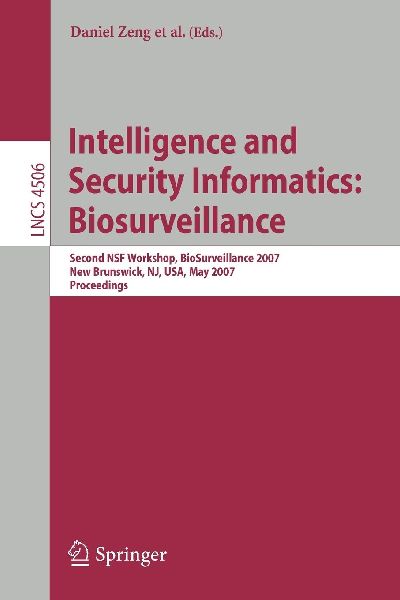
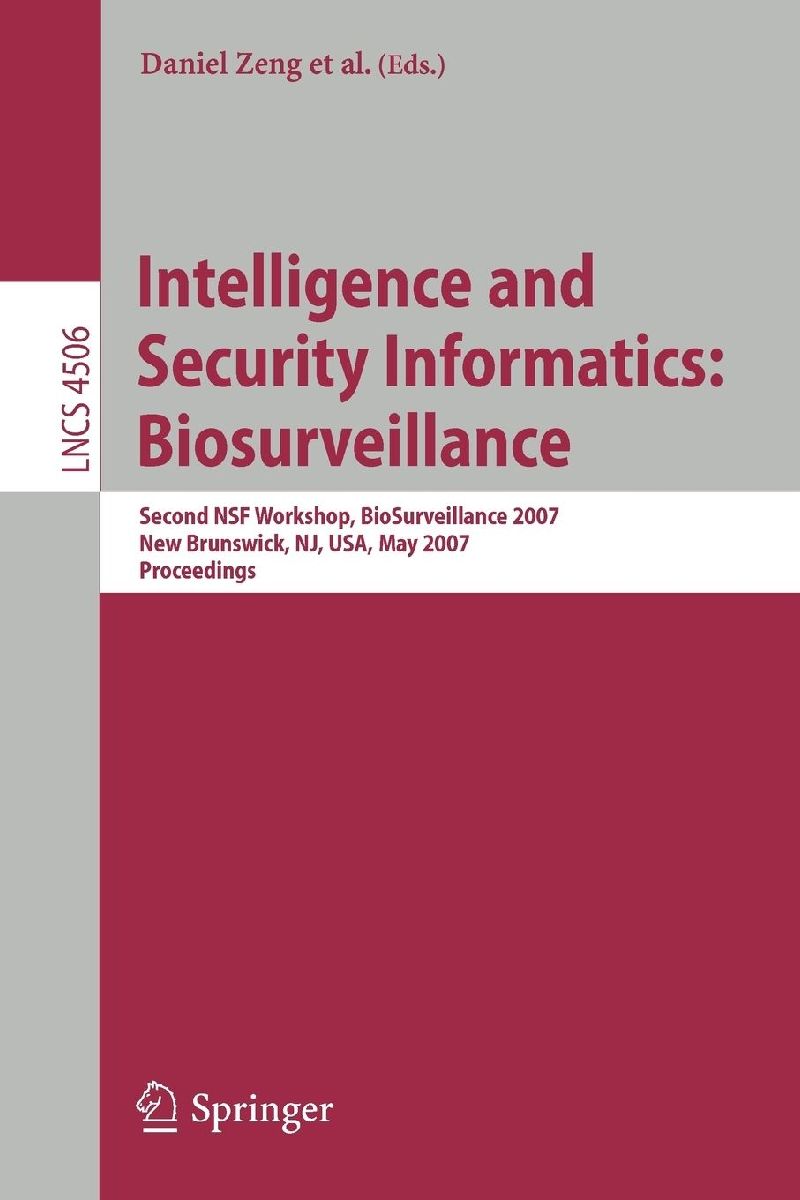
Intelligence and Security Informatics: Biosurveillance
Second NSF Workshop, BioSurveillance 2007, New Brunswick, NJ, USA, May 22, 2007, Proceedings
Herausgegeben von: Daniel Zeng, Herausgegeben von: Ivan Gotham, Herausgegeben von: Ken Komatsu, und weitere
Aus der Reihe Lecture Notes in Computer Science
- Einband
- Kartoniert
- Seiten
- 252
- Sprache
- Englisch
- Erschienen
- Mai 2007
- Verlag
- Springer
Buchbeschreibung
The 2007 NSF Bio
Surveillance Workshop (Bio
Surveillance 2007) was built on the success of the first NSF Bio
Surveillance Workshop, hosted by the University of Arizona's NSF Bio
Portal Center in March 2006. Bio
Surveillance 2007 brought - gether infectious disease informatics (IDI) researchers and practitioners to discuss selected topics directly relevant to data sharing and analysis for real-time animal and public health surveillance.
Ganze Beschreibung lesenWeniger anzeigen
These researchers and practitioners represented a wide range of backgrounds including but not limited to epidemiology, statistics, applied mathematics, information systems, computer science and machine learning/data mining. Bio
Surveillance 2007 aimed to achieve the following objectives: (a) review and examine various real-time data sharing approaches for animal and public health s- veillance from both technological and policy perspectives; (b) identify key technical challenges facing syndromic surveillance for both animal and human diseases, and discuss and compare related systems approaches and algorithms; and (c) provide a forum to bring together IDI researchers and practitioners to identify future research opportunities.
We are pleased that we received many outstanding contributions from IDI research groups and practitioners from around the world. The one-day program included one invited presentation, 17 long papers, six short papers, and two posters. Bio
Surveillance 2007 was jointly hosted by: the University of Arizona; University of California, Davis; Rutgers, The State University of New Jersey; and the University of Washington.
Inhaltsverzeichnis
- Long Papers
- Early Outbreak Detection Using an Automated Data Feed of Test Orders from a Veterinary Diagnostic Laboratory
- Chinese Chief Complaint Classification for Syndromic Surveillance
- Incorporating Geographical Contacts into Social Network Analysis for Contact Tracing in Epidemiology: A Study on Taiwan SARS Data
- A Model for Characterizing Annual Flu Cases
- Population Dynamics in the Elderly: The Need for Age-Adjustment in National Bio
- Surveillance Systems
- Data Classification for Selection of Temporal Alerting Methods for Biosurveillance
Ganzes Inhaltsverzeichnis anzeigen (30 Einträge)Weniger anzeigen
- High Performance Computing for Disease Surveillance
- Towards Real Time Epidemiology: Data Assimilation, Modeling and Anomaly Detection of Health Surveillance Data Streams
- Algorithm Combination for Improved Performance in Biosurveillance Systems
- Decoupling Temporal Aberration Detection Algorithms for Enhanced Biosurveillance
- Assessing Seasonal Variation in Multisource Surveillance Data: Annual Harmonic Regression
- A Study into Detection of Bio-Events in Multiple Streams of Surveillance Data
- A Web-Based System for Infectious Disease Data Integration and Sharing: Evaluating Outcome, Task Performance Efficiency, User Information Satisfaction, and Usability
- Public Health Affinity Domain: A Standards-Based Surveillance System Solution
- The Influenza Data Summary: A Prototype Application for Visualizing National Influenza Activity
- Global Foot-and-Mouth Disease Surveillance Using Bio
- Portal
- Utilization of Predictive Mathematical Epidemiological Modeling in Crisis Preparedness Exercises
- Short Papers
- Ambulatory e-Prescribing: Evaluating a Novel Surveillance Data Source
- Detecting the Start of the Flu Season
- Syndromic Surveillance for Early Detection of Nosocomial Outbreaks
- A Bayesian Biosurveillance Method That Models Unknown Outbreak Diseases
- Spatial Epidemic Patterns Recognition Using Computer Algebra
- Detecting Conserved RNA Secondary Structures in Viral Genomes: The RADAR Approach
- Extended Abstracts
- Gemina: A Web-Based Epidemiology and Genomic Metadata System Designed to Identify Infectious Agents
- Internet APRS Data Utilization for Biosurveillance Applications
Details
- Erscheinungstermin
- Mai 2007
- Kategorie
- Fremdsprachige Bücher
- Einband
- Kartoniert
- Seiten
- 252
- Sprache
- Englisch
- Verlag
- Springer
- Reihe
- Lecture Notes in Computer Science
- Format
- 23,5 × 15,5 cm
- Dicke
- 1,4 cm
- Gewicht
- 388 g
- EAN / ISBN-13
- 9783540726074
Versand und Rückgabe
Standardversand: 1 bis 3 Werktage, 3,99 €, kostenlos ab 35 €
Liefergebiet: Deutschland
Rücksendung: 14 Tage Widerrufsrecht. Bei einem Widerruf tragen Sie die Kosten der Rücksendung. Bei einer Falschlieferung oder einem Fehler von uns erstatten wir Ihnen das Rückporto. Den Widerruf erklären Sie über den Knopf „Vertrag widerrufen“ im Fuß der Seite.
Hersteller und ProduktsicherheitSpringer Nature Customer Service Center GmbH
Springer Nature Customer Service Center GmbH
Europaplatz 3
69115 Heidelberg
Deutschland
ProductSafety@springernature.com
Mehr von Daniel Zeng


Mehr aus der Reihe Lecture Notes in Computer Science


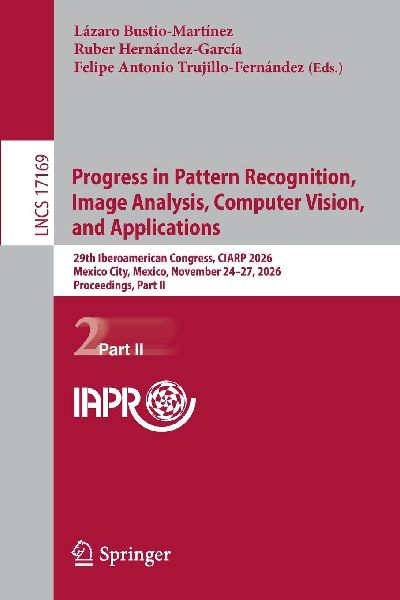
Progress in Pattern Recognition, Image Analysis, Computer Vision, and Applications
Lázaro Bustio-Martínez (Hrsg.)
Kartoniert, Englisch
87,73 €
Ähnliche Titel

Security and Privacy - Silver Linings in the Cloud
Kai Rannenberg (Hrsg.)
Gebunden, Englisch, 2 Ausgaben
ab 53,49 €



Bewertungen
Zu diesem Titel gibt es noch keine Bewertung. Bewerten kann, wer ihn bei uns gekauft hat.
So prüfen wir Bewertungen
Eine Bewertung kann bei uns nur abgeben, wer den Titel über sein Kundenkonto bei uns gekauft hat. Jede Bewertung ist fest mit der zugehörigen Bestellung verknüpft; anders kommt sie technisch gar nicht zustande. Deshalb trägt jede angezeigte Bewertung den Hinweis „Verifizierter Kauf". Wir zeigen positive wie negative Bewertungen und löschen nur bei Rechtsverstößen. Für Bewertungen gibt es keine Gegenleistung.
53,49 €Voraussichtlich 1. bis 3. Dez.