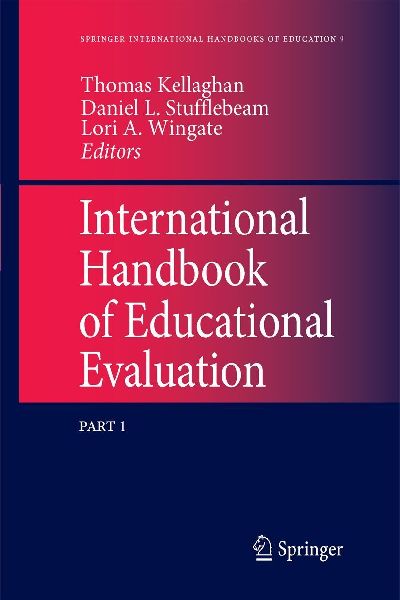
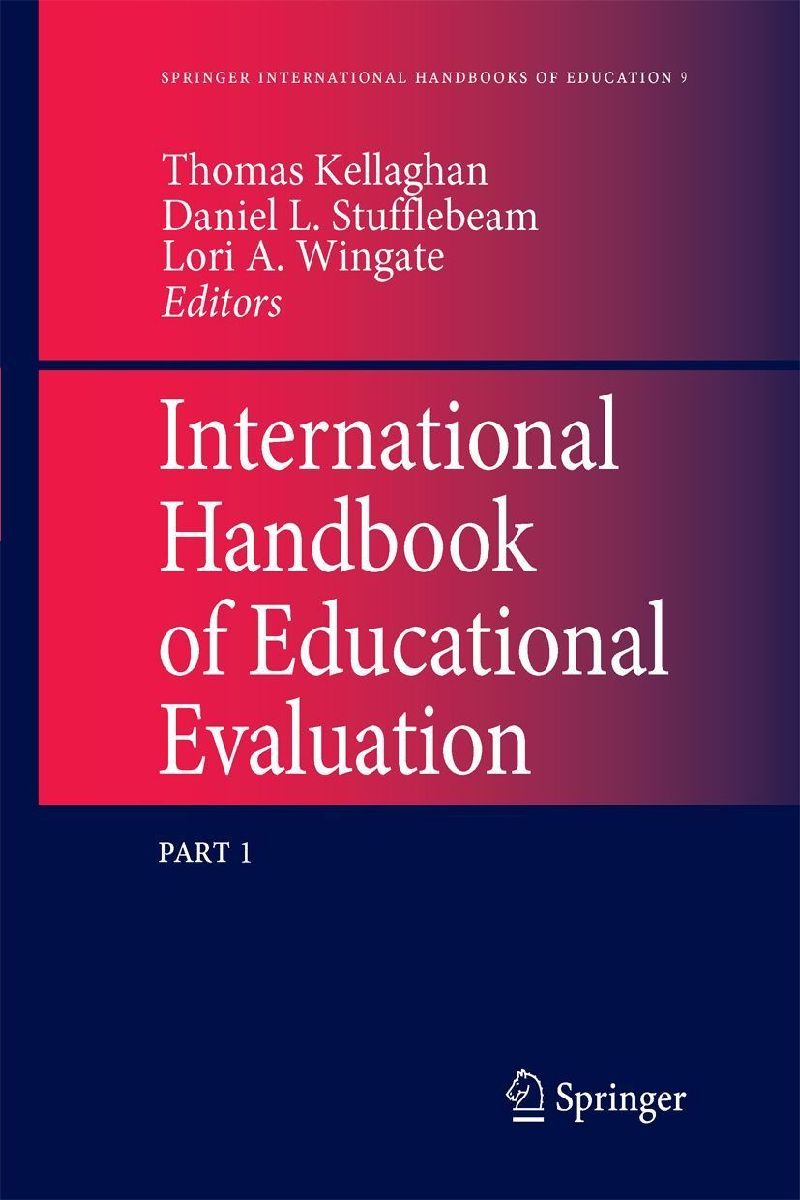
International Handbook of Educational Evaluation
Part One: Perspectives / Part Two: Practice
Herausgegeben von: T. Kellaghan, Herausgegeben von: D L Stufflebeam
- Einband
- Kartoniert
- Sprache
- Englisch
- Erschienen
- Dezember 2014
- Verlag
- Springer
Buchbeschreibung
Thomas Kellaghan Educational Research Centre, St. Patrick's College, Dublin, Ireland Daniel L. Stufflebeam The Evaluation Center, Western Michigan University, Ml, USA Lori A. Wingate The Evaluation Center, Western Michigan University, Ml, USA Educational evaluation encompasses a wide array of activities, including student assessment, measurement, testing, program evaluation, school personnel evalua tion, school accreditation, and curriculum evaluation.
Ganze Beschreibung lesenWeniger anzeigen
It occurs at all levels of education systems, from the individual student evaluations carried out by class room teachers, to evaluations of schools and districts, to district-wide program evaluations, to national assessments, to cross-national comparisons of student achievement. As in any area of scholarship and practice, the field is constantly evolving, as a result of advances in theory, methodology, and technology; increasing globalization; emerging needs and pressures; and cross-fertilization from other disciplines.
The beginning of a new century would seem an appropriate time to provide a portrait of the current state of the theory and practice of educational evaluation across the globe. It is the purpose of this handbook to attempt to do this, to sketch the international landscape of educational evaluation - its conceptual izations, practice, methodology, and background, and the functions it serves.
The book's 43 chapters, grouped in 10 sections, provide detailed accounts of major components of the educational evaluation enterprise. Together, they provide a panoramic view of an evolving field.
Inhaltsverzeichnis
- One: Perspectives Section 1: Evaluation Theory
- 1 Evaluation Theory and Metatheory
- 2 The CIPP Model for Evaluation
- 3 Responsive Evaluation
- 4 Constructivist Knowing, Participatory Ethics and &Responsive Evaluation: A Model for the 21st Century
- 5 Deliberative Democratic Evaluation
- Section 2: Evaluation Methodology
- 6 Randomized Field Trials in Education
Ganzes Inhaltsverzeichnis anzeigen (55 Einträge)Weniger anzeigen
- 7 Cost-Effectiveness Analysis as an Evaluation Tool
- 8 Educational Connoisseurship and Educational Criticism: &An Arts-Based Approach to Educational Evaluation
- 9 In Living Color: Qualitative Methods in Educational Evaluation
- Section 3: Evaluation Utilization
- 10 Evaluation Use Revisited
- 11 Utilization-Focused Evaluation
- 12 Utilization Effects of Participatory Evaluation
- Section 4: The Evaluation Profession
- 13 Professional Standards and Principles for Evaluations
- 14 Ethical Considerations in Evaluation
- 15 How can we call Evaluation a Profession if there are &no Qualifications for Practice?
- 16 The Evaluation Profession and the Government
- 17 The Evaluation Profession as a Sustainable Learning Community
- 18 The Future of the Evaluation Profession
- Section 5: The Social and Cultural Contexts of Educational Evaluation
- 19 Social and Cultural Contexts of Educational Evaluation: &A Global Perspective
- 20 The Context of Educational Program Evaluation in the United States
- 21 Program Evaluation in Europe: Between Democratic and &New Public Management Evaluation
- 22 The Social Context of Educational Evaluation in Latin America
- 23 Educational Evaluation in Africa
- Two: Practice Section 6: New and Old in Student Evaluation
- 24 Psychometric Principles in Student Assessment
- 25 Classroom Student Evaluation
- 26 Alternative Assessment
- 27 External (Public) Examinations
- Section 7: Personnel Evaluation
- 28 Teacher Evaluation Practices in the Accountability Era
- 29 Principal Evaluation in the United States
- 30 Evaluating Educational Specialists
- Section 8: Program/Project Evaluation.-31 Evaluating Educational Programs and Projects in the Third World
- 32 Evaluating Educational Programs and Projects in the USA
- 33 Evaluating Educational Programs and Projects in Canada
- 34 Evaluating Educational Programs and Projects in Australia
- Section 9: Old and New Challenges for Evaluation in Schools
- 35 Institutionalizing Evaluation in Schools
- 36 A Model for School Evaluation
- 37 The Development and Use of School Profiles
- 38 Evaluating the Institutionalization of Technology in Schools and Classrooms
- Section 10: Local, National, and International Levels of System Evaluation
- 39 National Assessment in the United States: The Evolution of a &Nation's Report Card
- 40 Assessment of the National Curriculum in England
- 41 State and School District Evaluation in the United States
- 42 International Studies of Educational Achievement
- 43 Cross-National Curriculum Evaluation
- List of Authors
- Index of Authors
- Index of Subjects
Details
- Erscheinungstermin
- Dezember 2014
- Kategorie
- Fremdsprachige Bücher
- Einband
- Kartoniert
- Sprache
- Englisch
- Verlag
- Springer
- Format
- 23,5 × 15,5 cm
- Dicke
- 5,8 cm
- Gewicht
- 1.597 g
- EAN / ISBN-13
- 9789401039383
Versand und Rückgabe
Standardversand: 1 bis 3 Werktage, 3,99 €, kostenlos ab 35 €
Liefergebiet: Deutschland
Rücksendung: 14 Tage Widerrufsrecht. Bei einem Widerruf tragen Sie die Kosten der Rücksendung. Bei einer Falschlieferung oder einem Fehler von uns erstatten wir Ihnen das Rückporto. Den Widerruf erklären Sie über den Knopf „Vertrag widerrufen“ im Fuß der Seite.
Hersteller und ProduktsicherheitSpringer Nature Customer Service Center GmbH
Springer Nature Customer Service Center GmbH
Europaplatz 3
69115 Heidelberg
Deutschland
ProductSafety@springernature.com
Ähnliche Titel


The Eightfold Path of the Decentralization of the Philippine Public Schools. Analysis of the Governance of Basic Education Act of 2001
May Anne Joy Romanes
Kartoniert, Englisch
17,95 €
Bewertungen
Zu diesem Titel gibt es noch keine Bewertung. Bewerten kann, wer ihn bei uns gekauft hat.
So prüfen wir Bewertungen
Eine Bewertung kann bei uns nur abgeben, wer den Titel über sein Kundenkonto bei uns gekauft hat. Jede Bewertung ist fest mit der zugehörigen Bestellung verknüpft; anders kommt sie technisch gar nicht zustande. Deshalb trägt jede angezeigte Bewertung den Hinweis „Verifizierter Kauf". Wir zeigen positive wie negative Bewertungen und löschen nur bei Rechtsverstößen. Für Bewertungen gibt es keine Gegenleistung.
979,50 €