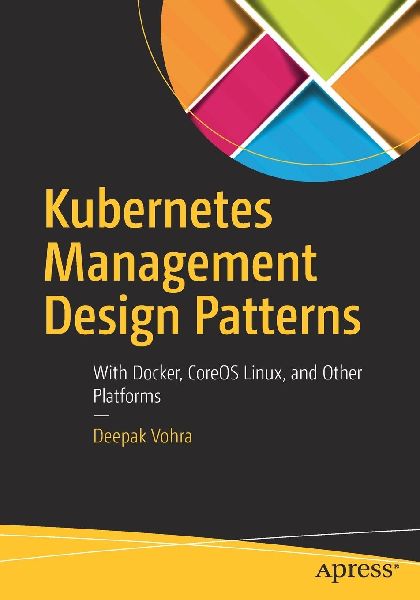
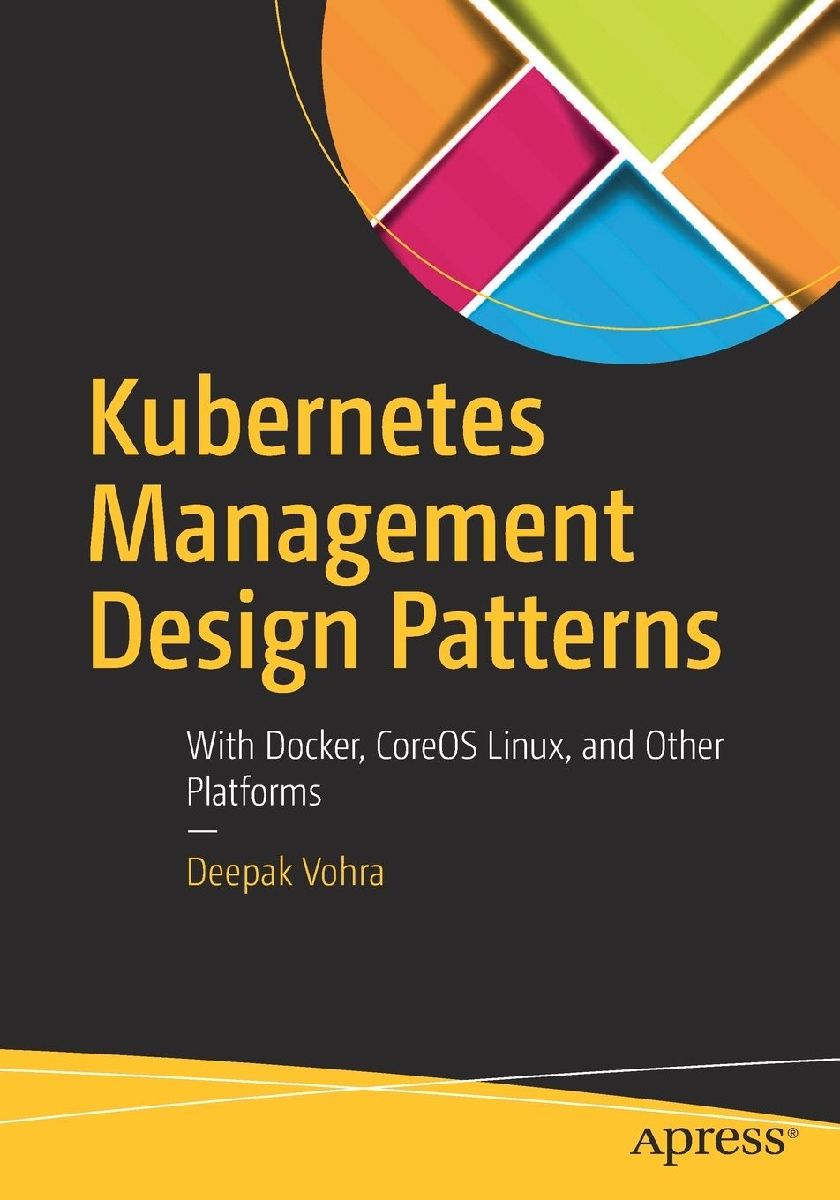
Kubernetes Management Design Patterns
With Docker, CoreOS Linux, and Other Platforms
von Deepak Vohra
- Einband
- Kartoniert
- Seiten
- 424
- Sprache
- Englisch
- Erschienen
- Januar 2017
- Verlag
- Apress
Buchbeschreibung
Take container cluster management to the next level; learn how to administer and configure Kubernetes on CoreOS; and apply suitable management design patterns such as Configmaps, Auto scaling, elastic resource usage, and high availability. Some of the other features discussed are logging, scheduling, rolling updates, volumes, service types, and multiple cloud provider zones.
Ganze Beschreibung lesenWeniger anzeigen
The atomic unit of modular container service in Kubernetes is a Pod, which is a group of containers with a common file system and networking. The Kubernetes Pod abstraction enables design patterns for containerized applications similar to object-oriented design patterns. Containers provide some of the same benefits as software objects such as modularity or packaging, abstraction, and reuse.
CoreOS Linux is used in the majority of the chapters and other platforms discussed are CentOS with OpenShift, Debian 8 (jessie) on AWS, and Debian 7 for Google Container Engine. CoreOS is the main focus becayse Docker is pre-installed on CoreOS out-of-the-box.
CoreOS: Supports most cloud providers (including Amazon AWS EC2 and Google Cloud Platform) and virtualization platforms (such as VMWare and VirtualBox) Provides Cloud-Config for declaratively configuring for OS items such as network configuration (flannel), storage (etcd), and user accounts Provides a production-level infrastructure for containerized applications including automation, security, and scalability Leads the drive for container industry standards and founded appc Provides the most advanced container registry, Quay Docker was made available as open source in March 2013 and has become the most commonly used containerization platform.
Kubernetes was open-sourced in June 2014 and has become the most widely used container cluster manager. The first stable version of CoreOS Linux was made available in July 2014 and since has become one of the most commonly used operating system for containers.
What You'll LearnUse Kubernetes with Docker Create a Kubernetes cluster on CoreOS on AWS Apply cluster management design patterns Use multiple cloud provider zones Work with Kubernetes and tools like AnsibleDiscover the Kubernetes-based PaaS platform Open Shift Create a high availability website Build a high availability Kubernetes master cluster Use volumes, configmaps, services, auto scaling, and rolling updates Manage compute resources Configure logging and scheduling Who This Book Is For Linux admins, CoreOS admins, application developers, and container as a service (CAAS) developers.
Some pre-requisite knowledge of Linux and Docker is required. Introductory knowledge of Kubernetes is required such as creating a cluster, creating a Pod, creating a service, and creating and scaling a replication controller. For introductory Docker and Kubernetes i
Inhaltsverzeichnis
- Part I Platforms
- 1. Kubernetes On AWS
- 2. Kubernetes on CoreOS
- 3. Kubernetes on Google Cloud Platform. Part 2 Administration and Configuration
- 4. Using Multiple Zones
- 5. Using the Tectonic Console
- 6. Using Volumes
- 7. Using Services
Ganzes Inhaltsverzeichnis anzeigen (17 Einträge)Weniger anzeigen
- 8. Using Rolling Updates
- 9. Scheduling Pods
- 10. Configuring Compute Resources
- 11. Using Configmaps
- 12. Setting Resource Quotas
- 13. Using Autoscaling
- 14. Configuring Logging. Part 3 High Availability
- 15. Using a HA Master with OpenShift
- 16. Developing a Highly Available Web Site
Details
- Erscheinungstermin
- Januar 2017
- Kategorie
- Fremdsprachige Bücher
- Einband
- Kartoniert
- Seiten
- 424
- Sprache
- Englisch
- Verlag
- Apress
- Format
- 25,4 × 17,8 cm
- Dicke
- 2,3 cm
- Gewicht
- 793 g
- EAN / ISBN-13
- 9781484225974
Über Deepak Vohra
Deepak Vohra is an Oracle Certified Associate and a Sun Certified Java Programmer. Deepak has published in Oracle Magazine, OTN, IBM developerWorks, ONJava, Dev
Source, Web
Mehr über Deepak VohraWeniger anzeigen
Logic Developer's Journal, XML Journal, Java Developer's Journal, FTP
Online, and devx.
Versand und Rückgabe
Standardversand: 1 bis 3 Werktage, 3,99 €, kostenlos ab 35 €
Liefergebiet: Deutschland
Rücksendung: 14 Tage Widerrufsrecht. Bei einem Widerruf tragen Sie die Kosten der Rücksendung. Bei einer Falschlieferung oder einem Fehler von uns erstatten wir Ihnen das Rückporto. Den Widerruf erklären Sie über den Knopf „Vertrag widerrufen“ im Fuß der Seite.
Hersteller und ProduktsicherheitSpringer Nature Customer Service Center GmbH
Springer Nature Customer Service Center GmbH
Europaplatz 3
69115 Heidelberg
Deutschland
ProductSafety@springernature.com
Mehr von Deepak Vohra
Ähnliche Titel

The Mythical Man-Month: Essays on Software Engineering, Anniversary Edition
Frederick Brooks
Kartoniert, Englisch
39,49 €
Bewertungen
Zu diesem Titel gibt es noch keine Bewertung. Bewerten kann, wer ihn bei uns gekauft hat.
So prüfen wir Bewertungen
Eine Bewertung kann bei uns nur abgeben, wer den Titel über sein Kundenkonto bei uns gekauft hat. Jede Bewertung ist fest mit der zugehörigen Bestellung verknüpft; anders kommt sie technisch gar nicht zustande. Deshalb trägt jede angezeigte Bewertung den Hinweis „Verifizierter Kauf". Wir zeigen positive wie negative Bewertungen und löschen nur bei Rechtsverstößen. Für Bewertungen gibt es keine Gegenleistung.
48,14 €Voraussichtlich 30. Nov. bis 2. Dez.