
Buch-OWLOnline-Buchhandel

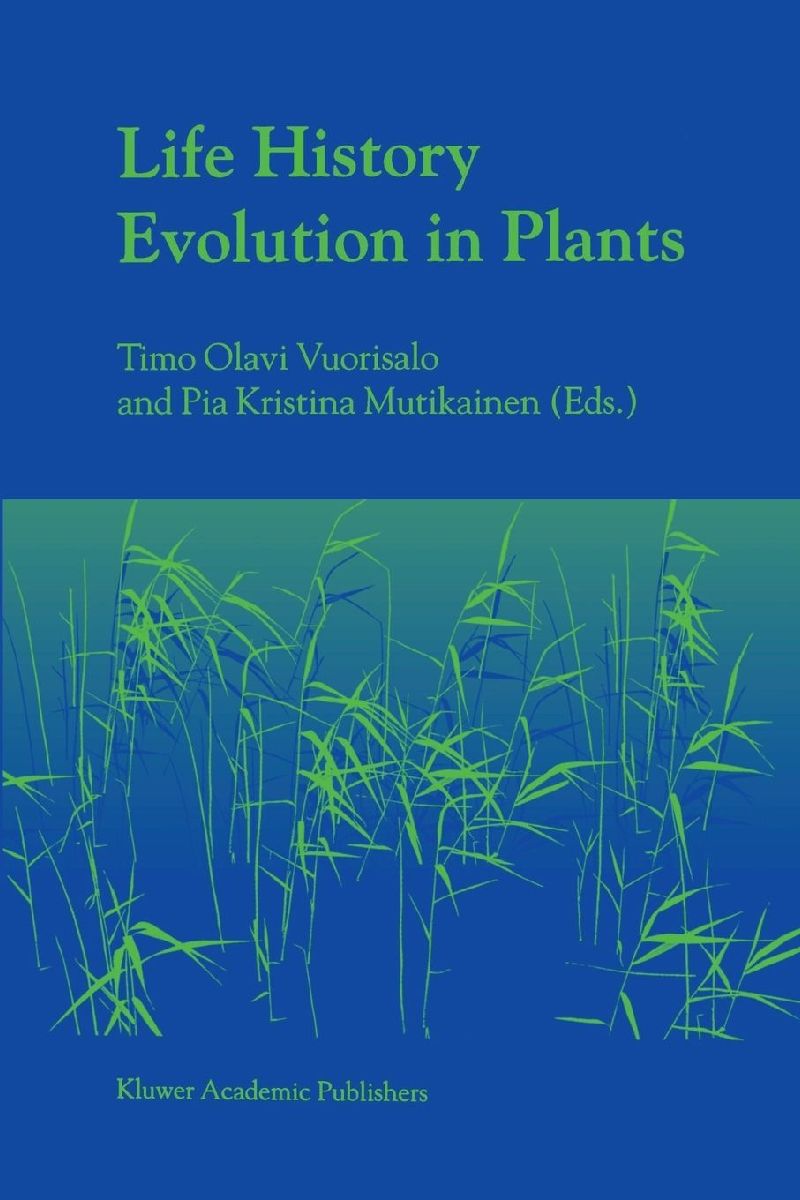
Life History Evolution in Plants

von P. Mutikainen (Hrsg.)

Herausgegeben von: P. Mutikainen, Herausgegeben von: Timo Olavi Vuorisalo

Einband
Kartoniert
Seiten
364
Sprache
Englisch
Erschienen
November 2001
Verlag
Springer

Buchbeschreibung

"The lack of discussion of the life histories of modular organisms is the weakness of this book that I most regret. … Modular organisms are different. " S. C. Steams: The Evolution of Life Histories (1992) Life-history theory endeavours to increase our understanding of the processe,s whereby the broad features of the life cycles of organisms, such as the timing and magnitude of reproduction, have evolved.

Ganze Beschreibung lesenWeniger anzeigen

Although reproductive traits have dominated as study objects due to their immediate importance for evolutionary success, much work has also been conducted on patterns of development, growth and senescence, as well as on the shifts in resource allocation related to these processes. The basic axiom of life-history theory is that patterns of life histories, such as reproductive traits, are subject to evolutionary explanation.

This idea can be traced back at least as far as Darwin's Origin of Species (1859). In his discussion of plant domestication, Darwin wrote: "I cannot doubt that the continued selection of slight variations, either in the leaves, the flowers, or the fruit, will produce races differing from each other chiefly in these characters".

Darwin was impressed by the success of plant breeders in moulding the growth and reproductive parameters of cultivated plants, and believed that natural selection could have a similar impact in natural populations.

Inhaltsverzeichnis

  • 1. Modularity and Plant Life Histories
  • 1.1. Modularity: the concept
  • 1.2. Life-history concepts and the modular hierarchy
  • 1.3. Modularity, the allocation principle, and trade-offs
  • 1.4. Modularity and sex
  • 1.5. Conclusion
  • 1.6. References
  • 2. Modelling and Measuring Plant Life Histories
Ganzes Inhaltsverzeichnis anzeigen (72 Einträge)Weniger anzeigen
  • 2.1. Introduction
  • 2.2. Transition matrix models
  • 2.3. Importance of demographic parameters in plants
  • 2.4. Actual variation in transition rates
  • 2.5. Trade-offs
  • 2.6. Plant life histories and the environment
  • 2.7. Concluding remarks
  • 2.8. References
  • 3. Fitness Interactions Among Plants: Optimal Defence and Evolutionary Game Theory
  • 3.1. Introduction
  • 3.2. Interactions between plants
  • 3.3. Plant defence theory
  • 3.4. Herbivory and interactions between plants
  • 3.5. Concluding remarks
  • 3.6. References
  • 4. Genetic Variation In Life-History Traits: Heritability Estimates within and Genetic Differentiation Among Populations
  • 4.1. The scope of this review
  • 4.2. Evidence for genetic variation in life-history traits within populations: field and greenhouse experiments
  • 4.3. Evidence for genetic differentiation among populations in life-history traits
  • 4.4. Suggestions for future research
  • 4.5. References
  • Appendix 4.1
  • Appendix 4.2
  • 5. Resource Allocation, Trade-Offs, and Reproductive Effort in Plants
  • 5.1. Introduction
  • 5.2. The measurement of reproductive effort
  • 5.3. Reproductive effort versus reproductive cost
  • 5.4. Phenotypic versus genetic variation in reproductive effort
  • 5.5. Developmental constraints
  • 5.6. Conclusions
  • 5.7. References
  • 6. Phenological and Developmental Costs of Male Sex Function in Hermaphroditic Plants
  • 6.1. Introduction
  • 6.2. Why male function may be surprisingly costly in hermaphrodites
  • 6.3. Next steps
  • 6.4. References.-7. Evolution of Plant Dispersal
  • 7.1. Introduction
  • 7.2. A brief history of dispersal studies
  • 7.3. Selection for dispersal
  • 7.4. Patterns of dispersal features
  • 7.5. Phylogenetic considerations
  • 7.6. Concluding remarks
  • 7.7. References
  • 8. Senescence in Plants
  • 8.1. Introduction
  • 8.2. Identifying senescence
  • 8.3. Senescence in plants
  • 8.4. Necessary conditions for the evolution of senescence
  • 8.5. Life-cycle models
  • 8.6. Conclusions
  • 8.7. References
  • 9. Pathogens and Plant Life Histories
  • 9.1. Introduction
  • 9.2. Interactions between pathogens and plant life histories
  • 9.3. Empirical evidence
  • 9.4. Conclusions
  • 9.5. References
  • 10. Impact of Herbivore Tolerance and Resistance on Plant Life Histories
  • 10.1. Introduction
  • 10.2. Mechanisms of tolerance
  • 10.3. Models of tolerance and resistance
  • 10.4. Evidence for costs of tolerance and resistance
  • 10.5. Discussion
  • 10.6. References

Details

Erscheinungstermin
November 2001
Kategorie
Fremdsprachige Bücher
Einband
Kartoniert
Seiten
364
Sprache
Englisch
Verlag
Springer
Format
23,5 × 15,5 cm
Dicke
2,0 cm
Gewicht
552 g
EAN / ISBN-13
9781402002793
Maßstabsgetreu: Deckel und Buchrücken neben einer Hand (18 cm).
Versand und Rückgabe

Standardversand: 1 bis 3 Werktage, 3,99 €, kostenlos ab 35 €

Liefergebiet: Deutschland

Rücksendung: 14 Tage Widerrufsrecht. Bei einem Widerruf tragen Sie die Kosten der Rücksendung. Bei einer Falschlieferung oder einem Fehler von uns erstatten wir Ihnen das Rückporto. Den Widerruf erklären Sie über den Knopf „Vertrag widerrufen“ im Fuß der Seite.

Hersteller und ProduktsicherheitSpringer Nature Customer Service Center GmbH
Springer Nature Customer Service Center GmbH
Europaplatz 3
69115 Heidelberg
Deutschland
ProductSafety@springernature.com

Ähnliche Titel

Bewertungen

Zu diesem Titel gibt es noch keine Bewertung. Bewerten kann, wer ihn bei uns gekauft hat.
So prüfen wir Bewertungen
Eine Bewertung kann bei uns nur abgeben, wer den Titel über sein Kundenkonto bei uns gekauft hat. Jede Bewertung ist fest mit der zugehörigen Bestellung verknüpft; anders kommt sie technisch gar nicht zustande. Deshalb trägt jede angezeigte Bewertung den Hinweis „Verifizierter Kauf". Wir zeigen positive wie negative Bewertungen und löschen nur bei Rechtsverstößen. Für Bewertungen gibt es keine Gegenleistung.
160,49 €Voraussichtlich 1. bis 3. Dez.

Inhalte ab 18

Cover von Titeln für Erwachsene, etwa erotische Romane, Manga oder Comics, bleiben unscharf, bis Sie bestätigen. Die Bestätigung gilt für alle Seiten und Tabs, bis Sie den Browser schließen.

Zurück zum Katalog