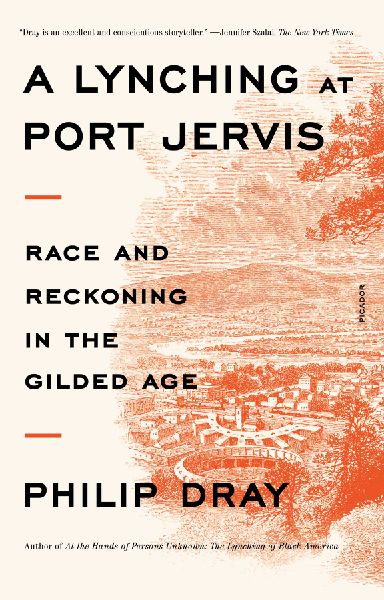
Lynching at Port Jervis
von Philip Dray
- Einband
- Kartoniert
- Seiten
- 274
- Sprache
- Englisch
- Erschienen
- Juni 2023
- Verlag
- St. Martins Press-3PL
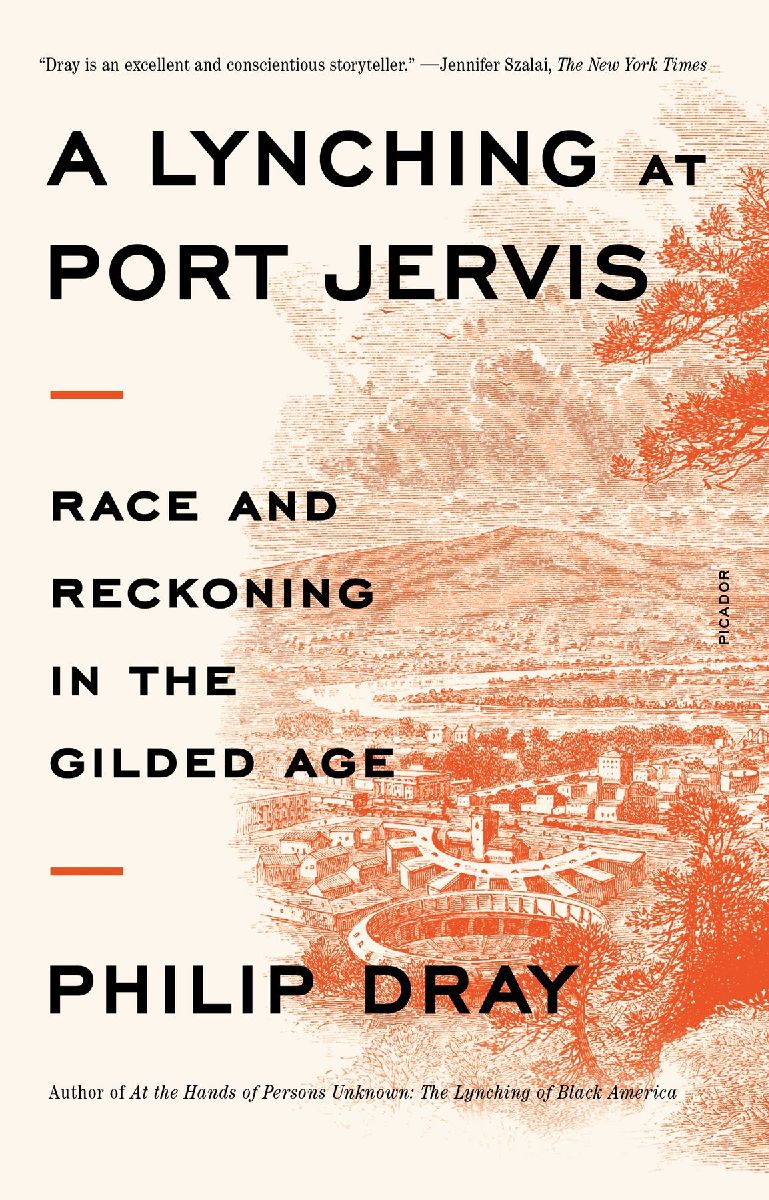
Buchbeschreibung
An account of a lynching that took place in New York in 1892, forcing the North to reckon with its own racism.
On June 2, 1892, in the small, idyllic village of Port Jervis, New York, a young Black man named Robert Lewis was lynched by a violent mob. The twenty-eight-year-old victim had been accused of sexually assaulting Lena McMahon, the daughter of one of the town's well-liked Irish American families.
Ganze Beschreibung lesenWeniger anzeigen
The incident was infamous at once, for it was seen as a portent that lynching, a Southern scourge, surging uncontrollably below the Mason-Dixon Line, was about to extend its tendrils north.
What factors prompted such a spasm of racial violence in a relatively prosperous, industrious upstate New York town, attracting the scrutiny of the Black journalist Ida B. Wells, just then beginning her courageous anti-lynching crusade? What meaning did the country assign to it? And of what did the incident forewarn?
Today, it's a terrible truth that the assault on the lives of Black Americans is neither a regional nor a temporary issue, but a national crisis. Black people are regularly killed by police, and the term "Jim Crow" has found new purpose in describing the harsh conditions of life for the formerly incarcerated, as well as the large-scale efforts to make voting inaccessible to Black people and other minority citizens.
That what drove the 2021 attack on the U.S. Capitol was a "mobocratic spirit"-a phrase Abraham Lincoln used as early as 1838 to describe vigilantism's corrosive effect on America-frightfully insinuates that mob violence is a viable means of effecting political change. These issues remain as deserving of our concern now as they did 130 years ago, when America turned its gaze to Port Jervis.
An alleged crime, a lynching, a misbegotten attempt at an official inquiry, and a past unresolved-in A Lynching at Port Jervis, the acclaimed historian Philip Dray revisits this time and place to consider its significance in our communal history and to show how justice cannot be achieved without an honest reckoning.
Inhaltsverzeichnis
- Introduction
- 1. June 2, 1892
- 2. City in Progress
- 3. A Shadow Cast Over My Sunshade
- 4. "I Am Not the Man"
- 5. Southern Methods Outdone
- 6. The Vigorous Pen of Ida B. Wells
- 7. Inquest
- 8. The Author of My Misfortune
- 9. The Blunders of Virtue
- Epilogue
- Bibliographical Essay
- Acknowledgments
Details
- Erscheinungstermin
- Juni 2023
- Kategorie
- Fremdsprachige Bücher
- Einband
- Kartoniert
- Seiten
- 274
- Sprache
- Englisch
- Verlag
- St. Martins Press-3PL
- Format
- 21,0 × 13,7 cm
- Dicke
- 1,6 cm
- Gewicht
- 371 g
- EAN / ISBN-13
- 9781250867131
Über Philip Dray
Philip Dray is the author of several books of American cultural and political history, including At the Hands of Persons Unknown: The Lynching of Black America, which won the Robert F.
Mehr über Philip DrayWeniger anzeigen
Kennedy Book Award and was a finalist for the Pulitzer Prize; There Is Power in a Union: The Epic Story of Labor in America; and Capitol Men: The Epic Story of Reconstruction Through the Lives of the First Black Congressmen. He is an adjunct professor in the Journalism + Design Department at Eugene Lang College of Liberal Arts. He lives in Brooklyn, New York.
Versand und Rückgabe
Standardversand: 1 bis 3 Werktage, 3,99 €, kostenlos ab 35 €
Liefergebiet: Deutschland
Rücksendung: 14 Tage Widerrufsrecht. Bei einem Widerruf tragen Sie die Kosten der Rücksendung. Bei einer Falschlieferung oder einem Fehler von uns erstatten wir Ihnen das Rückporto. Den Widerruf erklären Sie über den Knopf „Vertrag widerrufen“ im Fuß der Seite.
Hersteller und ProduktsicherheitSt. Martins Press-3PL
St. Martins Press-3PL
Europaallee 1
36244 Bad Hersfeld
Deutschland
gpsr@libri.de
Verantwortliche Person in der EU
Libri GmbHEuropaallee 1
36244 Bad Hersfeld
Deutschland
gpsr@libri.de
Mehr von Philip Dray
Ähnliche Titel



Bewertungen
Zu diesem Titel gibt es noch keine Bewertung. Bewerten kann, wer ihn bei uns gekauft hat.
So prüfen wir Bewertungen
Eine Bewertung kann bei uns nur abgeben, wer den Titel über sein Kundenkonto bei uns gekauft hat. Jede Bewertung ist fest mit der zugehörigen Bestellung verknüpft; anders kommt sie technisch gar nicht zustande. Deshalb trägt jede angezeigte Bewertung den Hinweis „Verifizierter Kauf". Wir zeigen positive wie negative Bewertungen und löschen nur bei Rechtsverstößen. Für Bewertungen gibt es keine Gegenleistung.
16,90 €Voraussichtlich 2. bis 4. Dez.