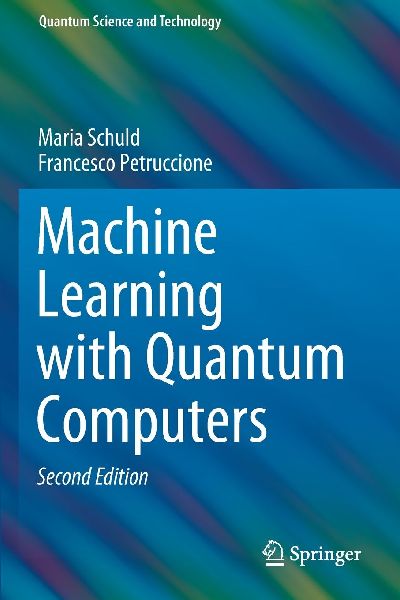
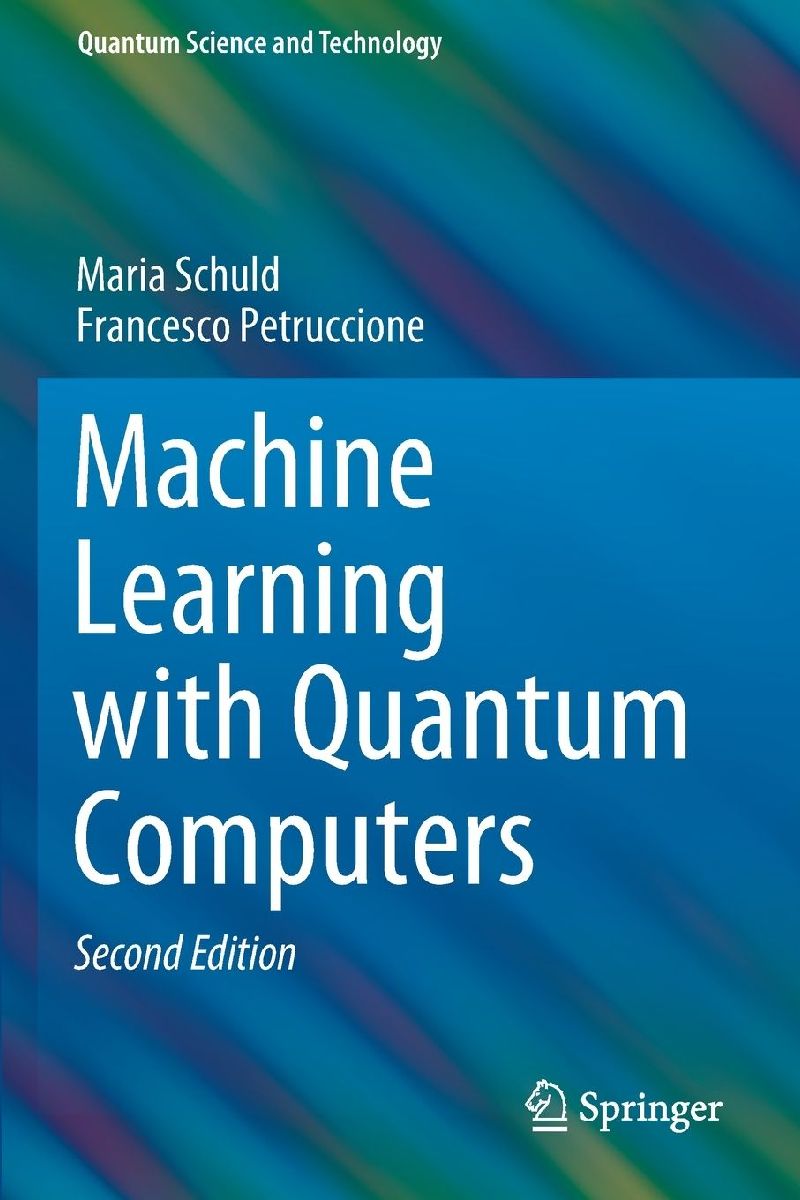
Machine Learning with Quantum Computers
von Maria Schuld und Francesco Petruccione
Aus der Reihe Quantum Science and Technology
- Einband
- Kartoniert
- Seiten
- 328
- Sprache
- Englisch
- Erschienen
- Oktober 2022
- Verlag
- Springer
Buchbeschreibung
This book offers an introduction into quantum machine learning research, covering approaches that range from "near-term" to fault-tolerant quantum machine learning algorithms, and from theoretical to practical techniques that help us understand how quantum computers can learn from data. Among the topics discussed are parameterized quantum circuits, hybrid optimization, data encoding, quantum feature maps and kernel methods, quantum learning theory, as well as quantum neural networks.
Ganze Beschreibung lesenWeniger anzeigen
The book aims at an audience of computer scientists and physicists at the graduate level onwards. The second edition extends the material beyond supervised learning and puts a special focus on the developments in near-term quantum machine learning seen over the past few years.
Inhaltsverzeichnis
- Chapter 1. Introduction
- Chapter 2. Machine Learning
- Chapter 3. Quantum Computing
- Chapter 4. Representing Data on a Quantum Computer
- Chapter 5. Variational Circuits as Machine Learning Models
- Chapter 6. Quantum Models as Kernel Methods
- Chapter 7. Fault-Tolerant Quantum Machine Learning
- Chapter 8. Approaches Based on the Ising Model
- Chapter 9. Potential Quantum Advantages
Details
- Erscheinungstermin
- Oktober 2022
- Kategorie
- Fremdsprachige Bücher
- Einband
- Kartoniert
- Seiten
- 328
- Sprache
- Englisch
- Verlag
- Springer
- Reihe
- Quantum Science and Technology
- Format
- 23,5 × 15,5 cm
- Dicke
- 1,8 cm
- Gewicht
- 499 g
- EAN / ISBN-13
- 9783030831004
Über Maria Schuld
Maria Schuld works as a researcher for the Toronto-based quantum computing start-up Xanadu. She received her Ph. D.
Mehr über Maria SchuldWeniger anzeigen
from the University of KwaZulu-Natal in 2017, where she began working on the intersection between quantum computing and machine learning in 2013. Besides her numerous contributions to the field, she is a co-developer for the open-source quantum machine learning software framework Penny Lane. Francesco Petruccione received his Ph. D. (1988) and "Habilitation" (1994) from the University of Freiburg, Germany. Since 2004, he has been a professor of Theoretical Physics at the University of KwaZulu-Natal in Durban, South Africa, where in 2007, he was granted a South African Research Chair for Quantum Information Processing and Communication. He is the co-author of "The Theory of Open Quantum Systems" (Oxford University Press, 2002) and has published more than 250 papers in refereed journals. Francesco Petruccione's research focuses on open quantum systems and quantum information processing and communication.
Versand und Rückgabe
Standardversand: 1 bis 3 Werktage, 3,99 €, kostenlos ab 35 €
Liefergebiet: Deutschland
Rücksendung: 14 Tage Widerrufsrecht. Bei einem Widerruf tragen Sie die Kosten der Rücksendung. Bei einer Falschlieferung oder einem Fehler von uns erstatten wir Ihnen das Rückporto. Den Widerruf erklären Sie über den Knopf „Vertrag widerrufen“ im Fuß der Seite.
Hersteller und ProduktsicherheitSpringer Nature Customer Service Center GmbH
Springer Nature Customer Service Center GmbH
Europaplatz 3
69115 Heidelberg
Deutschland
ProductSafety@springernature.com
Mehr aus der Reihe Quantum Science and Technology
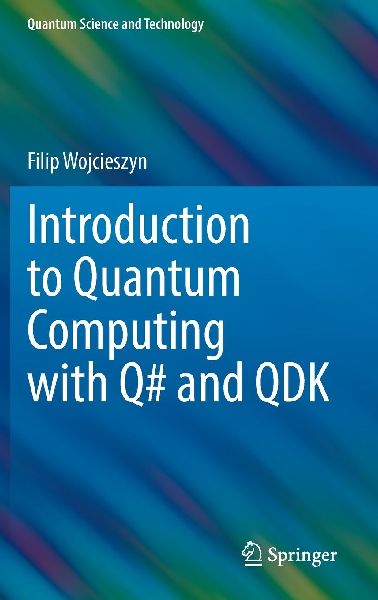
Introduction to Quantum Computing with Q# and QDK
Filip Wojcieszyn
Gebunden, Englisch, 2 Ausgaben
ab 64,19 €
Ähnliche Titel
Bewertungen
Zu diesem Titel gibt es noch keine Bewertung. Bewerten kann, wer ihn bei uns gekauft hat.
So prüfen wir Bewertungen
Eine Bewertung kann bei uns nur abgeben, wer den Titel über sein Kundenkonto bei uns gekauft hat. Jede Bewertung ist fest mit der zugehörigen Bestellung verknüpft; anders kommt sie technisch gar nicht zustande. Deshalb trägt jede angezeigte Bewertung den Hinweis „Verifizierter Kauf". Wir zeigen positive wie negative Bewertungen und löschen nur bei Rechtsverstößen. Für Bewertungen gibt es keine Gegenleistung.
139,09 €Voraussichtlich 30. Nov. bis 2. Dez.