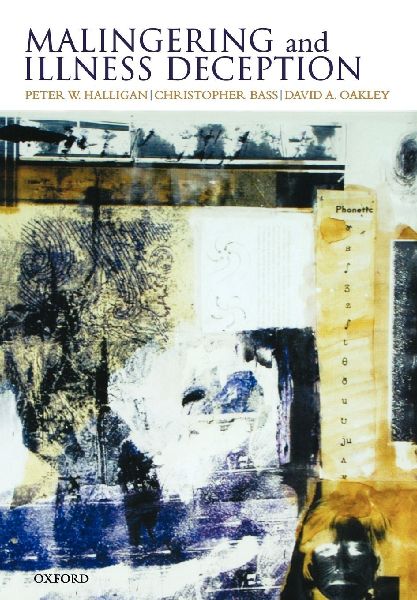
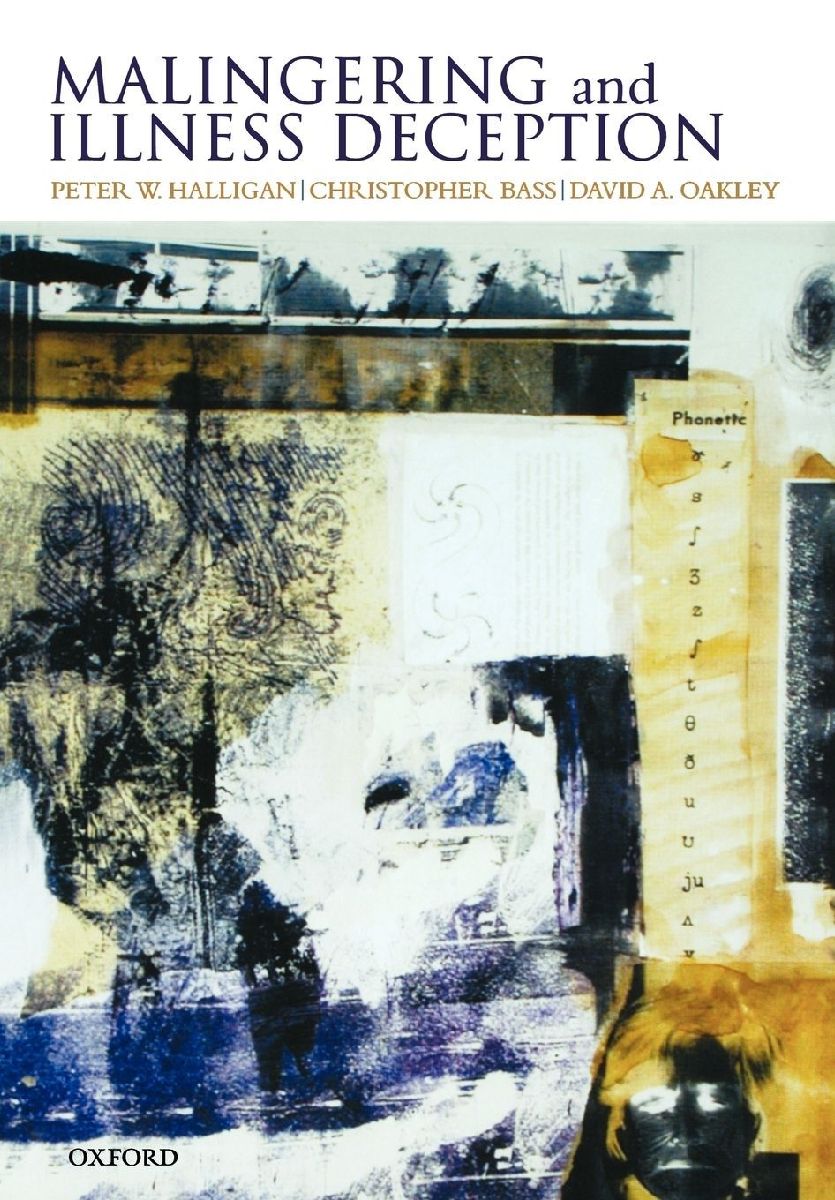
Malingering and Illness Deception
Herausgegeben von: Peter Halligan, Herausgegeben von: Christopher Bass, Herausgegeben von: David Oakley
- Einband
- Kartoniert
- Seiten
- 384
- Sprache
- Englisch
- Erschienen
- Oktober 2003
- Verlag
- OUP Oxford
Buchbeschreibung
Despite a rich and turbulent history spanning several centuries, malingering continues to be a controversial and neglected clinical condition that has significant implications for medical, social, legal and insurance interests.
Estimates of malingering - the wilful, intentional attempt to simulate or exaggerate illness in the pursuit of a consciously desired end - vary greatly, despite the fact that malingering is believed to contribute substantially to fraudulent health care and social welfare costs.
Ganze Beschreibung lesenWeniger anzeigen
There is little consensus about what would constitute a coherent assessment of malingering, and base rates have been difficult to establish. Malingering remains a difficult attribution to make not least since it falls outside the remit of the formal psychiatric classifications. Labelling a person as a malingerer however, has significant medico-legal, personal and economic ramifications for both subject and accuser.
Viewed in this way, malingering is not so much illness behaviour in search of a disease, as the manifestation of a conflict between personal and social values.
The aim of this book is to effect an integration of the different medical, forensic, neuropsychological, legal and social perspectives. The book provides an overview of progress in disparate fields relevant to the subject, including how recent social and neuroscience findings regarding volition, intentional states and theory of mind may have implications for informing detection, management and ultimately its explanation.
Inhaltsverzeichnis
- Section 1: Introduction
- 1: Halligan, Bass and Oakley: Wilful deception as illness behaviour
- Section 2: Historical, Military and Evolutionary Origins
- 2: Wessely: Malingering: historical perspectives
- 3: Palmer: Malingering, shirking and self-inflicted injuries in the military
- 4: Byrne and Stokes: Can monkeys malinger?
- Section 3: Conceptual, Methodological and Cultural Context
- 5: Rogers and Neumann: Conceptual issues and explanatory models of malingering
Ganzes Inhaltsverzeichnis anzeigen (35 Einträge)Weniger anzeigen
- 6: Malle: The social cognition of intentional action
- 7: Raine: Malingering and criminal behaviour as psychopathology
- 8: Faust: Alternatives to four clinical and research traditions in malingering detection
- 9: Prior and Wood: Characteristics of the sick role
- 10: Robinson: The contemporary cultural context for deception and malingering in Britain
- Section 4: Illness Deception and Clinical Practice
- 11: Libow: Illness falsification in children: pathways to prevention?
- 12: Sharpe: Distinguishing malingering from psychiatric disorders
- 13: Main: The nature of chronic pain: a clinical and legal challenge
- 14: Pankratz: The misadventures of wanderers and victims of traumas
- 15: Wynia: When the quantity of mercy is strained: US physicians' deception of insurers for patients
- Section 5: Medicolegal and Occupational Perspectives
- 16: Jones: Law, lies and videotape: malingering as a legal phenomenon
- 17: Mendelson: Outcome related compensation: in search of a new paradigm
- 18: Sprince: Malingering and the law: a third way?
- 19: Baron and Poole: How can organisations prevent illness deception among employees?
- Section 6: Contributions from Cognitive Neuroscience
- 20: Spence: Lying as an executive function
- 21: Oakley, Ward, Halligan and Frackowiak: Differential brain activations for malingered and subjectively 'real' paralysis
- Section 7: Disability Analysis and Insurance Medicine
- 22: Aylward: Origins, practice and limitiations of Disability Assessment Medicine
- 23: LoCascio: Malingering, insurance medicine and the medicalization of fraud
- Section 8: Deception Detection
- 24: Kitchen: Investigating benefit fraud and illness deception in the United Kingdom
- 25: Frederick: Neuropsychological tests and techniques that detect malingering
- 26: Craig and Hill: Misrepresentation of pain and facial expression
- 27: Vrij and Mann: Deceptive responses and detecting deceit
Details
- Erscheinungstermin
- Oktober 2003
- Kategorie
- Fremdsprachige Bücher
- Einband
- Kartoniert
- Seiten
- 384
- Sprache
- Englisch
- Verlag
- OUP Oxford
- Format
- 24,4 × 17,0 cm
- Dicke
- 2,1 cm
- Gewicht
- 661 g
- EAN / ISBN-13
- 9780198515548
Versand und Rückgabe
Standardversand: 1 bis 3 Werktage, 3,99 €, kostenlos ab 35 €
Liefergebiet: Deutschland
Rücksendung: 14 Tage Widerrufsrecht. Bei einem Widerruf tragen Sie die Kosten der Rücksendung. Bei einer Falschlieferung oder einem Fehler von uns erstatten wir Ihnen das Rückporto. Den Widerruf erklären Sie über den Knopf „Vertrag widerrufen“ im Fuß der Seite.
Hersteller und ProduktsicherheitOUP Oxford
OUP Oxford
Europaallee 1
36244 Bad Hersfeld
Deutschland
gpsr@libri.de
Verantwortliche Person in der EU
Libri GmbHEuropaallee 1
36244 Bad Hersfeld
Deutschland
gpsr@libri.de
Mehr von Peter Halligan

Ähnliche Titel
Caring for Mental Health in the Future
Scenario Committee on Mental Health and Mental Health Care
Kartoniert, Englisch
106,99 €
Bewertungen
Zu diesem Titel gibt es noch keine Bewertung. Bewerten kann, wer ihn bei uns gekauft hat.
So prüfen wir Bewertungen
Eine Bewertung kann bei uns nur abgeben, wer den Titel über sein Kundenkonto bei uns gekauft hat. Jede Bewertung ist fest mit der zugehörigen Bestellung verknüpft; anders kommt sie technisch gar nicht zustande. Deshalb trägt jede angezeigte Bewertung den Hinweis „Verifizierter Kauf". Wir zeigen positive wie negative Bewertungen und löschen nur bei Rechtsverstößen. Für Bewertungen gibt es keine Gegenleistung.
127,10 €Voraussichtlich 1. bis 3. Dez.