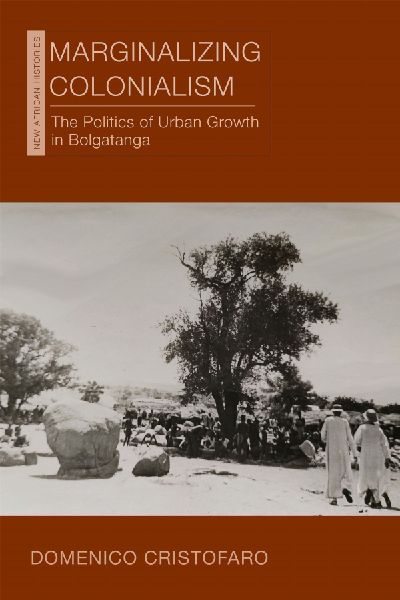
Marginalizing Colonialism
The Politics of Urban Growth in Bolgatanga
- Einband
- Gebunden
- Seiten
- 264
- Sprache
- Englisch
- Erschienen
- November 2026
- Verlag
- Ohio University Press
Buchbeschreibung
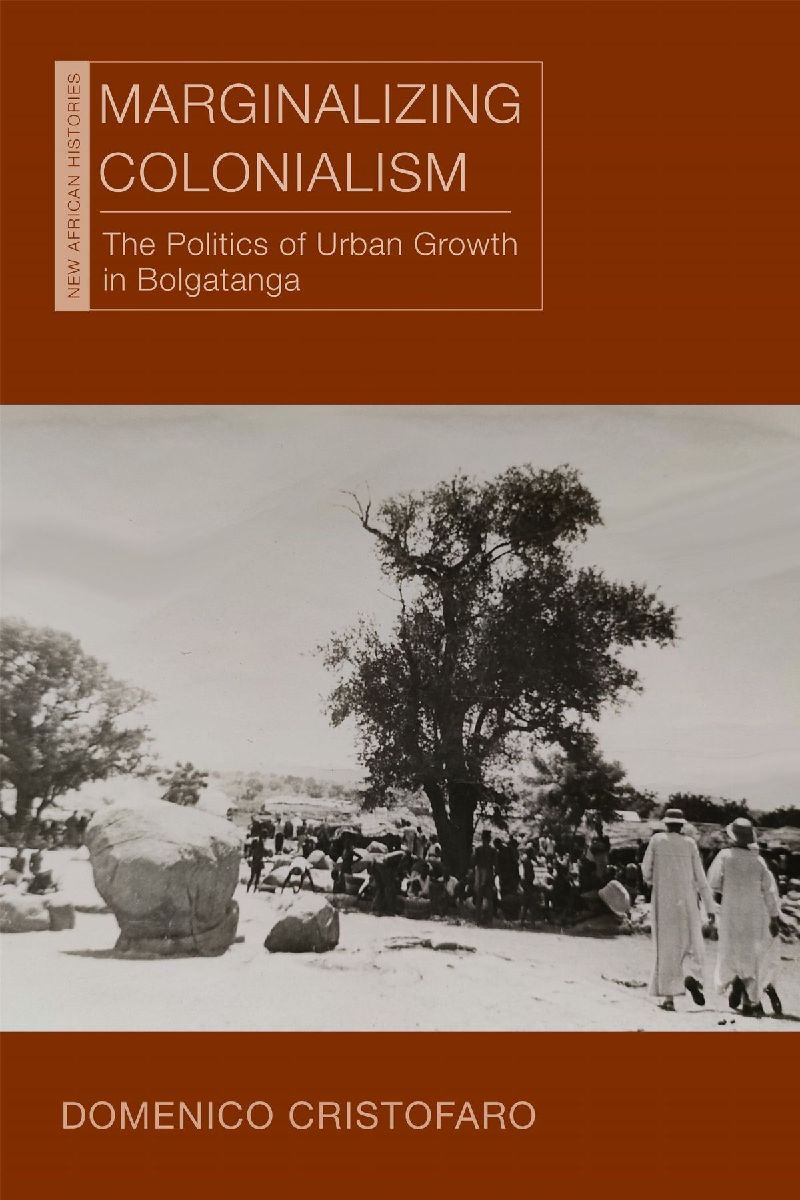
Marginalizing Colonialism offers a social, political, and spatial history of Bolgatanga, a northern Ghanaian town whose colonial-era urban development has been largely overlooked in African historiography.
Covering the late nineteenth century through the 1940s, the book traces how this settlement-long characterized as a remote hinterland of the British Empire-emerged as a commercial and political center in the region.
Ganze Beschreibung lesenWeniger anzeigen
Rather than depicting urbanization as an imperial project, it reveals how African actors actively shaped Bolgatanga’s growth and repeatedly marginalized, redirected, and evaded colonial authority.
The narrative follows Bolgatanga’s transformation from a dispersed settlement organized around kinship, ritual geographies, and earth shrines into a dynamic urban hub integrated into regional trade networks. Central to this shift were new land tenure systems, commercial expansion, and changing spatial practices.
By the 1930s and 1940s, trade in kola, groundnuts, livestock, and other goods surged, stimulated by new roads and increased mobility. Population growth converted farmland into leased plots, permanent buildings replaced older compounds, and areas around the market became focal points of economic and social life.
These changes were driven not by the colonial state but rather by local negotiations and strategic adaptations. Chiefs, earth priests, merchants, and migrant traders mediated and reshaped colonial policies, while missionaries and settlers concluded land agreements beyond official oversight. Roads and marketplaces, planned through negotiations between colonial officials and local chiefs and built largely through African labor, became central infrastructures of local economic life.
Even as colonial administrators sought to codify land tenure and regulate commerce, their influence remained largely nominal-a background presence in a story propelled by African initiative.
Drawing on archival documents, oral histories, and unpublished manuscripts by local intellectuals, Marginalizing Colonialism provides the first comprehensive urban history of Bolgatanga. It challenges dominant narratives in African colonial and urban historiography by exposing the silences of the colonial archive and highlighting the significance of medium-sized towns as arenas of negotiation and creativity.
Ultimately, the book argues that Bolgatanga’s urbanization was a locally driven process that redefined power, space, and governance-leaving a legacy that continues to shape the city’s identity and regional role today.
Inhaltsverzeichnis
- List of Illustrations ix Acknowledgments xi
- Note on Ethnonyms xv
- Introduction A Peripheral Town?
- Marginalizing Colonial Rule in Bolgatanga 1
- Chapter 1 A Town with No Center
- Trade Networks and the Politics of Dwelling 31
- Chapter 2 Defiance, Conflict, and Negotiation
- Accommodating the Colonial Army in Bolgatanga 57
Ganzes Inhaltsverzeichnis anzeigen (18 Einträge)Weniger anzeigen
- Chapter 3 Integrating the Colonial State
- Currencies, Mobility, and Trade Growth, 1899–1919 83
- Chapter 4 Rising to Paramountcy
- Centralization and the Negotiation of Boundaries, 1911–1920 107
- Chapter 5 Reconfiguring a Town
- Land Leasing and Commercial Growth, 1920–1950 133
- Epilogue 164
- Notes 169
- Bibliography 229
- Index 244
Details
- Erscheinungstermin
- November 2026
- Kategorie
- Fremdsprachige Bücher
- Einband
- Gebunden
- Seiten
- 264
- Sprache
- Englisch
- Verlag
- Ohio University Press
- Format
- 22,9 × 15,2 cm
- EAN / ISBN-13
- 9780821427095
Über Domenico Cristofaro
Domenico Cristofaro is a research fellow and adjunct lecturer at the University of Bologna. A historian of Africa with an anthropological background, he researches and writes about planning, political …
Mehr über Domenico CristofaroWeniger anzeigen
A historian of Africa with an anthropological background, he researches and writes about planning, political change, economic history, gender, and labor history. He has published in journals such as The Journal of African History and African Economic History.
Versand und Rückgabe
Standardversand: 1 bis 3 Werktage, 3,99 €, kostenlos ab 35 €
Liefergebiet: Deutschland
Rücksendung: 14 Tage Widerrufsrecht. Bei einem Widerruf tragen Sie die Kosten der Rücksendung. Bei einer Falschlieferung oder einem Fehler von uns erstatten wir Ihnen das Rückporto. Den Widerruf erklären Sie über den Knopf „Vertrag widerrufen“ im Fuß der Seite.
Hersteller und ProduktsicherheitMare Nostrum Group B.V.
Ähnliche Titel
Bewertungen
Zu diesem Titel gibt es noch keine Bewertung. Bewerten kann, wer ihn bei uns gekauft hat.
So prüfen wir Bewertungen
Eine Bewertung kann bei uns nur abgeben, wer den Titel über sein Kundenkonto bei uns gekauft hat. Jede Bewertung ist fest mit der zugehörigen Bestellung verknüpft; anders kommt sie technisch gar nicht zustande. Deshalb trägt jede angezeigte Bewertung den Hinweis „Verifizierter Kauf". Wir zeigen positive wie negative Bewertungen und löschen nur bei Rechtsverstößen. Für Bewertungen gibt es keine Gegenleistung.
128,50 €Erscheint 11/2026