Mathematical Location and Land Use Theory
An Introduction
von Tönu Puu
Aus der Reihe Advances in Spatial Science
- Einband
- Gebunden
- Seiten
- 376
- Sprache
- Englisch
- Erschienen
- Mai 2003
- Verlag
- Springer

Buchbeschreibung
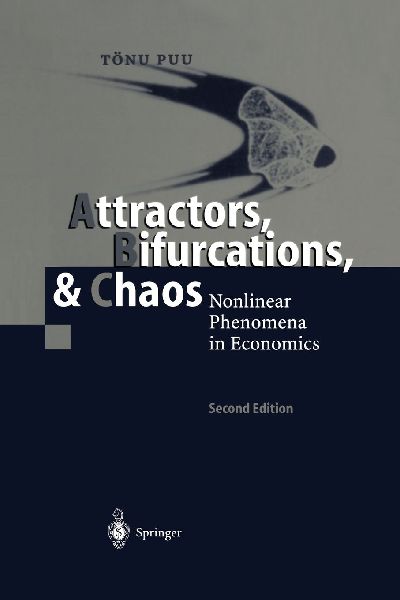
This second edition covers all main topics of spatial economics, plant location, and the theory of nested market areas.
The book starts from the classical models of the space economy which are stated in terms of precise mathematical models. Especially, the book offers a lavish supply of computer graphics to make the results easily understandable.
Ganze Beschreibung lesenWeniger anzeigen
Extracts from reviews to the first edition:"This book is an excellent introduction to the theory of continuous location of economic activities in two-dimensional space based on differential equations and to their solution by vector calculus methods. As Puu states "good science is to be easily understood.
This book is, indeed, a lucid and easily readable introduction to the fundamental concepts of spatial economic theory and the differential calculus machinery of the continuous transportation model."K. C. Mosler in "Location Science" "This book represents an honest attempt at introducing spatial economic theory. The author does not appear to be interested in showing off his obvious mathematical skills.
His intention is to summarize the accumulated knowledge in the field and present the main results in a simple manner. He does an admirable job. Of help are the high-quality graphics, the omission of semicooked ideas and messy results, and the author's extensive experience on the subject over a long period of time."P. S. Kanaroglou in "Environment and Planning"
Inhaltsverzeichnis
- Prologue
- 1 Location Theory
- 1.1 The Weber Problem
- 1.2 Pick's Construction
- 1.3 Location and Substitution
- 1.4 Non-Euclidean Metrics
- 2 Optimal Routes
- 2.1 Flows and Routes
Ganzes Inhaltsverzeichnis anzeigen (99 Einträge)Weniger anzeigen
- 2.2 Parameterized Paths
- 2.3 Shortest Paths and Euler's Equation
- 2.4 A Simpler Case
- 2.5 An Example
- 2.6 Another Example
- 2.7 Fermat's Principle and Snell's Law
- 2.8 Geodesics on Curved Surfaces
- 2.9 Generalizations: Several Functions
- 2.10 Generalizations: Constraints
- 2.11 Coordinate Transformations
- 2.12 The Isoperimetric Problem
- 3 Flows in the Space Economy
- 3.1 Flows in One Dimension
- 3.2 Flows in Two Dimensions
- 3.3 Euler's Equations Revisited
- 3.4 Minimal Surfaces
- 3.5 Generalizations
- 3.6 Beckmann's Flow Model
- 3.7 Uniqueness in the Beckmann Model
- 3.8 Aggregate Values
- 4 Market Areas
- 4.1 From Launhardt to Lösch
- 4.2 Compactness and Stability
- 4.3 Optimality Versus Stability
- 4.4 Nesting of Market Areas
- 4.5 Rank-Size Relations
- 4.6 Price Policies
- 4.7 Mill Pricing
- 4.8 Discriminatory Pricing
- 4.9 Uniform Delivery Price
- 4.10 Oligopoly Theory
- 4.11 Local Oligopoly
- 4.12 Disjoint Monopolies
- 4.13 The Hotelling Case
- 4.14 Equilibrium for Two Identical Firms
- 4.15 Crowding and Price Undercutting
- 4.16 Oligopoly in 2D: Equilibrium
- 4.17 Oligopoly in 2D: Price Cuts
- 4.18 Oligopoly in 2D: Cutting Out Competitors
- 4.19 Oligopoly in 2D: Touching Monopolies
- 4.20 Oligopoly in 2D: Partial Changes of Location
- 4.21 Public Utility Location
- 4.22 Demand: One Dimension
- 4.23 Bifurcations
- 4.24 Nonlinear Demand
- 4.25 Two Dimensions: Circles
- 4.26 Two Dimensions: Polygons
- 5 Land Use
- 5.1 Von Thünen's Model
- 5.2 Generalization: Production
- 5.3 Generalization: Transportation
- 5.4 Beckmann's Flow Model Revisited
- 5.5 Differential Equations in the Plane
- 5.6 Structural Stability Defined
- 5.7 The Square Flow Grid
- 5.8 Triangular/Hexagonal Grids
- 5.9 Changes of Structure
- 5.10 Fractal Rent Landscapes
- 6 Commuting and Migrating
- 6.1 The Gravity Model
- 6.2 Traffic: Linear Routes
- 6.3 Traffic: Spiral Routes
- 6.4 The Entropy Model
- 6.5 Hotelling's Migration Model
- 6.6 Stability of Hotelling's Model
- 6.7 Hotelling's Model with Production
- 6.8 Pure Growth in the Model with Production
- 6.9 Stationary Solutions for the Model with Production
- 6.10 Travelling Waves for the Model with Production
- 7 Cycles, Growth, and Equilibrium
- 7.1 Spatial Growth
- 7.2 Spatial Business Cycles
- 7.3 Equilibrium of the Beckmann Model
- 7.4 Stability
- 8 Transportation Networks
- 8.1 Transportation Cost Metrics
- 8.2 Nested Networks
- 8.3 Detours and Accessibility
- 8.4 Topological Considerations
- 8.5 Networks in Reality
- 8.6 Fractal Networks
- 8.7 Central Networks
- 8.8 The Number of Radials
- 8.9 Approximations
- 8.10 Bifurcations of Radials
- 8.11 Curved Bifurcations
- 8.12 Accessibility
- Epilogue
- List of Figures
- Author Index
- Glossary of Formulas
Details
- Erscheinungstermin
- Mai 2003
- Kategorie
- Fremdsprachige Bücher
- Einband
- Gebunden
- Seiten
- 376
- Sprache
- Englisch
- Verlag
- Springer
- Reihe
- Advances in Spatial Science
- Format
- 24,1 × 16,0 cm
- Dicke
- 2,5 cm
- Gewicht
- 677 g
- EAN / ISBN-13
- 9783540009313
Über Tönu Puu
Tõnu Puu is a Swedish economist of Estonian descent. Puu worked as acting full professor of Economics at Uppsala University 1963-1970, where he received his Ph. D.
Mehr über Tönu PuuWeniger anzeigen
and was appointed ordinary Professor of Economics by Royal patent at Umeå University in 1971. After emeritation in 2001, he works as senior professor at the Centre for Regional Science (CERUM). In 2014 he was awarded the Doctor Jubilaris of Uppsala University. Puu has published over 20 books and 120 scholarly articles in economics, philosophy and mathematics. Topics studied include portfolio selection, investment and production, philosophy of science (in collaboration with Sir Karl Popper), spatial economics, economics of the arts, nonlinear dynamic processes, oligopoly and business cycles.
Puu was Founder and Director 1987-2001 of the Nordic Baroque Music Festival and received in that capacity the Prize for extraordinary promotion of culture, awarded by the county government. Other musical interests are playing theviola da gamba, and being a "luthier", making his own instruments.
Versand und Rückgabe
Standardversand: 1 bis 3 Werktage, 3,99 €, kostenlos ab 35 €
Liefergebiet: Deutschland
Rücksendung: 14 Tage Widerrufsrecht. Bei einem Widerruf tragen Sie die Kosten der Rücksendung. Bei einer Falschlieferung oder einem Fehler von uns erstatten wir Ihnen das Rückporto. Den Widerruf erklären Sie über den Knopf „Vertrag widerrufen“ im Fuß der Seite.
Hersteller und ProduktsicherheitSpringer Nature Customer Service Center GmbH
Springer Nature Customer Service Center GmbH
Europaplatz 3
69115 Heidelberg
Deutschland
ProductSafety@springernature.com
Mehr von Tönu Puu



Mehr aus der Reihe Advances in Spatial Science
Modeling Transportation Logistics Systems in Post-Conflict Zones
Kieran Donaghy (Hrsg.)
Gebunden, Englisch
192,59 €
Ähnliche Titel



Bewertungen
Zu diesem Titel gibt es noch keine Bewertung. Bewerten kann, wer ihn bei uns gekauft hat.
So prüfen wir Bewertungen
Eine Bewertung kann bei uns nur abgeben, wer den Titel über sein Kundenkonto bei uns gekauft hat. Jede Bewertung ist fest mit der zugehörigen Bestellung verknüpft; anders kommt sie technisch gar nicht zustande. Deshalb trägt jede angezeigte Bewertung den Hinweis „Verifizierter Kauf". Wir zeigen positive wie negative Bewertungen und löschen nur bei Rechtsverstößen. Für Bewertungen gibt es keine Gegenleistung.
160,49 €Voraussichtlich 4. bis 8. Dez.