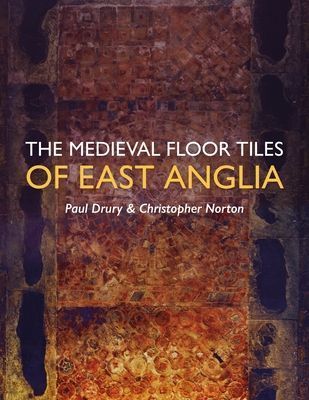
Medieval Floor Tiles of East Anglia
von Paul Drury und Christopher Norton
- Einband
- Gebunden
- Seiten
- 416
- Sprache
- Englisch
- Erschienen
- Januar 2028
- Verlag
- Oxbow Books Limited
Buchbeschreibung
The medieval floor tiles of East Anglia span a period of some four centuries and include an unusual variety of decorative techniques and styles.
This study traces their manufacture and use in the historic counties of Essex, Suffolk, Norfolk and Cambridgeshire, identifying their distinctive characteristics in comparison with other regions of England, Flanders and northern France.
Ganze Beschreibung lesenWeniger anzeigen
The tiles are also considered in the context of other ceramic building materials in a region that adopted their use early, as well as their relationship to the other decorative arts and crafts that contributed to the appearance of medieval interiors.
The sporadic introduction of glazed tiles, some decorated with compass-incised or high relief designs, began around the mid-12th century at high-status royal and monastic sites. The use of decorative tiles accelerated during the mid-late 13th century, with new types appearing, including mosaic, relief and two-color tiles.
While London was an important influence and source, production became established elsewhere, seemingly focused on supplying monastic houses.
The first half of the 14th century saw settled production at a range of scales, with sub-regional styles emerging, alongside widening patronage including many parish churches. Some production groups have wide distributions, the designs influenced by earlier styles but introducing new elements and new techniques, like line-impressed mosaics and stenciled slip designs. They existed alongside other production centers serving smaller areas with eclectic derivative designs.
In the second half of the 14th century, there were fewer centers mostly producing tiles by less labor-intensive means. The import of small plain color tiles (and occasionally decorated ones) from Flanders, laid checker-wise, grew in importance; by the end of the century almost all parish churches and many burgess houses had some glazed tiles.
Subsequently large plain tiles, imported and local, became the norm, enlivened by very localized production of decorated large quarries, until the use of glaze on earthenware tiles ceased during the later 16th century.
Details
- Erscheinungstermin
- Januar 2028
- Kategorie
- Fremdsprachige Bücher
- Einband
- Gebunden
- Seiten
- 416
- Sprache
- Englisch
- Verlag
- Oxbow Books Limited
- Format
- 29,7 × 21,1 cm
- EAN / ISBN-13
- 9781789259834
Über Paul Drury
Paul Drury specialises in an archaeological approach to understanding major buildings, particularly of the 16th and 17th centuries.
Mehr über Paul DruryWeniger anzeigen
His interest in floor tiles originated in contextualising the products of a medieval tile factory he excavated in Essex in 1974. He has published widely and served as President of the Society of Antiquaries, 2019-2021.
Versand und Rückgabe
Standardversand: 1 bis 3 Werktage, 3,99 €, kostenlos ab 35 €
Liefergebiet: Deutschland
Rücksendung: 14 Tage Widerrufsrecht. Bei einem Widerruf tragen Sie die Kosten der Rücksendung. Bei einer Falschlieferung oder einem Fehler von uns erstatten wir Ihnen das Rückporto. Den Widerruf erklären Sie über den Knopf „Vertrag widerrufen“ im Fuß der Seite.
Hersteller und ProduktsicherheitOxbow Books Limited
Oxbow Books Limited
Europaallee 1
36244 Bad Hersfeld
Deutschland
gpsr@libri.de
Verantwortliche Person in der EU
Libri GmbHEuropaallee 1
36244 Bad Hersfeld
Deutschland
gpsr@libri.de
Mehr von Paul Drury


Cambridge Global English Workbook 2 with Digital Access (1 Year)
Paul Drury
Kartoniert, Englisch
14,50 €
Bewertungen
Zu diesem Titel gibt es noch keine Bewertung. Bewerten kann, wer ihn bei uns gekauft hat.
So prüfen wir Bewertungen
Eine Bewertung kann bei uns nur abgeben, wer den Titel über sein Kundenkonto bei uns gekauft hat. Jede Bewertung ist fest mit der zugehörigen Bestellung verknüpft; anders kommt sie technisch gar nicht zustande. Deshalb trägt jede angezeigte Bewertung den Hinweis „Verifizierter Kauf". Wir zeigen positive wie negative Bewertungen und löschen nur bei Rechtsverstößen. Für Bewertungen gibt es keine Gegenleistung.
92,50 €Erscheint 01/2028