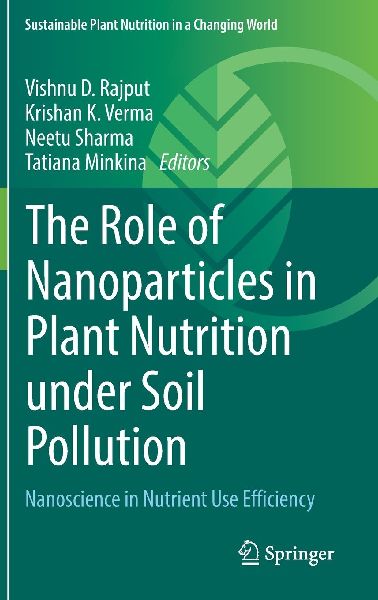
The Role of Nanoparticles in Plant Nutrition under Soil Pollution
Vishnu D. Rajput (Hrsg.)
Gebunden, Englisch, 2 Ausgaben
ab 181,89 €
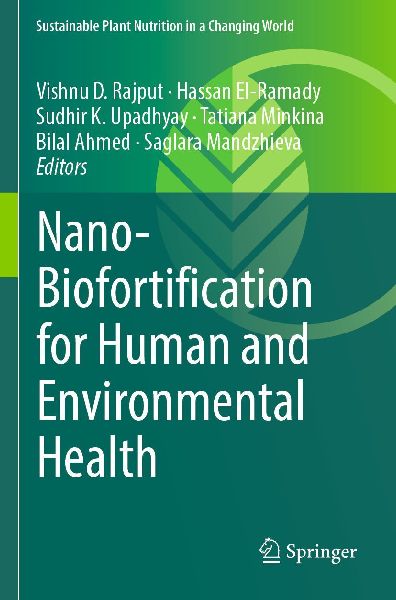
Herausgegeben von: Vishnu D. Rajput, Herausgegeben von: Hassan El-Ramady, Herausgegeben von: Sudhir K. Upadhyay, und weitere
Aus der Reihe Sustainable Plant Nutrition in a Changing World
Nanotechnology has shown great potential to alleviate increasing pressure to meet food needs for our increasing human population, Novel agricultural innovations are required to enhance the health of edible crops and per unit area yield without impacting the associated environment in a negative way.
Recent advancements in nanotechnology-based agricultural solutions have proven to help overcome the problems in agriculture that are associated with run-off of essential fertilizers from agricultural soils, low nutrient accumulation by crops, as well as to control insects, pests, and seasonal biotic factors, treatment of wastewater used for irrigation, plant uptake of xenobiotics (heavy metals, pesticides, industrial chemicals, drugs, and so on) that may be present in contaminated soils.
Additionally, the consumption of such food crops may result in malnourishment and plant-mediated transfer of toxic substances among humans especially in underprivileged and rural populations. Agents to stimulate plant growth include various types of nanomaterials such as carbon nanotubes, metal, and metal-oxide nanoparticles.
Applications of particular nutrients or elements in crop plants can be shown to aid human nourishment (either by directly inducing its uptake or indirectly through enhancing the intracellular levels of other associated elements that ultimately boost the synthesis of the desired nutrient in plants). It is also important to consider the competence and fate of nanomaterials in soil ecosystems.
The entry route of nanomaterials into the environment includes both natural and anthropogenic sources. In order to achieve sustainable and safe use of nanotechnological products in agriculture, similar environmental conditions must be simulated on lab scale with the careful selection of organisms related to agriculture.
Thus, emphasis should be placed on the judicial use of nano-enabled products without compromising the sustainability of the environment and human health. This comprehensive book highlights recent field research as well as contributions from academicians in the lab. This book addresses the major aspects related to nanotechnology, biofortification of crops, and human and environmental health.
Standardversand: 1 bis 3 Werktage, 3,99 €, kostenlos ab 35 €
Liefergebiet: Deutschland
Rücksendung: 14 Tage Widerrufsrecht. Bei einem Widerruf tragen Sie die Kosten der Rücksendung. Bei einer Falschlieferung oder einem Fehler von uns erstatten wir Ihnen das Rückporto. Den Widerruf erklären Sie über den Knopf „Vertrag widerrufen“ im Fuß der Seite.
Vishnu D. Rajput (Hrsg.)
Gebunden, Englisch, 2 Ausgaben
ab 181,89 €
Vishnu D. Rajput (Hrsg.)
Kartoniert, Englisch, 2 Ausgaben
ab 341,20 €
Vishnu D. Rajput (Hrsg.)
Gebunden, Englisch, 2 Ausgaben
ab 192,59 €
Sheikh Adil Edrisi (Hrsg.)
Gebunden, Englisch, 2 Ausgaben
ab 192,59 €
Renato de Mello Prado (Hrsg.)
Gebunden, Englisch, 2 Ausgaben
ab 213,99 €
R. Z. Sayyed (Hrsg.)
Gebunden, Englisch, 2 Ausgaben
ab 320,99 €
Mohammad Anwar Hossain (Hrsg.)
Gebunden, Englisch, 2 Ausgaben
ab 213,99 €
Kohji Mitsubayashi (Hrsg.)
Gebunden, Englisch, 2 Ausgaben
ab 192,59 €
Zu diesem Titel gibt es noch keine Bewertung. Bewerten kann, wer ihn bei uns gekauft hat.