
History of Rabies in the Americas: From the Pre-Columbian to the Present, Volume IV
Charles E. Rupprecht (Hrsg.)
Gebunden, Englisch
213,99 €
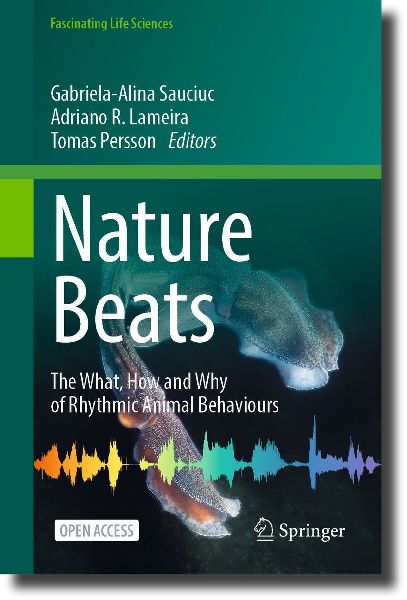
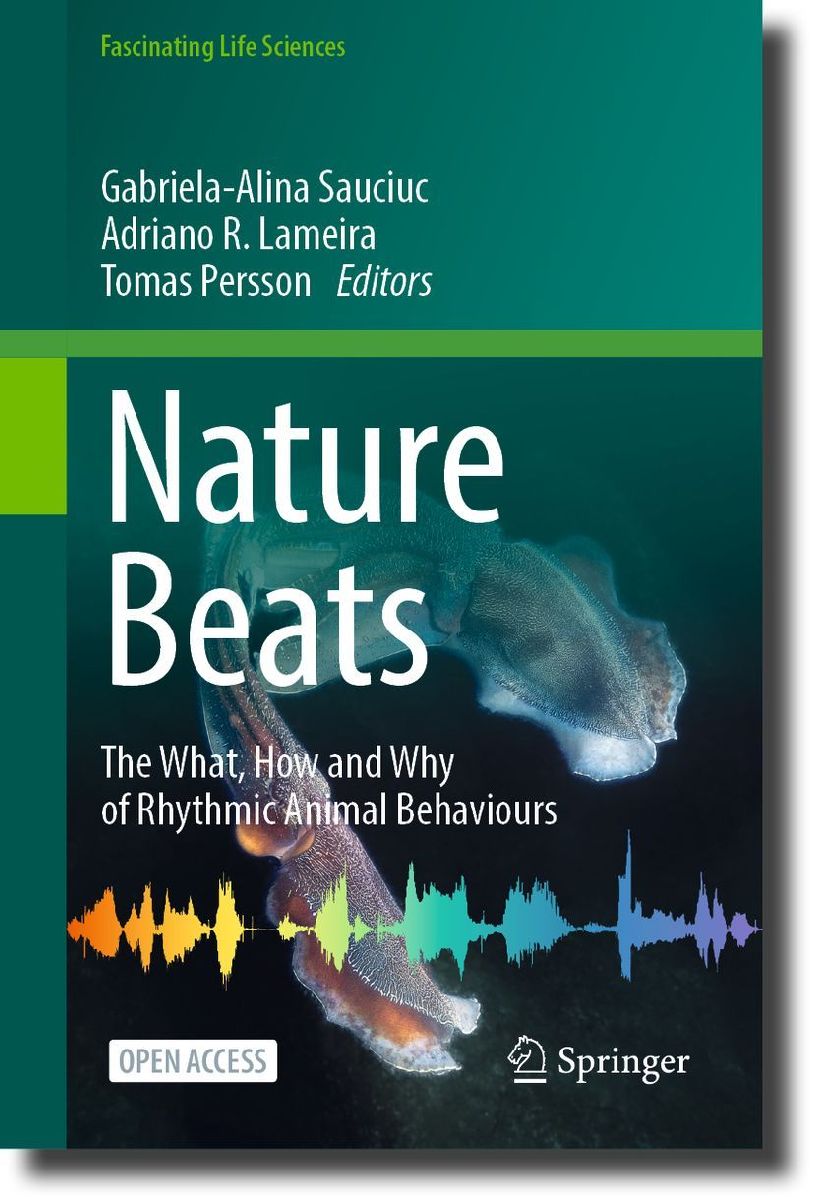
The What, How and Why of Rhythmic Animal Behaviours
von Gabriela-Alina Sauciuc (Hrsg.)
Herausgegeben von: Gabriela-Alina Sauciuc, Herausgegeben von: Adriano R. Lameira, Herausgegeben von: Tomas Persson
Aus der Reihe Fascinating Life Sciences
From drumming woodpeckers and chorusing frogs, to dancing birds and synchronized fireflies, the natural world is full of rhythm.
But what do these beats and pulses really mean? And what can they tell us about the evolution of music?
This open access book offers the first comprehensive, interdisciplinary exploration of rhythmic behavior across the animal kingdom, bringing together leading researchers in comparative cognition, ethology, evolutionary musicology, neurobiology, and related fields.
The volume examines how animals use timing, tempo, and patterned coordination to communicate, compete, and coordinate, revealing rhythmicity as a powerful, yet often overlooked dimension of animal signaling.
Through comparative analysis, the book illuminates how rhythmicity may have evolved, what adaptive roles it plays across taxa, and how studying non-human species can shed light on the prehistoric origins of human musicality. Within this evolutionary perspective, it provides unique insight into how rhythmic behaviors arise from complex interactions among muscular and neural processes, perception, affective states, ecological pressures, and social demands.
These intertwined mechanisms reveal the motor and cognitive complexity of rhythmic behaviors and, when considered in functional context, refine our understanding of the communicative and emotional significance of rhythm.
In addition to syntheses of established findings, Nature Beats presents exciting new data from ongoing research, offering readers a glimpse into discoveries as they unfold. Nature Beats will be of particular interest to a broad readership fascinated by animal behavior, music, and dance expression, as well as to researchers in comparative cognition, ethology, evolutionary musicology, biomusicology, and the behavioural and cognitive sciences more broadly.
It offers a rigorous yet integrative perspective on rhythmic behaviour, providing new insights into how – and why – rhythm emerges across species.
Gabriela-Alina Sauciuc is a cognitive scientist and senior researcher at Lund University. Her work examines the developmental and evolutionary foundations of social cognition, communication, and …
Her work examines the developmental and evolutionary foundations of social cognition, communication, and behaviouralcoordination, spanning studies with human infants, great apes, and other primates, on topics such as imitation, social learning, cooperation, imagination, and musicality. In recent years, she has focused much on integrative work regarding the biological, developmental, and ecological bases of rhythmic communication, including neuromuscular and environmental constraints, developmental trajectories of rhythmicity, and large scale comparative analyses across animal taxa. Her work aims to bridge comparative cognition, developmental science, and neuroethology to advance understanding of the evolutionary roots of rhythmic competence.
Adriano R. Lameira is Associate Professor of Evolutionary Psychology at the University of Warwick and a UK Research & Innovation Future Leaders Fellow. A primatologist and cognitive scientist, his research investigates the evolutionary origins of language, music and intelligence, with a particular focus on great ape vocal communication, cognition and combinatorics. Drawing on long-term fieldwork with wild orangutans in Sumatra and Borneo, complemented with captive work with all great ape genera across international accredited zoos, Lameira combines behavioural observation and innovative experimental design to test how the production and perception of consonant-like and vowel-like calls may have given rise to the first linguistic and musical structures in the human lineage. His work challenges long-standing assumptions that ape calls are purely reflexive, providing evidence for voluntary, structured vocal production and first vocal hierarchies identified outside language and music. Lameira advances a new synthesis linking biology, cognition and the future of intelligent systems.
Tomas Persson is Associate professor and senior lecturer in Cognitive Science at Lund University, Sweden, specializing in primate cognition and behaviour. 2007-2022 he co- directed the work at the Lund University Primate Research Station Furuvik. Besides researching rhythmic communication in chimpanzees, he has recently been involved in interdisciplinary projects on Scandinavian rock art and onmovement and cognition.
Standardversand: 1 bis 3 Werktage, 3,99 €, kostenlos ab 35 €
Liefergebiet: Deutschland
Rücksendung: 14 Tage Widerrufsrecht. Bei einem Widerruf tragen Sie die Kosten der Rücksendung. Bei einer Falschlieferung oder einem Fehler von uns erstatten wir Ihnen das Rückporto. Den Widerruf erklären Sie über den Knopf „Vertrag widerrufen“ im Fuß der Seite.
Charles E. Rupprecht (Hrsg.)
Gebunden, Englisch
213,99 €
Zu diesem Titel gibt es noch keine Bewertung. Bewerten kann, wer ihn bei uns gekauft hat.