Buch-OWLOnline-Buchhandel

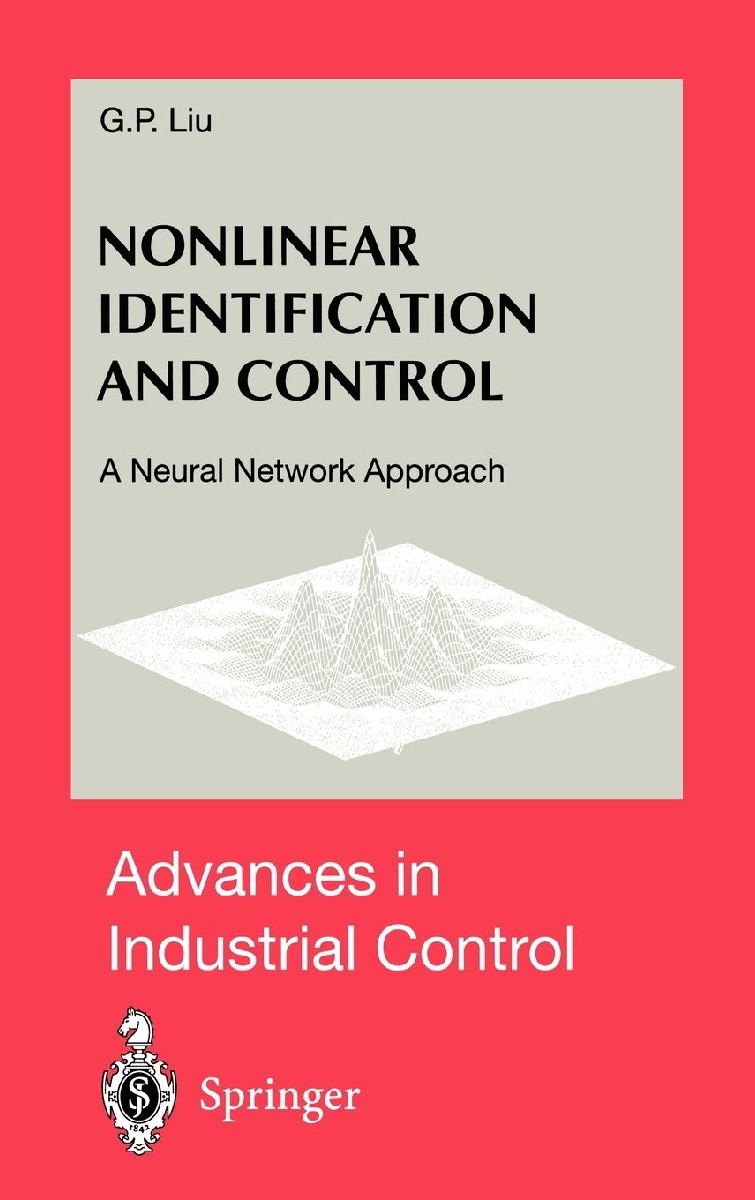
Nonlinear Identification and Control

A Neural Network Approach

von G. P. Liu

Aus der Reihe Advances in Industrial Control

Einband
Gebunden
Seiten
232
Sprache
Englisch
Erschienen
September 2001
Verlag
Springer

Buchbeschreibung

The series Advances in Industrial Control aims to report and encourage technology transfer in control engineering.

The rapid development of control technology has an impact on all areas of the control discipline. New theory, new controllers, actuators, sensors, new industrial processes, computer methods, new applications, new philosophies … , new challenges.

Ganze Beschreibung lesenWeniger anzeigen

Much of this development work resides in industrial reports, feasibility study papers and the reports of advanced collaborative projects.

The series otTers an opportunity for researchers to present an extended exposition of such new work in all aspects of industrial control for wider and rapid dissemination. The time for nonlinear control to enter routine application seems to be approaching. Nonlinear control has had a long gestation period but much ofthe past has been concerned with methods that involve formal nonlinear functional model representations.

It seems more likely that the breakthough will come through the use of other more flexible and amenable nonlinear system modelling tools. This Advances in Industrial Control monograph by Guoping Liu gives an excellent introduction to the type of new nonlinear system modelling methods currently being developed and used. Neural networks appear prominent in these new modelling directions.

The monograph presents a systematic development of this exciting subject. It opens with a useful tutorial introductory chapter on the various tools to be used. In subsequent chapters Doctor Liu leads the reader through identification, and then onto nonlinear control using nonlinear system neural network representations.

Inhaltsverzeichnis

  • 1. Neural Networks
  • 1.1 Introduction
  • 1.2 Model of a Neuron
  • 1.3 Architectures of Neural Networks
  • 1.4 Various Neural Networks
  • 1.5 Learning and Approximation
  • 1.6 Applications of Neural Networks
  • 1.7 Mathematical Preliminaries
Ganzes Inhaltsverzeichnis anzeigen (72 Einträge)Weniger anzeigen
  • 1.8 Summary
  • 2. Sequential Nonlinear Identification
  • 2.1 Introduction
  • 2.2 Variable Neural Networks
  • 2.3 Dynamical System Modelling by Neural Networks
  • 2.4 Stable Nonlinear Identification
  • 2.5 Sequential Nonlinear Identification
  • 2.6 Sequential Identification of Multivariable Systems
  • 2.7 An Example
  • 2.8 Summary
  • 3. Recursive Nonlinear Identification
  • 3.1 Introduction
  • 3.2 Nonlinear Modelling by VPBF Networks
  • 3.3 Structure Selection of Neural Networks
  • 3.4 Recursive Learning of Neural Networks
  • 3.5 Examples
  • 3.6 Summary
  • 4. Multiobjective Nonlinear Identification
  • 4.1 Introduction
  • 4.2 Multiobjective Modelling with Neural Networks
  • 4.3 Model Selection by Genetic Algorithms
  • 4.4 Multiobjective Identification Algorithm
  • 4.5 Examples
  • 4.6 Summary
  • 5. Wavelet Based Nonlinear Identification
  • 5.1 Introduction
  • 5.2 Wavelet Networks
  • 5.3 Identification Using Fixed Wavelet Networks
  • 5.4 Identification Using Variable Wavelet Networks
  • 5.5 Identification Using B-spline Wavelets
  • 5.6 An Example
  • 5.7 Summary
  • 6. Nonlinear Adaptive Neural Control
  • 6.1 Introduction
  • 6.2 Adaptive Control
  • 6.3 Adaptive Neural Control
  • 6.4 Adaptation Algorithm with Variable Networks
  • 6.5 Examples
  • 6.6 Summary
  • 7. Nonlinear Predictive Neural Control
  • 7.1 Introduction
  • 7.2 Predictive Control
  • 7.3 Nonlinear Neural Predictors
  • 7.4 Predictive Neural Control
  • 7.5 On-line Learning of Neural Predictors
  • 7.6 Sequential Predictive Neural Control
  • 7.7 An Example
  • 7.8 Summary
  • 8. Variable Structure Neural Control
  • 8.1 Introduction
  • 8.2 Variable Structure Control
  • 8.3 Variable Structure Neural Control
  • 8.4 Generalised Variable Structure Neural Control
  • 8.5 Recursive Learning for Variable Structure Control
  • 8.6 An Example
  • 8.7 Summary
  • 9. Neural Control Application to Combustion Processes
  • 9.1 Introduction
  • 9.2 Model of Combustion Dynamics
  • 9.3 Neural Network Based Mode Observer
  • 9.4 Output Predictor and Controller
  • 9.5 Active Control of a Simulated Combustor
  • 9.6 Active Control of an Experimental Combustor
  • 9.7 Summary

Details

Erscheinungstermin
September 2001
Kategorie
Fremdsprachige Bücher
Einband
Gebunden
Seiten
232
Sprache
Englisch
Verlag
Springer
Reihe
Advances in Industrial Control
Format
24,1 × 16,0 cm
Dicke
1,8 cm
Gewicht
466 g
EAN / ISBN-13
9781852333423
Maßstabsgetreu: Deckel und Buchrücken neben einer Hand (18 cm).
Versand und Rückgabe

Standardversand: 1 bis 3 Werktage, 3,99 €, kostenlos ab 35 €

Liefergebiet: Deutschland

Rücksendung: 14 Tage Widerrufsrecht. Bei einem Widerruf tragen Sie die Kosten der Rücksendung. Bei einer Falschlieferung oder einem Fehler von uns erstatten wir Ihnen das Rückporto. Den Widerruf erklären Sie über den Knopf „Vertrag widerrufen“ im Fuß der Seite.

Hersteller und ProduktsicherheitSpringer Nature Customer Service Center GmbH
Springer Nature Customer Service Center GmbH
Europaplatz 3
69115 Heidelberg
Deutschland
ProductSafety@springernature.com

Mehr aus der Reihe Advances in Industrial Control

Ähnliche Titel

Bewertungen

Zu diesem Titel gibt es noch keine Bewertung. Bewerten kann, wer ihn bei uns gekauft hat.

So prüfen wir Bewertungen
Eine Bewertung kann bei uns nur abgeben, wer den Titel über sein Kundenkonto bei uns gekauft hat. Jede Bewertung ist fest mit der zugehörigen Bestellung verknüpft; anders kommt sie technisch gar nicht zustande. Deshalb trägt jede angezeigte Bewertung den Hinweis „Verifizierter Kauf". Wir zeigen positive wie negative Bewertungen und löschen nur bei Rechtsverstößen. Für Bewertungen gibt es keine Gegenleistung.
106,99 €Voraussichtlich 3. bis 7. Dez.

Inhalte ab 18

Cover von Titeln für Erwachsene, etwa erotische Romane, Manga oder Comics, bleiben unscharf, bis Sie bestätigen. Die Bestätigung gilt für alle Seiten und Tabs, bis Sie den Browser schließen.

Zurück zum Katalog