Paramilitarism and European Society in the 1940s
Regimes of Violence
von Gareth Pritchard und Vesna Drapac
Aus der Reihe World Histories of Crime, Culture and Violence
- Einband
- Kartoniert
- Seiten
- 288
- Sprache
- Englisch
- Erschienen
- Januar 2026
- Verlag
- Springer

Buchbeschreibung
This book explores the social roots, character, and consequences of paramilitary violence in Europe in the 1940s.
Paramilitarism had an impact on the lives of millions of Europeans, yet knowledge about this important topic is partial and fragmented.
The general perception of European paramilitary violence in the 1940s derives almost entirely from the resistance/collaboration paradigm.
Ganze Beschreibung lesenWeniger anzeigen
This dichotomous analytical framework makes a clear distinction between politically motivated violence and social violence, such as sexual, criminal, and structural violence.
By contrast, in this book, Gareth Pritchard and Vesna Drapac recognise the mutual dependence of all kinds of violence. Their interpretative model, the Regimes of Violence paradigm, which takes account of the changing relationship between state, society, and organised violence, allows us to observe paramilitarism in the round.
The Regimes of Violence framework reveals the interconnectedness of paramilitarism with other forms of violence during this period of unprecedented brutality.
Today, paramilitary violence is a global phenomenon. It has resulted in the undermining of the rule of law and the erosion of civil society in many different countries on different continents, while at the same time traumatising the countless numbers of innocent people who are caught in its crossfire.
With their compelling and timely study, Pritchard and Drapac provide an historical context and present a novel approach for understanding why paramilitarism shows no sign of abating.
Inhaltsverzeichnis
- 1. Introduction
- Part I. Principles and People
- 2. How Can We Conceptualise Paramilitary Violence in 1940s Europe
- 3. Who Were the Paramilitaries?
- Part II. Regimes of Violence
- 4. What Caused the Expansion and Escalation of Paramilitarisation?
- 5. How Did Regimes of Violence Shape the Character and Activities of Paramilitaries?
- 6. How Did Paramilitarism Transform Social Relations?
- 7. How and Why Did Paramilitarism End?
- 8. Conclusion: What Have We Learned and Why Does It Matter?
Details
- Erscheinungstermin
- Januar 2026
- Kategorie
- Fremdsprachige Bücher
- Einband
- Kartoniert
- Seiten
- 288
- Sprache
- Englisch
- Verlag
- Springer
- Reihe
- World Histories of Crime, Culture and Violence
- Format
- 21,0 × 14,8 cm
- Dicke
- 1,6 cm
- Gewicht
- 376 g
- EAN / ISBN-13
- 9783031749735
Autorenporträt
Gareth Pritchard is Senior Lecturer at the University of Adelaide, Australia.
Vesna Drapac is Associate Professor at the University of Adelaide, Australia.
Versand und Rückgabe
Standardversand: 1 bis 3 Werktage, 3,99 €, kostenlos ab 35 €
Liefergebiet: Deutschland
Rücksendung: 14 Tage Widerrufsrecht. Bei einem Widerruf tragen Sie die Kosten der Rücksendung. Bei einer Falschlieferung oder einem Fehler von uns erstatten wir Ihnen das Rückporto. Den Widerruf erklären Sie über den Knopf „Vertrag widerrufen“ im Fuß der Seite.
Hersteller und ProduktsicherheitSpringer Nature Customer Service Center GmbH
Springer Nature Customer Service Center GmbH
Europaplatz 3
69115 Heidelberg
Deutschland
ProductSafety@springernature.com
Mehr aus der Reihe World Histories of Crime, Culture and Violence


Patterns of Violence Behind the Lines in Europe's Civil Wars
Francisco J. Leira-Castiñeira (Hrsg.)
Gebunden, Englisch, 2 Ausgaben
ab 149,79 €


Ähnliche Titel
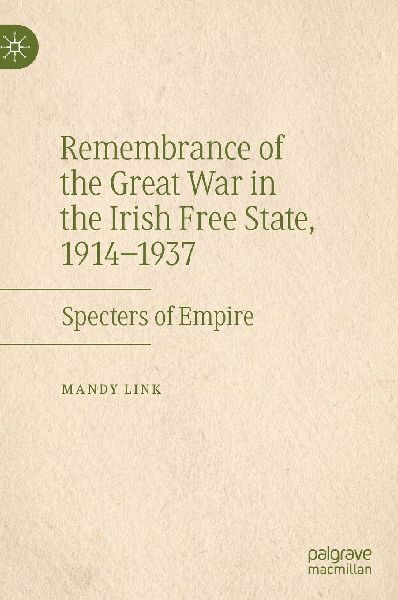
Remembrance of the Great War in the Irish Free State, 1914-1937
Mandy Link
Gebunden, Englisch, 2 Ausgaben
ab 85,59 €

Irish Speakers and Schooling in the Gaeltacht, 1900 to the Present
Tom O'Donoghue
Kartoniert, Englisch, 2 Ausgaben
ab 85,59 €


A Cross-Cultural History of Britain and Belgium, 1815-1918
Marysa Demoor
Gebunden, Englisch, 2 Ausgaben
ab 149,79 €
Bewertungen
Zu diesem Titel gibt es noch keine Bewertung. Bewerten kann, wer ihn bei uns gekauft hat.
So prüfen wir Bewertungen
Eine Bewertung kann bei uns nur abgeben, wer den Titel über sein Kundenkonto bei uns gekauft hat. Jede Bewertung ist fest mit der zugehörigen Bestellung verknüpft; anders kommt sie technisch gar nicht zustande. Deshalb trägt jede angezeigte Bewertung den Hinweis „Verifizierter Kauf". Wir zeigen positive wie negative Bewertungen und löschen nur bei Rechtsverstößen. Für Bewertungen gibt es keine Gegenleistung.
149,79 €Voraussichtlich 2. bis 4. Dez.