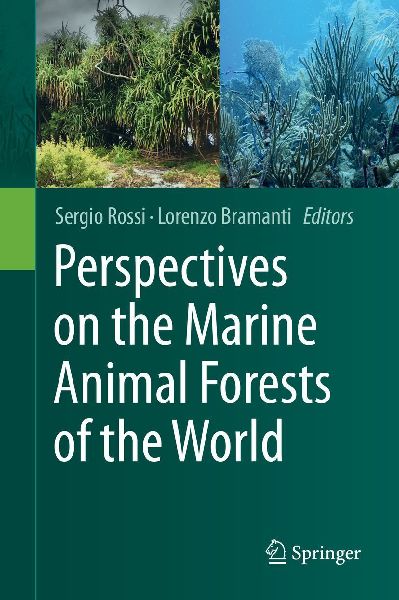
Perspectives on the Marine Animal Forests of the World
Sergio Rossi (Hrsg.)
Gebunden, Englisch, 2 Ausgaben
ab 235,39 €
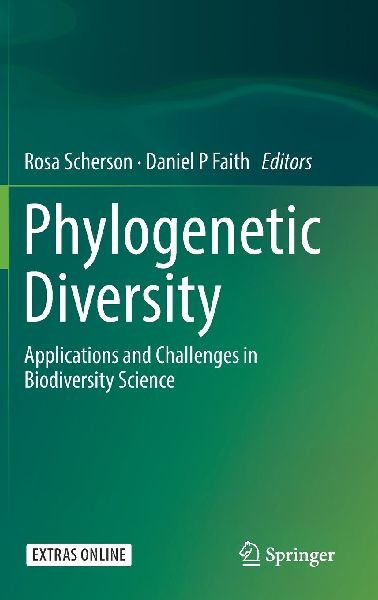
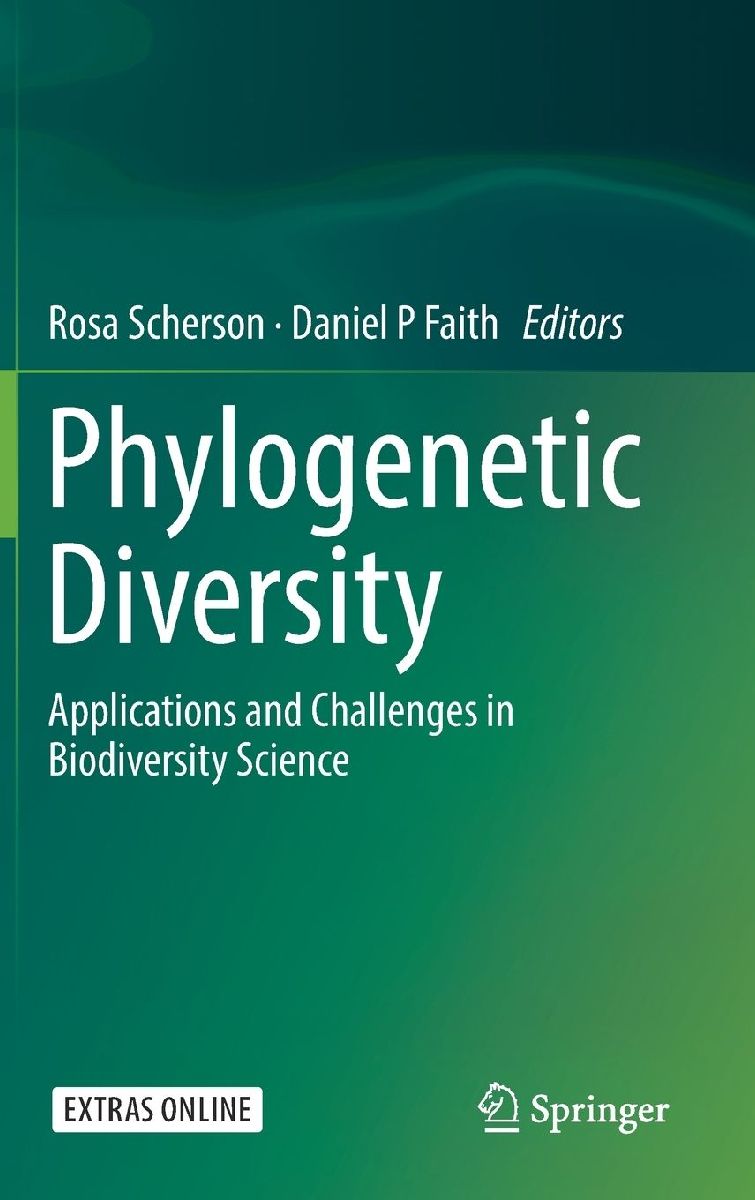
Applications and Challenges in Biodiversity Science
Herausgegeben von: Rosa A. Scherson, Herausgegeben von: Daniel P Faith
"Biodiversity" refers to the variety of life.
It is now agreed that there is a "biodiversity crisis", corresponding to extinction rates of species that may be 1000 times what is thought to be "normal". Biodiversity science has a higher profile than ever, with the new Intergovernmental Science-Policy Platform on Biodiversity and Ecosystem Services involving more than 120 countries and 1000s of scientists.
At the same time, the discipline is re-evaluating its foundations - including its philosophy and even core definitions. The value of biodiversity is being debated. In this context, the tree of life ("phylogeny") is emerging as an important way to look at biodiversity, with relevance cutting across current areas of concern - from the question of resilience within ecosystems, to conservation priorities for globally threatened species - while capturing the values of biodiversity that have been hard to quantify, including resilience and maintaining options for future generations.
This increased appreciation of the importance of conserving "phylogenetic diversity", from microbial communities in the human gut to global threatened species, has inevitably resulted in an explosion of new indices, methods, and case studies. This book recognizes and responds to the timely opportunity for synthesis and sharing experiences in practical applications.
The book recognizes that the challenge of finding a synthesis, and building shared concepts and a shared toolbox, requires both an appreciation of the past and a look into the future. Thus, the book is organized as a flow from history, concepts and philosophy, through to methods and tools, and followed by selected case studies.
A positive vision and plan of action emerges from these chapters, that includes coping with inevitable uncertainties, effectively communicating the importance of this "evolutionary heritage" to the public and to policy-makers, and ultimately contributing to biodiversity conservation policy from localto global scales.
Dr. Faith did his first degree in Mathematics, at the University of Chicago. He adopted a biology "sub-major", pursuing courses on genetics and population biology.
That prompted further study at Stony Brook, Ecology and Evolution, for his PhD work, on speciation and geographic variation in aphids. Dr. Faith's research over the past 30 years or so could be described as mathematical biodiversity science. His research at the Australian Museum integrates biodiversity and systematics, including "biodiversity informatics". It is concerned with theory and applications of quantitative biodiversity assessment, extending from the scale of genes to whole countries, with special emphasis on the best-possible use of Museum collections in regional biodiversity assessment, and to the links from biodiversity assessment to ecosystem services, sustainability, and economics. Dr. Faith's work on "phylogenetic diversity" and conservation is considered semial in the field, his original 1992 work accumulated more than 1000 citations, making it the most-cited paper ever in Biological Conservation from more than 7000 papers spanning 40 years. Other work in phylogenetics involves development and application of phylogenetic methods, and philosophy of science. He also does editorial work for Systematic Biology. Dr. Faith is an Adjunct associate professor at Sydney University and at the University of New England. Dr. Scherson is an Associate Professor at the University of Chile, at the Faculty of Forest Sciences and Nature Conservation. Her research has focused on phylogenetic systematics of Chilean flora, with a special focus on endemic taxa. In the last 5-6 years she has developed an interest in studying phylogeny-based measures for conservation and their application as tools for evaluating taxa and ecosystems for conservation purposes. She has studied patterns of phylogenetic diversity and endemism in Chilean endemic and native flora, and has published the first evaluations of these parameters in Chile. She has also studied the way in which centres of high phylogenetic diversity and endemism are being protected by the state protected area system, and has been a consultant in these topics by the Ministry of the Environment in Chile. Lately Dr. Scherson's interest has also focused on public data availability for phylogenetic diversity studies and how to efficiently use different types of data bases to aid conservation efforts.
Standardversand: 1 bis 3 Werktage, 3,99 €, kostenlos ab 35 €
Liefergebiet: Deutschland
Rücksendung: 14 Tage Widerrufsrecht. Bei einem Widerruf tragen Sie die Kosten der Rücksendung. Bei einer Falschlieferung oder einem Fehler von uns erstatten wir Ihnen das Rückporto. Den Widerruf erklären Sie über den Knopf „Vertrag widerrufen“ im Fuß der Seite.
Sergio Rossi (Hrsg.)
Gebunden, Englisch, 2 Ausgaben
ab 235,39 €
Zu diesem Titel gibt es noch keine Bewertung. Bewerten kann, wer ihn bei uns gekauft hat.