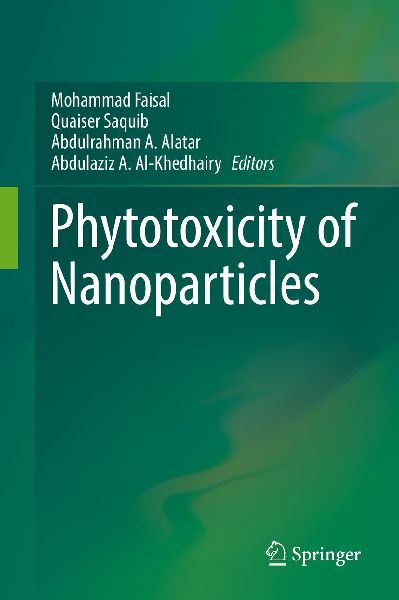
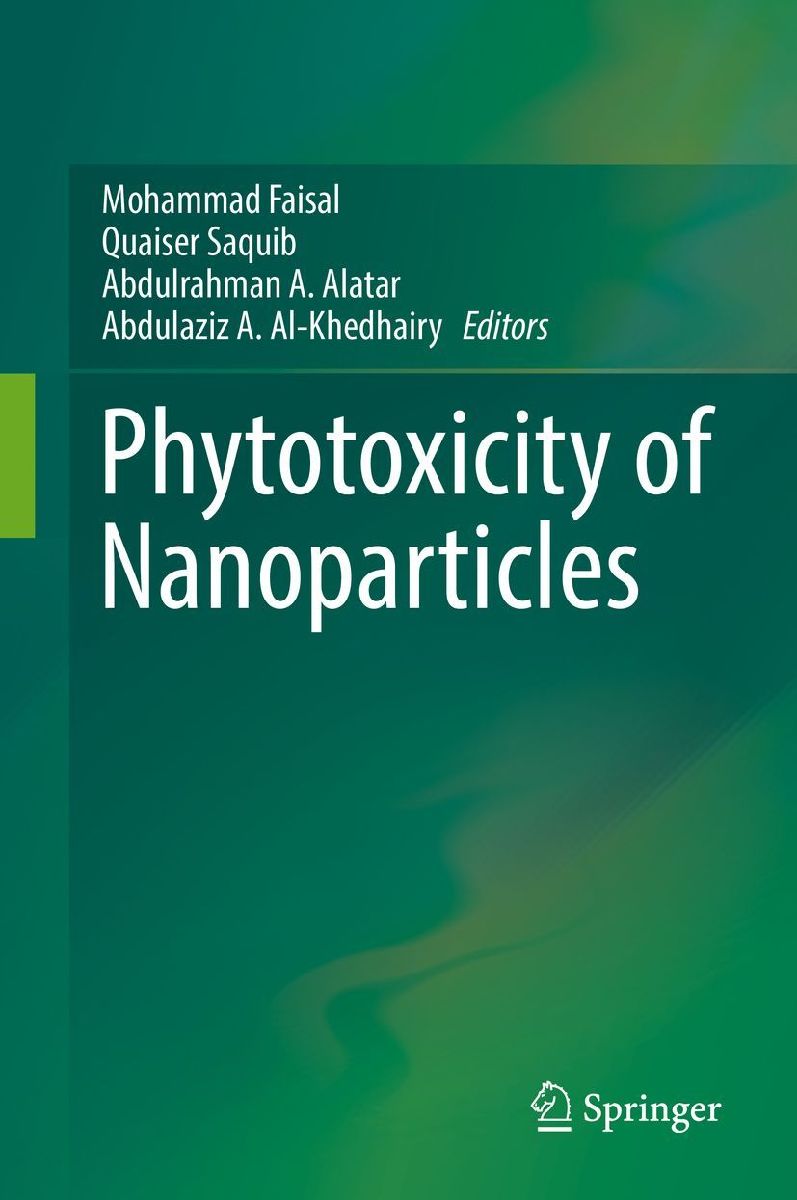
Phytotoxicity of Nanoparticles
Herausgegeben von: Mohammad Faisal, Herausgegeben von: Quaiser Saquib, Herausgegeben von: Abdulrahman A. Alatar, und weitere
- Einband
- Gebunden
- Seiten
- 424
- Sprache
- Englisch
- Erschienen
- Juli 2018
- Verlag
- Springer
Buchbeschreibung
Chapter 1: Nanoparticle Uptake by Plants - Beneficial or Detrimental?.
Ganze Beschreibung lesenWeniger anzeigen
- Chapter 2: Interplay Between Engineered Nanomaterials (ENMs) and Edible Plants: A Current Perspective.
- Chapter 3: Penetration and accumulation of carbon-based nanoparticles in plants.
- Chapter 4: Phytotoxicity of Rare Earth Nanomaterials.
- Chapter 5: Interaction of Nano-sized Nutrients with Plant Biomass: A Review.
- Chapter 6: Current Status of Nanoclays Phytotoxicity.
- Chapter 7: Mechanism and Interaction of Nanoparticle-induced Programmed Cell Death in Plants.
- Chapter 8: Metal-based nanomaterials and oxidative stress in plants - current aspects and overview.
- Chapter 9: Biological and phytotoxic impacts of nanomaterial.
- Chapter 10: Nanoparticle Associated Phytotoxicity and Abiotic Stress under Agroecosystems.
- Chapter 11: Phytotoxic assessment of NiO Nanoparticles in Radish.
- Chapter 12: Nano-silicon Particles Effects on Physiology and Growth of Woody Plants.
- Chapter 13: Phytotoxicity of nanoscale zero valentiron (nZVI) in remediation strategies.
- Chapter 14: Alumina Nanoparticles and Plants: Environmental transformation, Bioaccumulation and Phytotoxicity.
- Chapter 15: Lanatana aculeate L. Mediated Zin Oxide Nanoparticles Induced DNA Damage in Sesamumindicumand their cytotoxic activity against SiHa cell line.
- Chapter 16: Uptake and distribution of 14C-labeled multi-walled carbon nanotubes by wheat (Triticum aestivum L.).
- Chapter 17: Plant Response Strategies to Engineered Metal Oxide Nanoparticles-A Review.
- Chapter 18: Nanobiotechnology in the Health Care: The Game and the Goal.
Inhaltsverzeichnis
- Chapter 1: Nanoparticle Uptake by Plants - Beneficial or Detrimental?
- Chapter 2: Interplay Between Engineered Nanomaterials (ENMs) and Edible Plants: A Current Perspective
- Chapter 3: Penetration and accumulation of carbon-based nanoparticles in plants
- Chapter 4: Phytotoxicity of Rare Earth Nanomaterials
- Chapter 5: Interaction of Nano-sized Nutrients with Plant Biomass: A Review
- Chapter 6: Current Status of Nanoclays Phytotoxicity
- Chapter 7: Mechanism and Interaction of Nanoparticle-induced Programmed Cell Death in Plants
- Chapter 8: Metal-based nanomaterials and oxidative stress in plants - current aspects and overview
Ganzes Inhaltsverzeichnis anzeigen (18 Einträge)Weniger anzeigen
- Chapter 9: Biological and phytotoxic impacts of nanomaterial
- Chapter 10: Nanoparticle Associated Phytotoxicity and Abiotic Stress under Agroecosystems
- Chapter 11: Phytotoxic assessment of NiO Nanoparticles in Radish
- Chapter 12: Nano-silicon Particles Effects on Physiology and Growth of Woody Plants
- Chapter 13: Phytotoxicity of nanoscale zero valentiron (nZVI) in remediation strategies
- Chapter 14: Alumina Nanoparticles and Plants: Environmental transformation, Bioaccumulation and Phytotoxicity
- Chapter 15: Lanatana aculeate L. Mediated Zin Oxide Nanoparticles Induced DNA Damage in Sesamumindicumand their cytotoxic activity against SiHa cell line
- Chapter 16: Uptake and distribution of 14C-labeled multi-walled carbon nanotubes by wheat (Triticum aestivum L.)
- Chapter 17: Plant Response Strategies to Engineered Metal Oxide Nanoparticles-A Review
- Chapter 18: Nanobiotechnology in the Health Care: The Game and the Goal
Details
- Erscheinungstermin
- Juli 2018
- Kategorie
- Fremdsprachige Bücher
- Einband
- Gebunden
- Seiten
- 424
- Sprache
- Englisch
- Verlag
- Springer
- Format
- 24,1 × 16,0 cm
- Dicke
- 2,9 cm
- Gewicht
- 747 g
- EAN / ISBN-13
- 9783319767079
Über Mohammad Faisal (Hrsg.)
Dr. Mohammad Faisal has over 10 years of research experience in plant biotechnology, and is currently working as an associate professor at the Department of Botany & Microbiology, King Saud University, Riyadh, Saudi Arabia.
Mehr über Mohammad Faisal (Hrsg.)Weniger anzeigen
He was the recipient of the 2017 SESR Plant Biotechnologist Award and the 2015 NESA Scientist of the Year Award, as well as several national and international fellowships. He is a member of numerous academic bodies/societies and fellow of the SESR. He has published over 64 research articles, 3 book chapters and 2 books and is on the editorial board of a number of journals.
Dr. Quaiser Saquib is currently working as an assistant professor and coordinator at the Al-Jeraisy Chair for DNA Research, Zoology Department, College of Science, King Saud University, Riyadh, Saudi Arabia. He received the NESA India Scientist of the Year Award in 2016, and the EMSI India Young Scientist Award in 2008. Dr. Saquib has published 46 research articles, 2 books and 2 book chapters. Dr. Abdulrahman Alatar is Vice Dean of Graduate Studies, and a professor at the Department of Botany & Microbiology, King Saud University, Riyadh, Saudi Arabia. He has been the PI and Co-I of various projects and has published more than 65 scientific articles, 2 books. His work has been cited in various leading journals. Professor Abdulaziz A. Al-Khedhairy is Director of the Twasol Research Excellence Program and Al-Jeraisy Chair for DNA Research at King Saud University, Riyadh, Saudi Arabia. He has published 160 research articles, 9 book chapters, 2 books and one US patient. As a PI and CO-I, he has supervised several successful projects funded by KACST, KSA.
Versand und Rückgabe
Standardversand: 1 bis 3 Werktage, 3,99 €, kostenlos ab 35 €
Liefergebiet: Deutschland
Rücksendung: 14 Tage Widerrufsrecht. Bei einem Widerruf tragen Sie die Kosten der Rücksendung. Bei einer Falschlieferung oder einem Fehler von uns erstatten wir Ihnen das Rückporto. Den Widerruf erklären Sie über den Knopf „Vertrag widerrufen“ im Fuß der Seite.
Hersteller und ProduktsicherheitSpringer Nature Customer Service Center GmbH
Springer Nature Customer Service Center GmbH
Europaplatz 3
69115 Heidelberg
Deutschland
ProductSafety@springernature.com
Mehr von Mohammad Faisal
A Framework for Managing Requirement Volatility throughout the Software Development Life Cycle
Mohammad Faisal
Kartoniert, Englisch
57,60 €
Automatic Isolated Speech Recognition System Using MFCC Analysis
Mohammad Faisal
Kartoniert, Englisch
54,90 €
Ähnliche Titel
Practical Applications of Chlorophyll Fluorescence in Plant Biology
Jennifer R. Deell (Hrsg.)
Gebunden, Englisch, 2 Ausgaben
ab 106,99 €
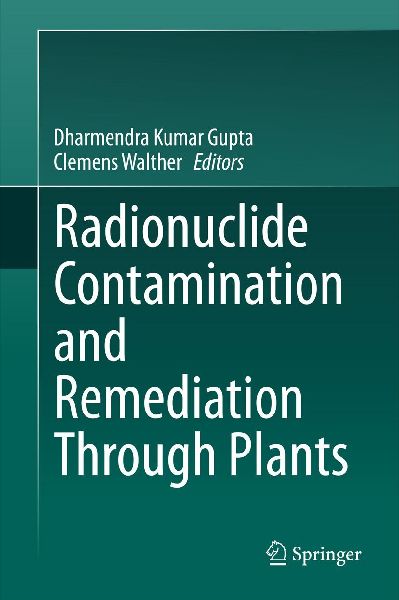
Radionuclide Contamination and Remediation Through Plants
Dharmendra Kumar Gupta (Hrsg.)
Gebunden, Englisch, 2 Ausgaben
ab 160,49 €
Bewertungen
Zu diesem Titel gibt es noch keine Bewertung. Bewerten kann, wer ihn bei uns gekauft hat.
So prüfen wir Bewertungen
Eine Bewertung kann bei uns nur abgeben, wer den Titel über sein Kundenkonto bei uns gekauft hat. Jede Bewertung ist fest mit der zugehörigen Bestellung verknüpft; anders kommt sie technisch gar nicht zustande. Deshalb trägt jede angezeigte Bewertung den Hinweis „Verifizierter Kauf". Wir zeigen positive wie negative Bewertungen und löschen nur bei Rechtsverstößen. Für Bewertungen gibt es keine Gegenleistung.
213,99 €Voraussichtlich 4. bis 8. Dez.