
Buch-OWLOnline-Buchhandel

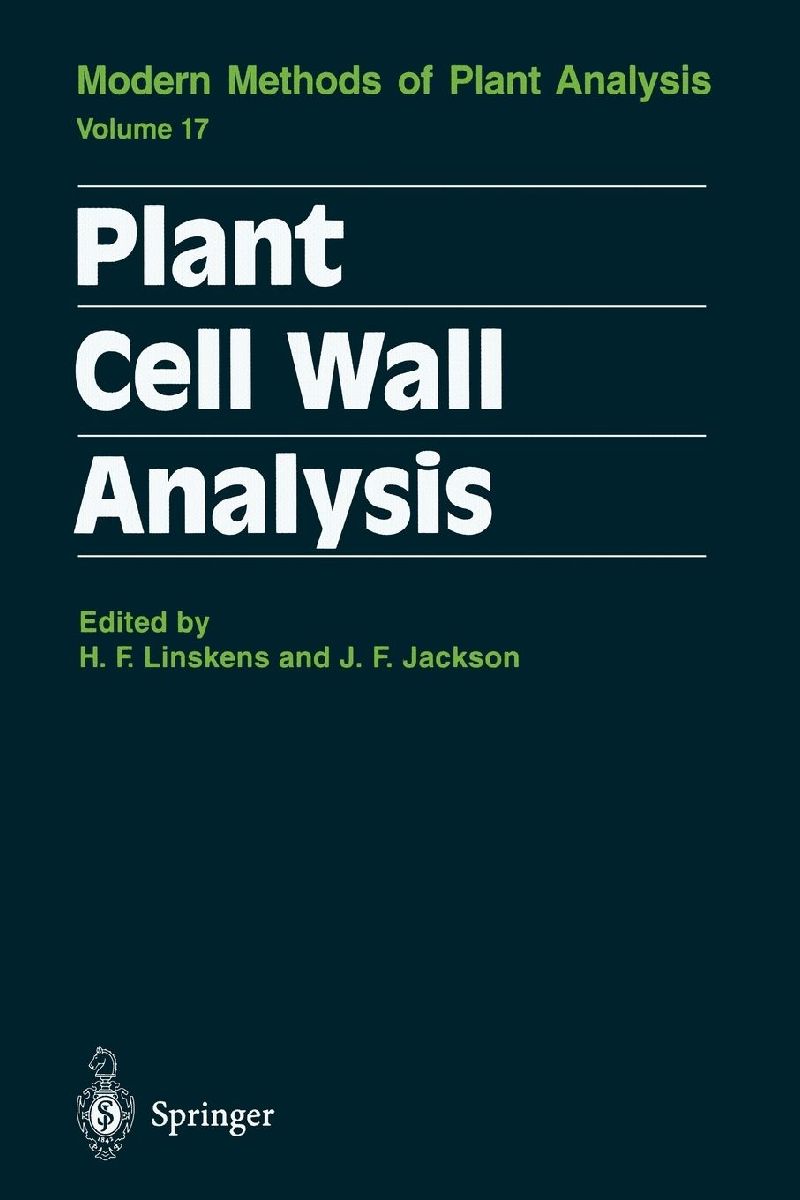
Plant Cell Wall Analysis

von Hans F. Linskens (Hrsg.)

Herausgegeben von: Hans F. Linskens, Herausgegeben von: John F. Jackson

Aus der Reihe Molecular Methods of Plant Analysis

Einband
Kartoniert
Seiten
228
Sprache
Englisch
Erschienen
Oktober 2011
Verlag
Springer Berlin Heidelberg

Buchbeschreibung

Modern Methods of Plant Analysis When the handbook Modern Methods of Plant Analysis, was first introduced in 1954, the considerations were: 1. the dependence of scientific progress in biology on the improvement of existing and the introduction of new methods; 2. the difficulty in finding many new analytical methods in specialized journals which are normally not accessible to experimental plant biologists; 3.

Ganze Beschreibung lesenWeniger anzeigen

the fact that in the methods sections of papers the description of methods is frequently so compact, or even sometimes to incomplete, that it is difficult to reproduce experiments.

These considerations still stand today. The series was highly successful, seven volumes appearing between 1956 and 1964. Since there is still today a demand for the old series, the publisher has decided to resume publication of Modern Methods of Plant Analysis. It is hoped that the New Series will be just as acceptable to those working in plant sciences and related fields as the early volumes undoubtedly were.

It is difficult to single out the major reasons for the success of any publication, but we believe that the methods published in the first series were up-to-date at the time and presented in a way that made description, as applied to plant material, complete in itself with little need to consult other publications.

Contribution authors have attempted to follow these guidelines in this New Series of volumes. Editorial The earlier series of Modern Methods of Plant Analysis was initiated by Michel V.

Inhaltsverzeichnis

  • Fractionation of Cell Wall Components
  • 1 Introduction
  • 2 Polysaccharides
  • 3 Proteins and Glycoproteins
  • 4 Lignins
  • References
  • Isolation and Analysis of Cell Wall Polymers from Olive Pulp
  • 1 Introduction
Ganzes Inhaltsverzeichnis anzeigen (84 Einträge)Weniger anzeigen
  • 2 Isolation of Cell Walls from Olive Pulp
  • 3 Sequential Extraction of Cell Wall Polymers
  • 4 Fractionation of the Extracted Cell Wall Polysaccharides
  • 5 Chemical and Spectroscopic Analysis
  • 6 Concluding Remarks
  • References
  • Determination of Cell Wall Autolysis
  • 1 Introduction
  • 2 Factors Altering Cell Wall Isolation and Autolysis
  • 3 Isolation of Active Cell Walls
  • 4 Isolation of Inactive Cell Walls (Controls)
  • 5 Autolysis Incubations
  • 6 Analysis of Autolysis Products
  • 7 Conclusions
  • References
  • Cell Wall Porosity and Its Determination
  • 1 Introduction
  • 2 Microscopic Visualization of Wall Pores
  • 3 Bulk Exclusion Techniques
  • 4 Tracer Techniques: Uptake of Molecules or Particles
  • 5 Conclusions
  • References
  • Analysis of Chitin Biosynthesis
  • 1 Introduction
  • 2 Structure of Chitin
  • 3 The Enzymatic Synthesis of Chitin
  • 4 Preparation of Chitin Synthase
  • 5 Product Characterization of Chitin Synthase
  • 6 Polymerization and Crystallization
  • 7 Fungal Chitin Synthase Genes
  • 8 Morphogenetic Roles of Chitin Synthases
  • 9 Conclusions
  • References
  • Analysis of Plant-Substratum Adhesives
  • 1 Introduction
  • 2 Case Studies of Cell-Substratum Adhesion
  • 3 Methods for the Analysis of Cell-Substratum Adhesives
  • 4 Conclusions
  • References
  • Biochemical, Immunological and Molecular Analyses of Extensin
  • 1 Introduction
  • 2 Biochemical Characterization of Extensin
  • 3 Immunological Detection of Extensin
  • 4 Molecular Characterization of Extensin
  • 5 Summary
  • References
  • Analysis of Pectin Structure by HPAEC-PAD
  • 1 Introduction
  • 2 Pectin HPLC Separations
  • 3Pectin Analysis in Ripening Peach Fruit
  • 4 Conclusions and Future Directions
  • References
  • Characterization of Oligosaccharides Derived from Plant Cell Wall Polysaccharides by On-Line High-Performance Anion-Exchange Chromatography Thermospray Mass Spectrometry
  • 1 Introduction
  • 2 Methods
  • 3 HPAEC in Oligosaccharide Analysis
  • 4 General Experimental Considerations Related to HPAEC-MS
  • 5 Application of HPAEC-MS in Oligosaccharide Characterization
  • 6 Conclusions and Perspectives
  • References
  • Analysis of Pectin Methyl Esterases
  • 1 Introduction
  • 2 Estimation and Detection of PME Activities
  • 3 PME Localization
  • 4 PME Extraction and Purification
  • 5 PME Properties
  • 6 Roles of PMEs
  • 7 Conclusions and Perspectives
  • References
  • Probing the Subunit Composition and Topology of Plasma Membrane-Bound (1,3)-?-Glucan (Callose) Synthases
  • 1 Introduction
  • 2 Membrane Isolation, Enzyme Assay, and Solubilization
  • 3 Callose Synthase Topology, Purification, and Subunit Composition
  • 4 Biochemical Characterization of Integral Plant Plasma Membrane Proteins
  • 5 Summary
  • References

Details

Erscheinungstermin
Oktober 2011
Kategorie
Fremdsprachige Bücher
Einband
Kartoniert
Seiten
228
Sprache
Englisch
Verlag
Springer Berlin Heidelberg
Reihe
Molecular Methods of Plant Analysis
Format
23,5 × 15,5 cm
Dicke
1,3 cm
Gewicht
353 g
EAN / ISBN-13
9783642646447
Maßstabsgetreu: Deckel und Buchrücken neben einer Hand (18 cm).
Versand und Rückgabe

Standardversand: 1 bis 3 Werktage, 3,99 €, kostenlos ab 35 €

Liefergebiet: Deutschland

Rücksendung: 14 Tage Widerrufsrecht. Bei einem Widerruf tragen Sie die Kosten der Rücksendung. Bei einer Falschlieferung oder einem Fehler von uns erstatten wir Ihnen das Rückporto. Den Widerruf erklären Sie über den Knopf „Vertrag widerrufen“ im Fuß der Seite.

Hersteller und ProduktsicherheitSpringer Nature Customer Service Center GmbH
Springer Nature Customer Service Center GmbH
Europaplatz 3
69115 Heidelberg
Deutschland
ProductSafety@springernature.com

Mehr von Hans F. Linskens

Mehr aus der Reihe Molecular Methods of Plant Analysis

Ähnliche Titel

Bewertungen

Zu diesem Titel gibt es noch keine Bewertung. Bewerten kann, wer ihn bei uns gekauft hat.

So prüfen wir Bewertungen
Eine Bewertung kann bei uns nur abgeben, wer den Titel über sein Kundenkonto bei uns gekauft hat. Jede Bewertung ist fest mit der zugehörigen Bestellung verknüpft; anders kommt sie technisch gar nicht zustande. Deshalb trägt jede angezeigte Bewertung den Hinweis „Verifizierter Kauf". Wir zeigen positive wie negative Bewertungen und löschen nur bei Rechtsverstößen. Für Bewertungen gibt es keine Gegenleistung.
106,99 €Voraussichtlich 1. bis 3. Dez.

Inhalte ab 18

Cover von Titeln für Erwachsene, etwa erotische Romane, Manga oder Comics, bleiben unscharf, bis Sie bestätigen. Die Bestätigung gilt für alle Seiten und Tabs, bis Sie den Browser schließen.

Zurück zum Katalog