
Buch-OWLOnline-Buchhandel

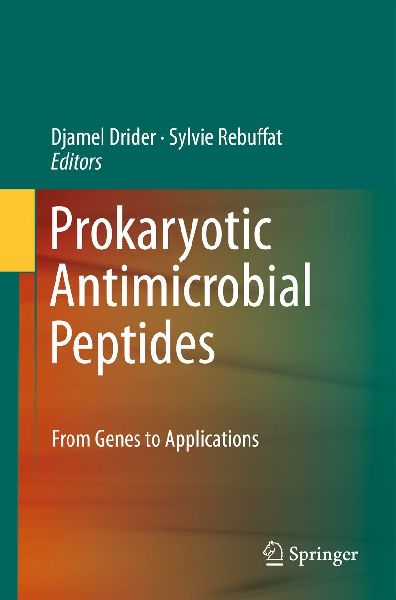
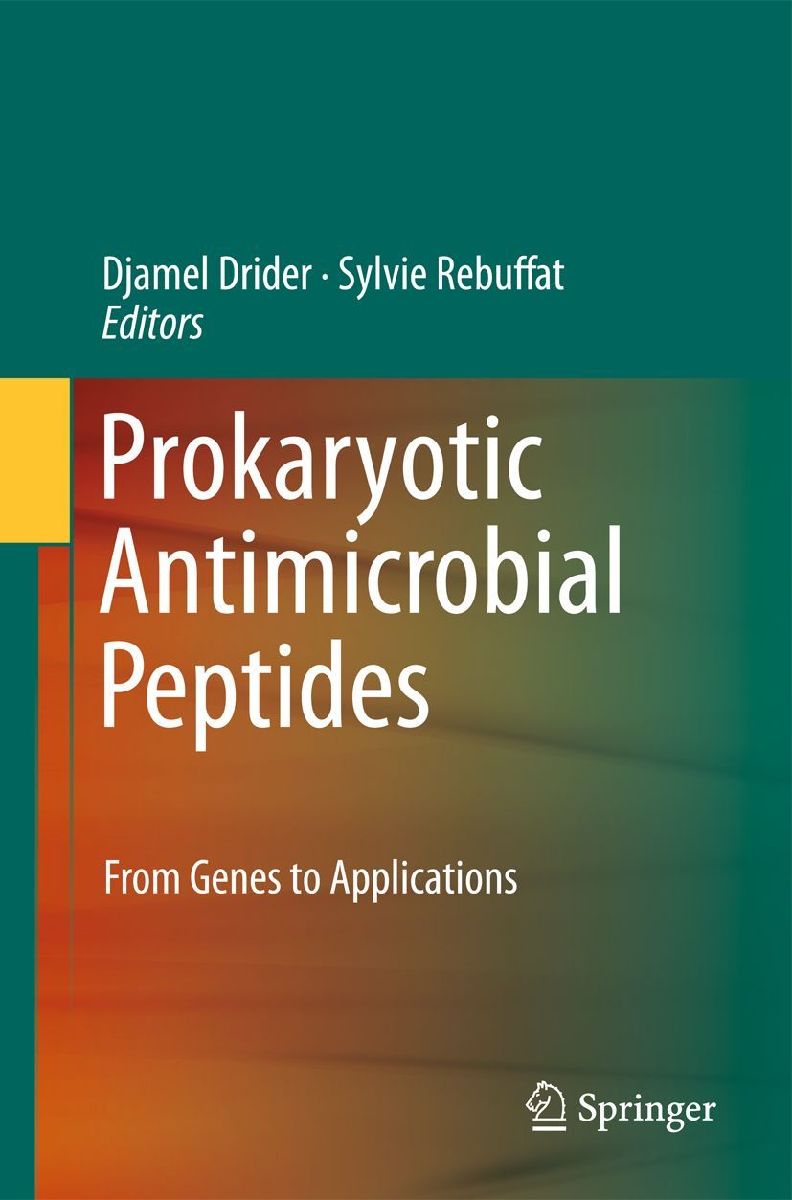
Prokaryotic Antimicrobial Peptides

From Genes to Applications

von Djamel Drider (Hrsg.)

Herausgegeben von: Djamel Drider, Herausgegeben von: Sylvie Rebuffat

Einband
Gebunden
Seiten
468
Sprache
Englisch
Erschienen
März 2011
Verlag
Springer US

Buchbeschreibung

The book will provide an overview of the advancement of fundamental knowledge and applications of antimicrobial peptides in biomedical, agricultural, veterinary, food, and cosmetic products.

Antimicrobial peptides stand as potentially great alternatives to current antibiotics, and most research in this newly-created area has been published in journals and other periodicals.

Ganze Beschreibung lesenWeniger anzeigen

It is the editors' opinion that it is timely to sum up the most important achievements in the field and provide the scientific community in a reference book.

The goals of this project include illustrating the achievements made so far, debating the state of the art, and drawing new perspectives.

Inhaltsverzeichnis

  • Part I. Introduction: History, current Knowledge and future research on antimicrobial peptides
  • Chapter 1. History, current knowledge and future directions on bacteriocin research in lactic acid bacteria
  • Chapter 2. Bacteriocin mediated competitive interactions of bacterial populations and communities
  • Part II. Classification of prokaryotic antimicrobial peptides
  • Chapter 3. Classification of Bacteriocins from Gram positive bacteria
  • Chapter 4. Bacteriocins from Gram negative bacteria: a classification?
  • Part III. Isolation, purification and production of antimicrobial peptides
  • Chapter 5. Genomes exploitation and bioinformatics tools
Ganzes Inhaltsverzeichnis anzeigen (26 Einträge)Weniger anzeigen
  • Chapter 6. Design and engineering strategies for synthetic antimicrobial peptides
  • Chapter 7. Purification techniques of bacteriocins from lactic acid bacteria and other Gram positive bacteria
  • Chapter 8. Natural and heterologous production of Bacteriocins
  • Part IV. Genetics, biosynthesis, structure, and mode of action of AMP from gram postive bacteria
  • Chapter 9. Genetics, biosynthesis, structure and mode of action of lantibiotics
  • Chapter 10. Class IIa bacteriocins: current knowledge and perspectives
  • Chapter 11. The two-peptide (Class-IIb) bacteriocins: Genetics, Biosynthesis, Structure, and Mode-of-Action
  • Chapter 12. Class IIc or circular bacteriocins
  • Chapter 13. Class IId or linear and non pediocin-like bacteriocins
  • Part V. Genetics, biosynthesis, structure, and mode of action of AMP from gram negative bacteria
  • Chapter 14. Colicin killing: foiled cell defense and hijacked cell functions
  • Chapter 15. Class I microcins: their structure, activities, and mechanisms of resistance
  • Chapter 16. Class II microcins
  • Chapter 17. Microcins: on the edge between gram positive bacteriocins and colicins
  • Part VI. Applications and Perspectives
  • Chapter 18. Food Applications and Regulation
  • Chapter 19. Medical and Personal Care Applications of Bacteriocins Produced by Lactic Acid Bacteria
  • Chapter 20. Perspectives and peptides of the next generation

Details

Erscheinungstermin
März 2011
Kategorie
Fremdsprachige Bücher
Einband
Gebunden
Seiten
468
Sprache
Englisch
Verlag
Springer US
Format
24,1 × 16,0 cm
Dicke
2,9 cm
Gewicht
811 g
EAN / ISBN-13
9781441976918
Maßstabsgetreu: Deckel und Buchrücken neben einer Hand (18 cm).

Über Djamel Drider (Hrsg.)

Dr. Djamel Drider is currently an associate professor of Microbiology at Nantes-Atlantic National College of Veterinary Medicine, Food Science and Engineering-ONIRIS.

Mehr über Djamel Drider (Hrsg.)Weniger anzeigen

He obtained his PhD from Ecole Nationale Supérieure Agronomique de Montpellier (France) and completed his post-doc at Centro de Investigaciones Biológicas (Madrid, Spain) and Mount Sinai School of Medicine at New York University. Dr. Drider is currently a member of the editorial board of the journal, Probiotics and Antimicrobial Proteins and Chairman of the French Antimicrobial Peptides Society. Professor Sylvie Rebuffat is the Director of the Laboratory Communication Molecules and Adaptation of Microorganisms at the National Museum of Natural History in Paris, France. She researches antimicrobial peptides of bacterial origin (microcins, bacteriocins), focusing mainly on their mechanisms of action, structure/activity relationships, and biosynthetic pathways. Dr. Rebuffat is also the Scientific Advisor to the Director of the National Museum of Natural History.

Versand und Rückgabe

Standardversand: 1 bis 3 Werktage, 3,99 €, kostenlos ab 35 €

Liefergebiet: Deutschland

Rücksendung: 14 Tage Widerrufsrecht. Bei einem Widerruf tragen Sie die Kosten der Rücksendung. Bei einer Falschlieferung oder einem Fehler von uns erstatten wir Ihnen das Rückporto. Den Widerruf erklären Sie über den Knopf „Vertrag widerrufen“ im Fuß der Seite.

Hersteller und ProduktsicherheitSpringer Nature Customer Service Center GmbH
Springer Nature Customer Service Center GmbH
Europaplatz 3
69115 Heidelberg
Deutschland
ProductSafety@springernature.com

Ähnliche Titel

Bewertungen

Zu diesem Titel gibt es noch keine Bewertung. Bewerten kann, wer ihn bei uns gekauft hat.

So prüfen wir Bewertungen
Eine Bewertung kann bei uns nur abgeben, wer den Titel über sein Kundenkonto bei uns gekauft hat. Jede Bewertung ist fest mit der zugehörigen Bestellung verknüpft; anders kommt sie technisch gar nicht zustande. Deshalb trägt jede angezeigte Bewertung den Hinweis „Verifizierter Kauf". Wir zeigen positive wie negative Bewertungen und löschen nur bei Rechtsverstößen. Für Bewertungen gibt es keine Gegenleistung.
160,49 €Voraussichtlich 4. bis 8. Dez.

Inhalte ab 18

Cover von Titeln für Erwachsene, etwa erotische Romane, Manga oder Comics, bleiben unscharf, bis Sie bestätigen. Die Bestätigung gilt für alle Seiten und Tabs, bis Sie den Browser schließen.

Zurück zum Katalog