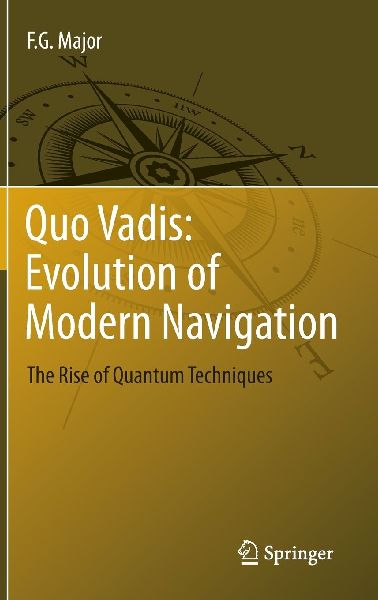
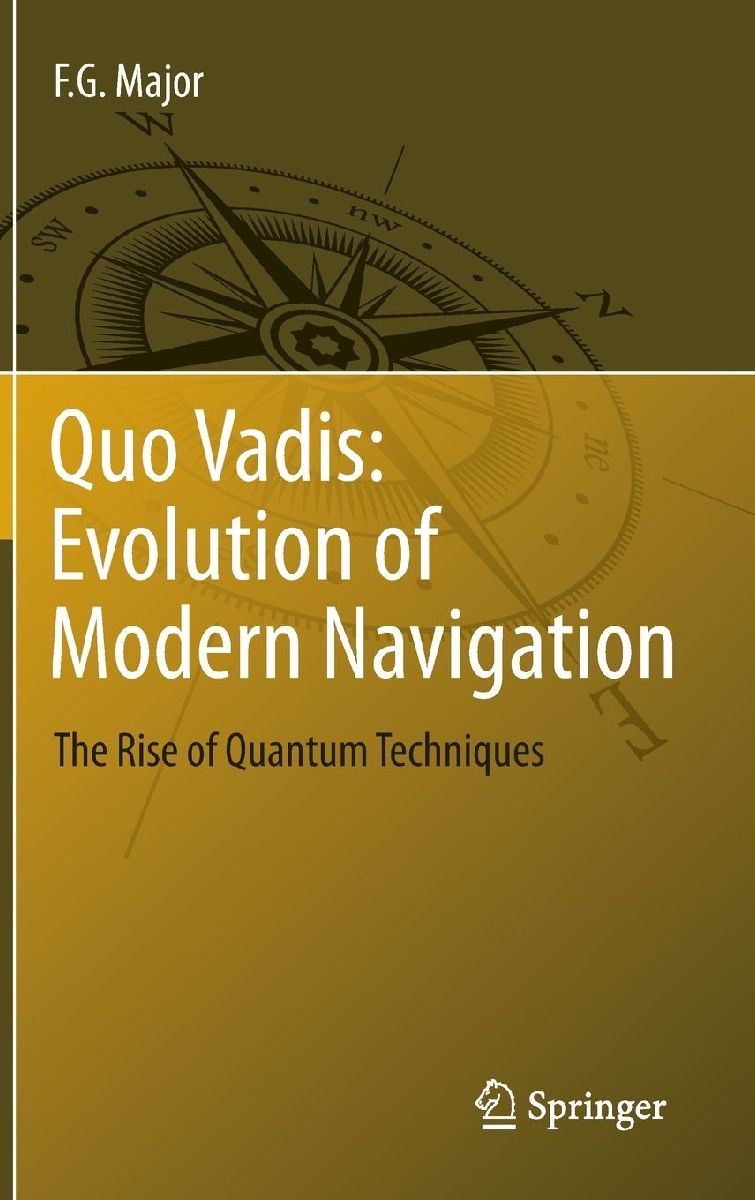
Quo Vadis: Evolution of Modern Navigation
The Rise of Quantum Techniques
von F. G. Major
- Einband
- Gebunden
- Seiten
- 440
- Sprache
- Englisch
- Erschienen
- Oktober 2013
- Verlag
- Springer US
Buchbeschreibung
Quo Vadis: Evolution of Modern Navigation presents an intelligent and intelligible account of the essential principles underlying the design of satellite navigational systems-with introductory chapters placing them in context with the early development of navigational methods.
Ganze Beschreibung lesenWeniger anzeigen
The material is organized roughly as follows: the first third of the book deals with navigation in the natural world, the early history of navigation, navigating by the stars, precise mechanical chronometers for the determination of longitude at sea, and the development of precise quartz controlled clocks.
Then, the reader is introduced to quantum ideas as a lead in to a discussion of microwave and optical interactions with atoms, atomic clocks, laser gyrocompasses, and time based navigation.
The final third of the book deals with satellite-based systems, including orbit theory, early satellite navigation systems, and a detailed treatment of the Global Positioning System (GPS).Intended for non-specialists with some knowledge of physics or engineering at the college level, this book covers in an intuitive manner a broad range of topics relevant to the evolution of surface and space navigation, with minimum mathematical formalism.
Inhaltsverzeichnis
- 1. Navigation in Nature
- 2. The Early Navigators
- 3. Historical Background to Astronomy
- 4. Modern Astronomy
- 5. Navigation at Sea
- 6. The Longitude Problem
- 7. The Quartz Revolution
- 8. Classical Atomic Frequency Standards
- 9. Atomic and Molecular Oscillators
- 10. Field Confinement of Ions
- 11. Optical Frequency Oscillators: Lasers
- 12. The Gyrocompass
Ganzes Inhaltsverzeichnis anzeigen (18 Einträge)Weniger anzeigen
- 13. Radio Navigation
- 14. Satellite Navigation: GPS Space Segment
- 15. Satellite Navigation: GPS Control Segment
- 16. Satellite Navigation: GPS User Segment
- 17. Space Navigation
- 18. The Future of Navigation
Details
- Erscheinungstermin
- Oktober 2013
- Kategorie
- Fremdsprachige Bücher
- Einband
- Gebunden
- Seiten
- 440
- Sprache
- Englisch
- Verlag
- Springer US
- Format
- 24,1 × 16,0 cm
- Dicke
- 3,0 cm
- Gewicht
- 771 g
- EAN / ISBN-13
- 9781461486718
Über F. G. Major
Dr Fouad Major was a student of Hans Georg Dehmelt, Nobel Prize winner (with Ramsey) in 1989, and was the first physicist to proves experimentally the capability of an atomic clock with ions stocked in a radio-electric quadripolar trap.
Mehr über F. G. MajorWeniger anzeigen
He is an expert on atomic clocks and author of The Quantum Beat (Springer, 2007).
Versand und Rückgabe
Standardversand: 1 bis 3 Werktage, 3,99 €, kostenlos ab 35 €
Liefergebiet: Deutschland
Rücksendung: 14 Tage Widerrufsrecht. Bei einem Widerruf tragen Sie die Kosten der Rücksendung. Bei einer Falschlieferung oder einem Fehler von uns erstatten wir Ihnen das Rückporto. Den Widerruf erklären Sie über den Knopf „Vertrag widerrufen“ im Fuß der Seite.
Hersteller und ProduktsicherheitSpringer Nature Customer Service Center GmbH
Springer Nature Customer Service Center GmbH
Europaplatz 3
69115 Heidelberg
Deutschland
ProductSafety@springernature.com
Ähnliche Titel
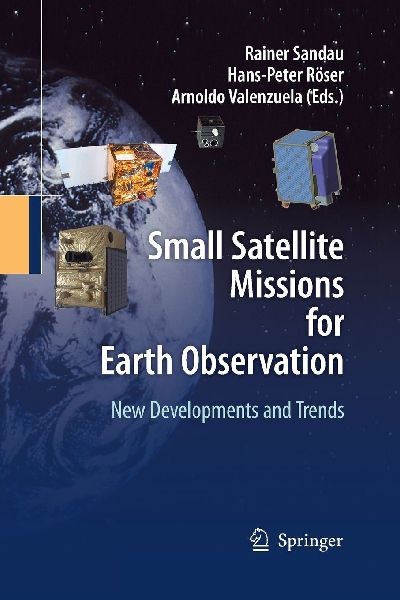

Small Satellites for Earth Observation
Rainer Sandau (Hrsg.)
Kartoniert, Englisch, 2 Ausgaben
ab 160,49 €
Bewertungen
Zu diesem Titel gibt es noch keine Bewertung. Bewerten kann, wer ihn bei uns gekauft hat.
So prüfen wir Bewertungen
Eine Bewertung kann bei uns nur abgeben, wer den Titel über sein Kundenkonto bei uns gekauft hat. Jede Bewertung ist fest mit der zugehörigen Bestellung verknüpft; anders kommt sie technisch gar nicht zustande. Deshalb trägt jede angezeigte Bewertung den Hinweis „Verifizierter Kauf". Wir zeigen positive wie negative Bewertungen und löschen nur bei Rechtsverstößen. Für Bewertungen gibt es keine Gegenleistung.
160,49 €Voraussichtlich 7. bis 9. Dez.