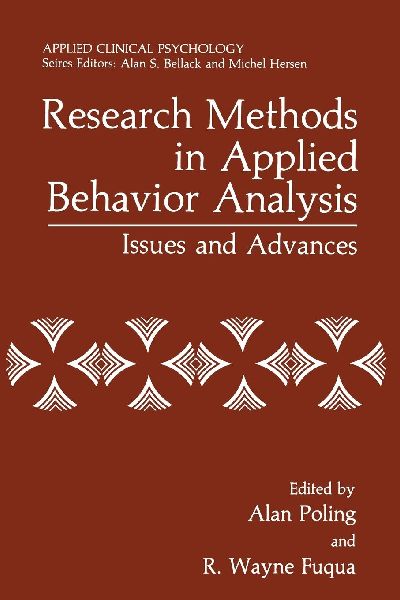
Research Methods in Applied Behavior Analysis
Issues and Advances
Herausgegeben von: Alan Poling, Herausgegeben von: R. Wayne Fuqua
Aus der Reihe NATO Science Series B:
- Einband
- Kartoniert
- Seiten
- 352
- Sprache
- Englisch
- Erschienen
- Mai 2012
- Verlag
- Springer
Buchbeschreibung
The branch of clinical psychology known as behavior modification or, synonymously, applied behavior analysis, has grown substantially from humble beginnings in the 1960s.
Many colleges and universities now offer courses in applied behavior analysis, and more than a few grant degrees in the area.
Ganze Beschreibung lesenWeniger anzeigen
Although they remain controversial, behavior mod ification procedures have been used to good advantage in dealing with a range of problem behaviors and are now rather widely employed in schools, residential institutions, and other therapeutic facilities.
The two hallmarks of applied behavior analysis are utilization of the principles of operant conditioning to improve human behavior and utilization of scientific research methodology to assess the effectiveness of treatments. The present text provides an overview of several issues peculiar to applied behavior analysis research methodology.
Six general areas of concern are (a) trends in applied behavior analysis research, (b) assessment and measurement issues, (c) experimental designs and strategies, (d) interpretation of findings, (e) ethical issues in applied behavior analysis, and (f) the societal impact of studies in the area.
As evidenced by a sizable number of recently published articles, these topics are of considerable interest to behavior analysts. They also are relevant for students of scientific epistemology and general psychological research methods.
Inhaltsverzeichnis
- 1. Experimentation in Behavioral Psychology: The Flight to the Laboratory
- Darwin
- Skinner
- Fear of Field Studies
- Fear of Utility
- Conclusions
- References
- 2. Basic Research Designs in Applied Behavior Analysis
Ganzes Inhaltsverzeichnis anzeigen (88 Einträge)Weniger anzeigen
- Between-Subjects and Within-Subject Designs
- External Validity and Within-Subject Research
- Selecting an Experimental Design
- References
- 3. Pure versus Quasi-Behavioral Research
- Behavior as a Scientific Subject Matter
- Pure Behavior Research Methods
- Quasi-Behavioral Research Methods
- Traditions and Practices of Inferential Statistics
- Limitations and Uses of Quasi-Behavioral Research
- Methodological Contingencies
- References
- 4. The Nature and Functions of Experimental Questions
- The Nature of Experimental Questions
- The Functions of Experimental Questions
- References
- 5. Some Factors Limiting the Applicability of Applied Behavioral Research: Descriptive Information in JABA Articles
- Methods
- Results and Discussion
- References
- 6. Interobserver Agreement: History, Theory, and Current Methods
- Historical Perspective
- Initial Assessment Techniques
- The Chance Agreement Problem
- Basic Considerations in Reporting Agreement
- Summary and Conclusions
- References
- 7. Simulation Research in the Analysis of Behavior
- One Hundred Babies
- Simulations in the Sciences
- "Self-Awareness" in the Pigeon
- The Columban Simulations
- Symbolic Communication
- The Spontaneous Use of Memoranda
- "Insight"
- Tool Use and "Resurgence"
- Computer Simulations of Cognitive Processes
- Pigeons
- Conclusions
- References
- 8. The Graphic Analysis of Data
- How Sensitive is Visual Analysis?
- Objections to Visual Analysis
- Fine-Grained Graphic Analysis
- Apologia
- References
- 9. Autocorrelation in Behavioral Research: Wherefore Art
- Thou?
- Justifying the Use of Time-Series Analysis
- Problems with the Jones et al. (1977) Points
- The Statistical Structure of JABA Data
- Findings
- Conclusions
- References
- 10. Statistical Analysis and Single-Subject Designs: Some Misunderstandings
- Nine Commandments
- Summary
- References
- 11. Ethical Standards in Behavioral Research: A Historical Analysis and Review of Publication Practices
- Historical and Behavioral Analysis of Research Ethics
- Survey of Research Practices and Current Trends
- References
- 12. Social Validation of Applied Behavioral Research: A Selective Review and Critique
- Validation of Treatment Goals
- Social Validation of Treatment Procedures
- Social Validation of Treatment Effects
- Conclusions
- References
- 13. The Science of Behavior in the Design of Cultures
- Text
- References
- 14. The Role of Applied Behavior Analysis in Evaluating Medication Effects
- Drugs as Independent Variables
- Acknowledgments
- References
- 15. Fraud, Fakery, and Fudging: Behavior Analysis and Bad Science
- How and Why Scientists Cheat
- Consequences of Fraud
- Acknowledgments
- References
Details
- Erscheinungstermin
- Mai 2012
- Kategorie
- Fremdsprachige Bücher
- Einband
- Kartoniert
- Seiten
- 352
- Sprache
- Englisch
- Verlag
- Springer
- Reihe
- NATO Science Series B:
- Format
- 23,5 × 15,5 cm
- Dicke
- 2,0 cm
- Gewicht
- 534 g
- EAN / ISBN-13
- 9781468487886
Versand und Rückgabe
Standardversand: 1 bis 3 Werktage, 3,99 €, kostenlos ab 35 €
Liefergebiet: Deutschland
Rücksendung: 14 Tage Widerrufsrecht. Bei einem Widerruf tragen Sie die Kosten der Rücksendung. Bei einer Falschlieferung oder einem Fehler von uns erstatten wir Ihnen das Rückporto. Den Widerruf erklären Sie über den Knopf „Vertrag widerrufen“ im Fuß der Seite.
Hersteller und ProduktsicherheitSpringer Nature Customer Service Center GmbH
Springer Nature Customer Service Center GmbH
Europaplatz 3
69115 Heidelberg
Deutschland
ProductSafety@springernature.com
Mehr von Alan Poling
Mehr aus der Reihe NATO Science Series B:


Hadron Structure and Lepton-Hadron Interactions
Maurice Levy (Hrsg.)
Kartoniert, Englisch, 2 Ausgaben
ab 69,54 €


Ähnliche Titel
Stepped Care 2.0: The Power of Conundrums
Peter Cornish (Hrsg.)
Kartoniert, Englisch, 2 Ausgaben
ab 74,89 €

The Palgrave Handbook of Psychological Perspectives on Alcohol Consumption
Richard Cooke (Hrsg.)
Gebunden, Englisch, 2 Ausgaben
ab 192,59 €


Anxiety and Substance Use Disorders
Patricia Conrod (Hrsg.)
Kartoniert, Englisch, 2 Ausgaben
ab 106,99 €
Bewertungen
Zu diesem Titel gibt es noch keine Bewertung. Bewerten kann, wer ihn bei uns gekauft hat.
So prüfen wir Bewertungen
Eine Bewertung kann bei uns nur abgeben, wer den Titel über sein Kundenkonto bei uns gekauft hat. Jede Bewertung ist fest mit der zugehörigen Bestellung verknüpft; anders kommt sie technisch gar nicht zustande. Deshalb trägt jede angezeigte Bewertung den Hinweis „Verifizierter Kauf". Wir zeigen positive wie negative Bewertungen und löschen nur bei Rechtsverstößen. Für Bewertungen gibt es keine Gegenleistung.
106,99 €Voraussichtlich 1. bis 3. Dez.