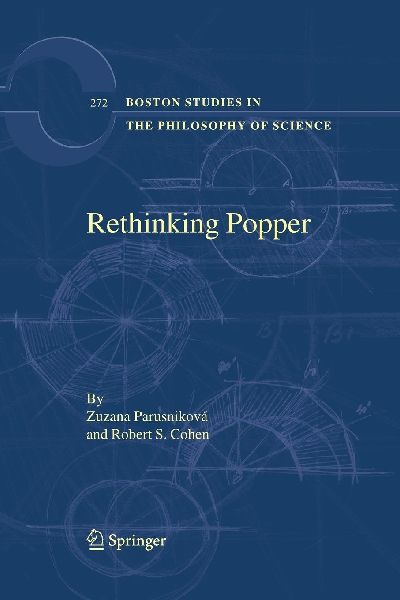
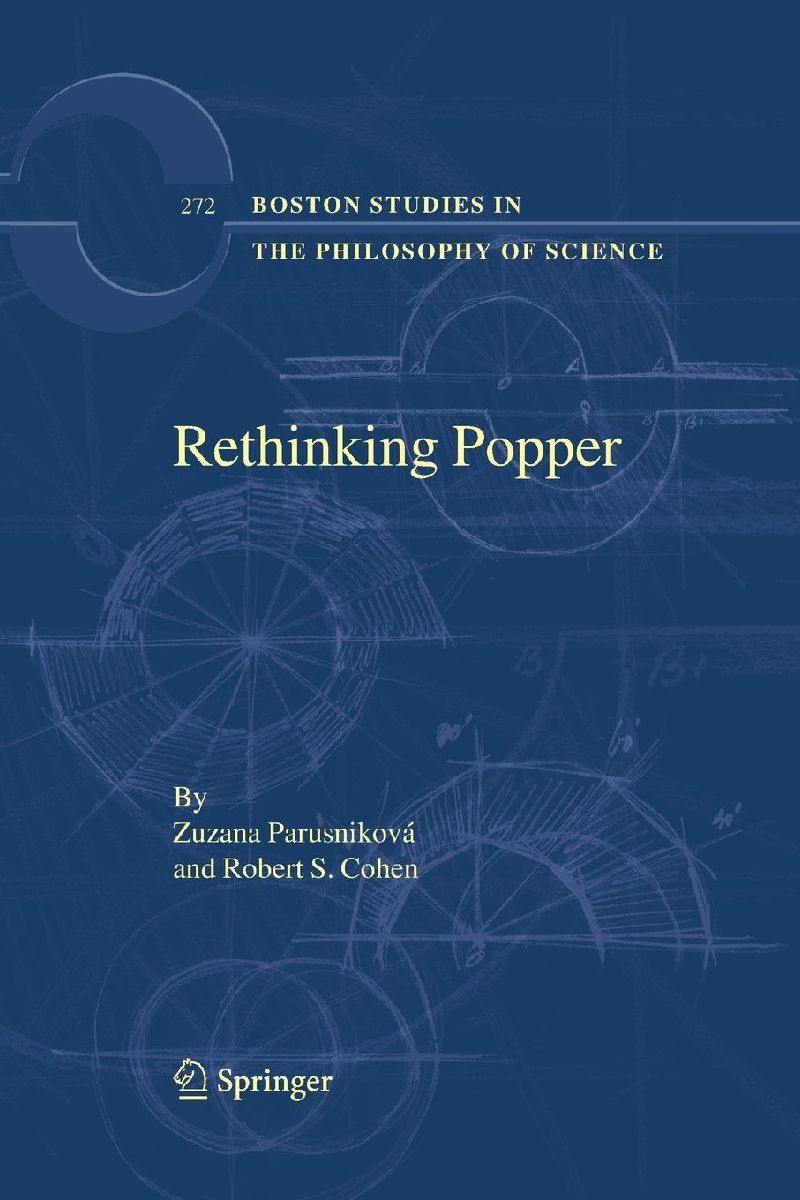
Rethinking Popper
von Zuzana Parusniková (Hrsg.)
Herausgegeben von: Zuzana Parusniková, Herausgegeben von: Robert S. Cohen
Aus der Reihe Boston Studies in the Philosophy and History of Science
- Einband
- Kartoniert
- Seiten
- 444
- Sprache
- Englisch
- Erschienen
- Dezember 2014
- Verlag
- Springer
Buchbeschreibung
In September 2007, more than 100 philosophers came to Prague with the determination to approach Karl Popper's philosophy as a source of inspiration in many areas of our intellectual endeavor.
This volume is a result of that effort.
Ganze Beschreibung lesenWeniger anzeigen
Topics cover Popper's views on rationality, scientific methodology, the evolution of knowledge and democracy; and since Popper's philosophy has always had a strong interdisciplinary influence, part of the volume discusses the impact of his ideas in such areas as education, economics, psychology, biology, or ethics.
The concept of falsification, the problem of demarcation, the ban on induction, or the role of the empirical basis, along with the provocative parallels between historicism, holism and totalitarianism, have always caused controversies. The aim of this volume is not to smooth them but show them as a challenge.
In this time when the traditional role of reason in the Western thought is being undermined, Popper's non-foundationist model ofreason brings the Enlightenment message into a new perspective. Popper believed that the open society was vulnerable, due precisely to its tolerance of otherness. This is a matter of great urgency in the modern world, as cultures based on different values gain prominence.
The processes related to the extending of the EU, or the increasing economic globalization also raise questions about openness and democracy. The volume's aim is to show the vitality of critical rationalism in addressing and responding to the problems of this time and this world.
Inhaltsverzeichnis
- Introduction: Zuzana Parusniková & Robert S. Cohen
- Part 1: Reason, Logic, Science Alan Musgrave: Experience and Perceptual Belief Gunnar Andersson: Critical Rationalism and the Principle of Sufficient Reason Zuzana Parusnikova: Ratio negativa: the Popperian Challenge Stefano Gattei : Kepler’s Method by Conjectures and Refutations: Towards a Unifying Picture of His Early and Later Works Nimrod Bar-Am: Proof vs. Sound Inference Ladislav Kvasz & Eugen Zelenák: A Problem for Popper’s Fallibilism Darrell Rowbottom & Otavio Bueno: Why Advocate Pancritical Rationalism? Vladimír Zeman: Karl Popper and Hans Albert ¿ The Broad Scope of Critical Rationalism
- Part 2: Epistemology, Methodology, Evolution Donald Gillies: Problem-Solving and the Problem of Induction Adolf Grünbaum: Popper’s Fundamental Misdiagnosis of the Scientific Defects of Freudian Psychoanalysis Diego Rosende: Popper on Refutability: Some Philosophical and Historical Issues Carlos Verdugo: Popper’s Thesis of the Unity of Scientific Method versus Technique Natsuka Tokumaru: Popper’s Analysis of the Problems of Induction and Demarcation and Mises' Justification of the Theoretical Social Sciences Michel Ter Hark: Popper’s theory of the searchlight: a historical assessment of its significance Jack Birner: From group selection to ecological niches
- Part 3: Society, Politics Anthony O¿Hear: Popperian Individualism To-day Ian Jarvie: Popper’s Continuing Relevance Miloslav Bednár : Open Society and the European Union Alain Boyer: Epistemology, Politics and Fairness Alexander J. Naraniecki: Logic and The Open Society : Revising the Place of Tarski’s Semantic Theory of Truth within Popper’s Political Philosophy. Harald Stelzer:Popper and Communitarianism: Justification and Criticism of moral Standards Jeff Kochan: Popper’s Communitarianism Herzl Baruch: Re-examination of Popper's portrayal of Socrates
- Part 4: Ethics, Economics, Education Noretta Koertge: The Moral Underpinnings of Popper’s Philosophy Jeremy Shearmur: Critical rationalism and Ethics Joseph Agassi: Popper’s Insights into the State of Positive Economics and of Welfare Economics John Wettersten: Popper and Sen on Rationality and Economics Joanna Swann: Popperian Selectionism and Its Implications for Education, Or 'What to Do About the Myth of Learning by Instruction from Without?' Michael Segre: Applying Popperian Didactics Musa Akrami: The Difficulties with Popper's Nontraditional Conception of Metaphysics. A review by Zuzana Parusnikova: Out of Error: Further Essays on Critical Rationalism by David Miller INDEX
Details
- Erscheinungstermin
- Dezember 2014
- Kategorie
- Fremdsprachige Bücher
- Einband
- Kartoniert
- Seiten
- 444
- Sprache
- Englisch
- Verlag
- Springer
- Reihe
- Boston Studies in the Philosophy and History of Science
- Format
- 23,5 × 15,5 cm
- Dicke
- 2,4 cm
- Gewicht
- 668 g
- EAN / ISBN-13
- 9789400789586
Versand und Rückgabe
Standardversand: 1 bis 3 Werktage, 3,99 €, kostenlos ab 35 €
Liefergebiet: Deutschland
Rücksendung: 14 Tage Widerrufsrecht. Bei einem Widerruf tragen Sie die Kosten der Rücksendung. Bei einer Falschlieferung oder einem Fehler von uns erstatten wir Ihnen das Rückporto. Den Widerruf erklären Sie über den Knopf „Vertrag widerrufen“ im Fuß der Seite.
Hersteller und ProduktsicherheitSpringer Nature Customer Service Center GmbH
Springer Nature Customer Service Center GmbH
Europaplatz 3
69115 Heidelberg
Deutschland
ProductSafety@springernature.com
Mehr aus der Reihe Boston Studies in the Philosophy and History of Science

The Perils and Promises of Prediction in the Natural Sciences
Theodore Arabatzis (Hrsg.)
Gebunden, Englisch
149,79 €
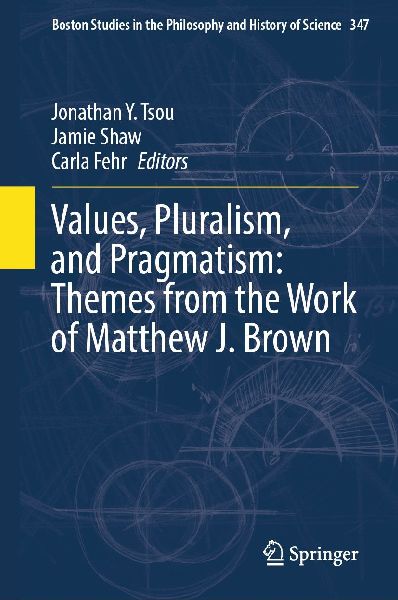
Values, Pluralism, and Pragmatism: Themes from the Work of Matthew J. Brown
Jonathan Y. Tsou (Hrsg.)
Gebunden, Englisch, 2 Ausgaben
ab 160,49 €
Ähnliche Titel




Bewertungen
Zu diesem Titel gibt es noch keine Bewertung. Bewerten kann, wer ihn bei uns gekauft hat.
So prüfen wir Bewertungen
Eine Bewertung kann bei uns nur abgeben, wer den Titel über sein Kundenkonto bei uns gekauft hat. Jede Bewertung ist fest mit der zugehörigen Bestellung verknüpft; anders kommt sie technisch gar nicht zustande. Deshalb trägt jede angezeigte Bewertung den Hinweis „Verifizierter Kauf". Wir zeigen positive wie negative Bewertungen und löschen nur bei Rechtsverstößen. Für Bewertungen gibt es keine Gegenleistung.
213,99 €Voraussichtlich 1. bis 3. Dez.