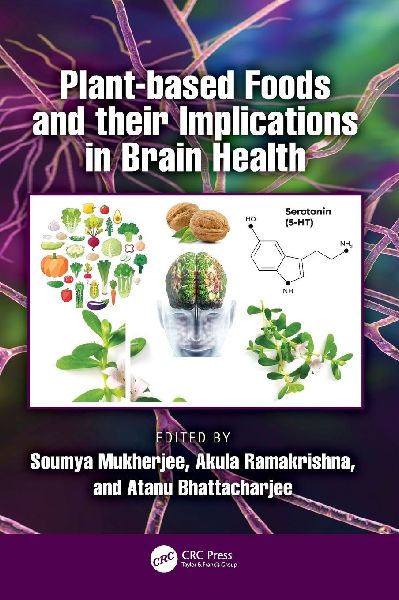
Plant-based Foods and their Implications in Brain Health
Soumya Mukherjee (Hrsg.)
Gebunden, Englisch
210,60 €
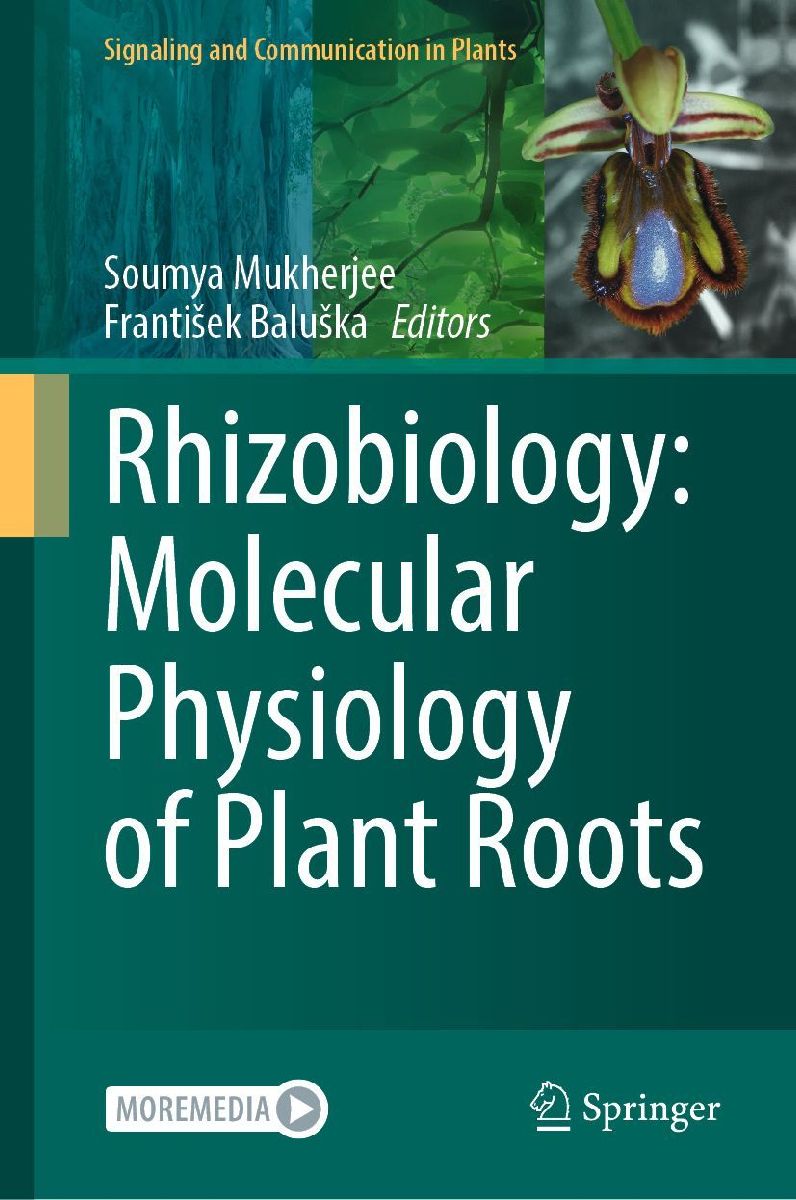
Herausgegeben von: Soumya Mukherjee, Herausgegeben von: Franti¿ek Balu¿ka
Aus der Reihe Signaling and Communication in Plants
This book discusses the recent advancements in the role of various biomolecules in regulating root growth and development.
Rhizobiology is a dynamic sub discipline of plant science which collates investigations from various aspects like physiology, biochemistry, genetic analysis and plant-microbe interactions. The physiology and molecular mechanisms of root development have undergone significant advancements in the last couple of decades.
Apart from the already known conventional phytohormones (IAA, GA, cytokinin, ethylene and ABA), certain novel biomolecules have been considered as potential growth regulators or hormones regulating plant growth and development. Root phenotyping and plasticity analysis with respect to the specific functional mutants of each biomolecule shall provide substantial information on the molecular pathways of root signaling.
Special emphasis provides insights on the tolerance and modulatory mechanisms of root physiology in response to light burst, ROS generation, agravitrophic response, abiotic stress and biotic interactions.
Root Apex Cognition: From Neuronal Molecules to Root-Fungal Networks and Suberin in Monocotyledonous Crop Plants: Structure and Function in Response to Abiotic Stresses" are available open access under a Creative Commons Attribution 4.0 International License via link.springer.com. Chapters "Root Apex Cognition: From Neuronal Molecules to Root-Fungal Networks and Suberin in Monocotyledonous Crop Plants: Structure and Function in Response to Abiotic Stresses" are available open access under a Creative Commons Attribution 4.0 International License via link.springer.com.
Dr. Soumya Mukherjee has accomplished his doctorate studies from the Department of Botany, University of Delhi. He has been as Ex-Faculty (adhoc) of Ramjas College, University of Delhi.
Currently, he is employed as Faculty in the Department of Botany, Jangipur College, University of Kalyani, West Bengal. Dr. Mukherjee has worked as CSIR Research Fellow in the area of abiotic stress physiology of plants. He has published both research and review articles in various peer-reviewed international journals (SCOPUS and SCI indexed). He has contributed various chapters (plant physiology, abiotic stress signaling) and popular articles in various books published from national and international publishers. He has authored e-learning module in Plant Physiology and Biochemistry published as an effort of National Mission on Education through ICT (MHRD Project undertaken by University of Delhi). He is Subject Reviewer of some peer-reviewed international journals on plant science (Acta physiologia plantarum, Journal of Plant Physiology, Plos One, Plant signaling and Behaviour, BMC plant biology, Scientific reports). He has presented brief research works in international- and state-level conferences in India and Abroad. Currently, he is focussed on undergraduate teaching to Botany and Life Science students in various fundamental aspects areas of Plant Physiology and Plant Anatomy. He continues to work with research interests in salt-stress physiology associated with the aspects of hormone signaling and biomolecular cross talk in plants.
Professor FRANTI¿EK BALU¿KA is Lecturer and Researcher at the Institute of Cellular and Molecular Botany at Bonn University, Germany. He obtained Full Professor title at the Comenius University Bratislava (Slovakia) in 2008. His main interest is plant cell biology, especially root apices, as related to the cytoskeleton, endocytosis, vesicle trafficking and polarity. He has investigated root apices for more than twenty years andmade original contribution to the root apex organization by the discovery of a transition zone interpolated between the apical meristem and the rapid cell elongation region. Franti¿ek Balu¿ka is also interested in the response of roots to environmental factors such as light and gravity, as well as in the emerging field of plant neurobiology. Finally, he is interested in the conceptual analysis of the cell theory. He published more than eighty research papers and edited several books. Franti¿ek Balu¿ka founded and acts as Editor-in-Chief for two Taylor & Francis journals: Plant Signaling & Behavior and Communicative & Integrative Biology
Standardversand: 1 bis 3 Werktage, 3,99 €, kostenlos ab 35 €
Liefergebiet: Deutschland
Rücksendung: 14 Tage Widerrufsrecht. Bei einem Widerruf tragen Sie die Kosten der Rücksendung. Bei einer Falschlieferung oder einem Fehler von uns erstatten wir Ihnen das Rückporto. Den Widerruf erklären Sie über den Knopf „Vertrag widerrufen“ im Fuß der Seite.
Soumya Mukherjee (Hrsg.)
Gebunden, Englisch
210,60 €
Soumya Mukherjee (Hrsg.)
Gebunden, Englisch, 2 Ausgaben
ab 213,99 €
Soumya Mukherjee (Hrsg.)
Gebunden, Englisch
227,50 €
Tariq Aftab (Hrsg.)
Gebunden, Englisch, 2 Ausgaben
ab 267,49 €
Nabil Semmar
Gebunden, Englisch, 2 Ausgaben
ab 149,79 €
Mehar Fatma (Hrsg.)
Gebunden, Englisch, 2 Ausgaben
ab 181,89 €
Tariq Aftab (Hrsg.)
Gebunden, Englisch, 2 Ausgaben
ab 267,49 €
Shyam Singh Yadav (Hrsg.)
Kartoniert, Englisch, 2 Ausgaben
ab 213,99 €
S. M. Paul Khurana (Hrsg.)
Gebunden, Englisch, 2 Ausgaben
ab 299,59 €
Zu diesem Titel gibt es noch keine Bewertung. Bewerten kann, wer ihn bei uns gekauft hat.