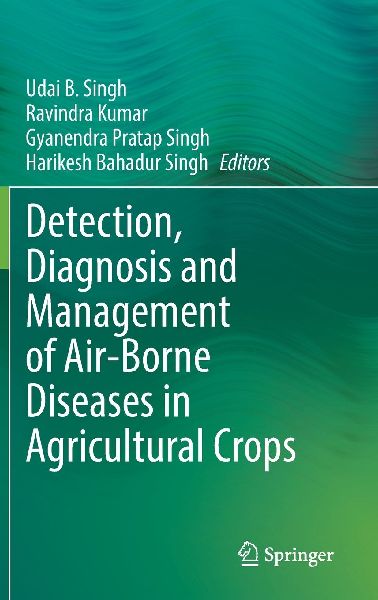
Detection, Diagnosis and Management of Air-Borne Diseases in Agricultural Crops
Udai B. Singh (Hrsg.)
Gebunden, Englisch, 2 Ausgaben
ab 246,09 €
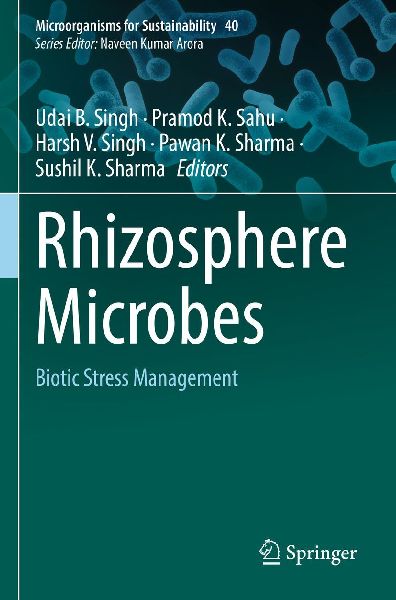
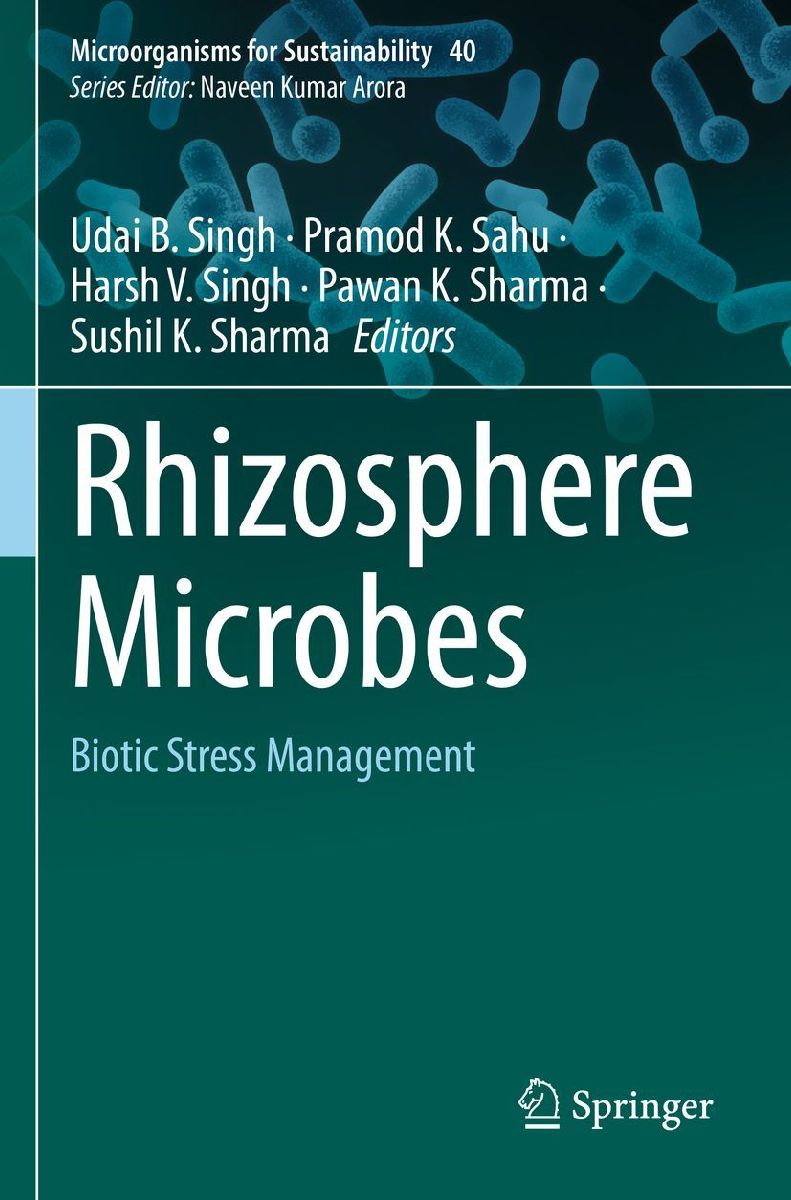
Biotic Stress Management
Herausgegeben von: Udai B. Singh, Herausgegeben von: Pramod K. Sahu, Herausgegeben von: Harsh V. Singh, und weitere
Aus der Reihe Microorganisms for Sustainability
This edited book volume aims to bringing out a comprehensive collection of latest information and developments on the management of biotic stresses by the use of rhizospheric microbes across the globe.
The main focus of this book is to address the scientific and practical significance of rhizosphere microbes in biotic stress management.
The microbial communities in the rhizosphere ecosystem play multitude of microbe-microbe, microbe-insect/pest and plant-microbe interactions and they have not yet been fully exploited to gain benefits in this field as well as to achieve sustainability in agriculture.
Among the more recent strategies, stress tolerance/resistance induced by environment-friendly elicitors of microbial origin and/or rhizosphere microorganisms has emerged as a promising supplement in the approaches to crop protection.
The proposed book entitled "Rhizosphere Microbes: Biotic Stress Management" is pertinent to rhizospheric microbe-mediated biotic stress management coveringall spheres of biotic stress tolerance viz., bio-resources, diversity, ecology, and functioning of microbial bio-control agents, host-parasite interaction, strategies to characterize microbial bioinoculants, interactions of rhizosphere microbes by developing a fundamental understanding of the microbial communities, exploration of the diverse roles of microbes and microbial communities and their role in biotic stress tolerance, microbe-mediated mitigation of biotic stresses, quorum sensing, microbial signalling and cross-talk in the rhizosphere, biofilm formation, cell-to-cell communication, role of microorganisms in ecosystems functioning under various biotic stress conditions, application of microbial bio-pesticides, molecular studies using microbial systems, etc. This book is of interest to teachers, researchers, crop protection scientists, capacity builders and policymakers.
Also the book serves as additional reading material for under-graduate, post-graduate, and post-doctorate fellow of agriculture, forestry, ecology, life science, and environmental sciences. National and international agricultural scientists, policy makers will also find this to be a useful read.
Standardversand: 1 bis 3 Werktage, 3,99 €, kostenlos ab 35 €
Liefergebiet: Deutschland
Rücksendung: 14 Tage Widerrufsrecht. Bei einem Widerruf tragen Sie die Kosten der Rücksendung. Bei einer Falschlieferung oder einem Fehler von uns erstatten wir Ihnen das Rückporto. Den Widerruf erklären Sie über den Knopf „Vertrag widerrufen“ im Fuß der Seite.
Udai B. Singh (Hrsg.)
Gebunden, Englisch, 2 Ausgaben
ab 246,09 €
Udai B. Singh (Hrsg.)
Gebunden, Englisch, 2 Ausgaben
ab 235,39 €
Udai B. Singh (Hrsg.)
Gebunden, Englisch, 2 Ausgaben
ab 213,99 €
Meenu Saraf (Hrsg.)
Kartoniert, Englisch, 2 Ausgaben
ab 235,39 €
Venugopal Gopikrishnan (Hrsg.)
Gebunden, Englisch
213,99 €
Naveen Kumar Arora (Hrsg.)
Gebunden, Englisch
213,99 €
Monika Felchner-Zwirello
Kartoniert, Englisch
40,00 €
Zu diesem Titel gibt es noch keine Bewertung. Bewerten kann, wer ihn bei uns gekauft hat.