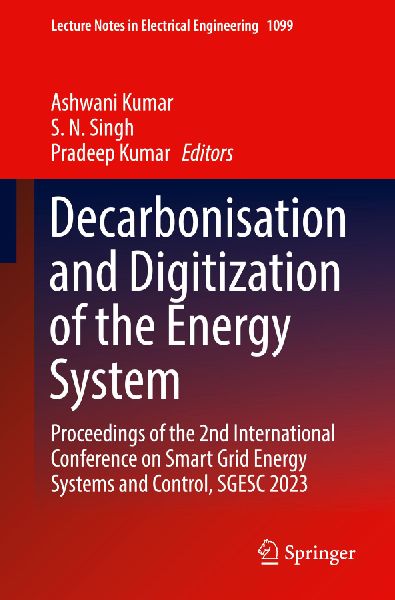
Decarbonisation and Digitization of the Energy System
Ashwani Kumar (Hrsg.)
Kartoniert, Englisch
213,99 €
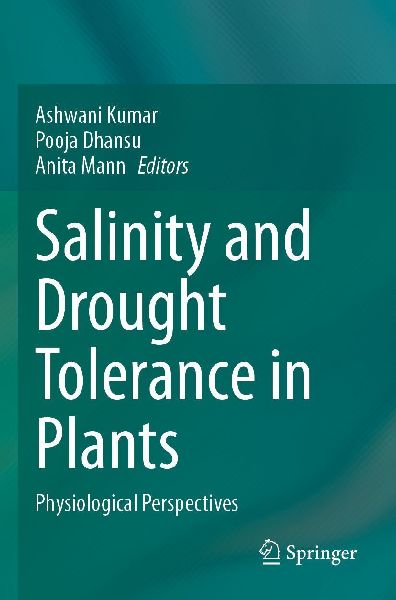
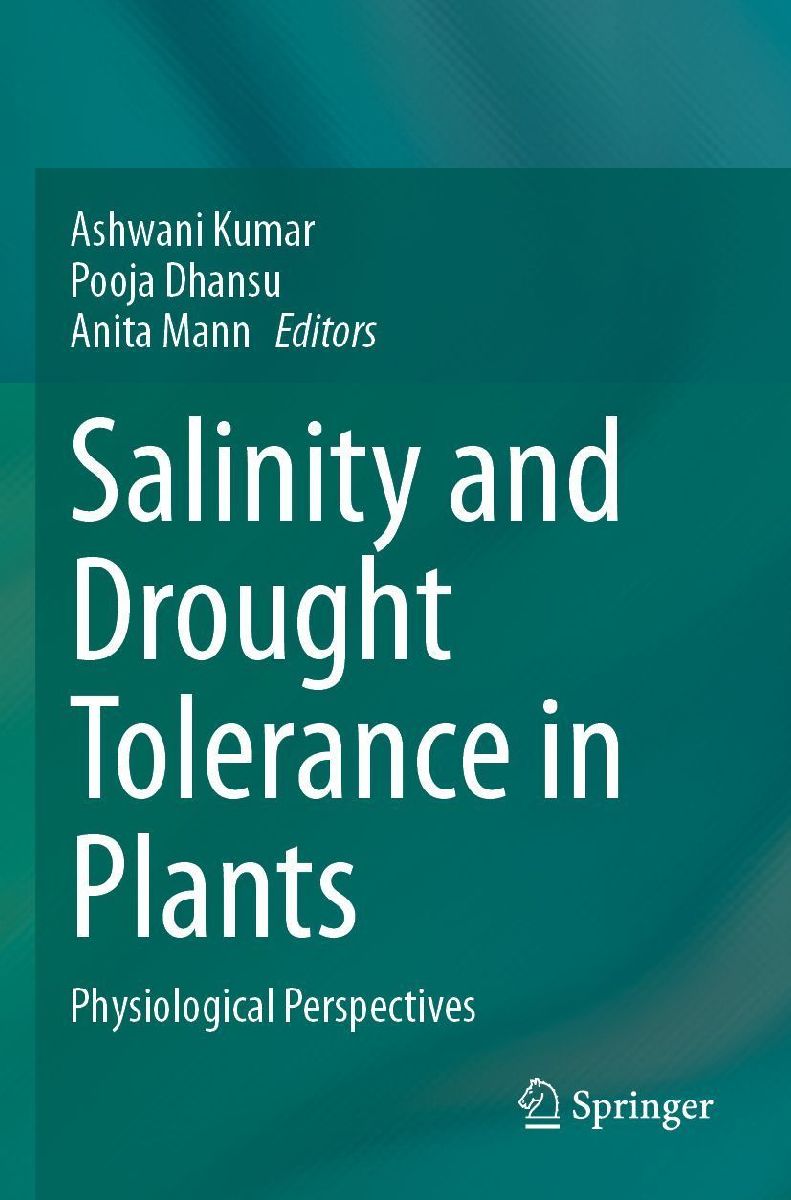
Physiological Perspectives
Herausgegeben von: Ashwani Kumar, Herausgegeben von: Pooja Dhansu, Herausgegeben von: Anita Mann
This edited book is a comprehensive collection of scientific research on different plants under drought and salt stress conditions.
The main focus of this book is to elaborate on the mechanisms being operative in plants under stress and how various biological factors mitigate the adverse effects for better plant productivity. This book covers all physiological, biochemical, and molecular mechanisms operating under drought and saline stresses.
The current status and impact of drought and salinity on various crop plants have been elaborated on in different chapters. Agricultural lands are either turning barren or becoming more saline and drought-prone with increasing temperatures, decreasing water tables, untimely rainfall, and other environmental factors.
In India, salt-affected soils occupy an area of about 6.73 million ha of which saline and sodic soils constitute roughly 40 and 60%, respectively. All these factors individually or cumulatively, affect the plant growth and development and hence, the crop productivity with the monetary loss. The inbuilt plant's ability with modified/acclimatized mechanisms has been described in various chapters with step-wise descriptions.
The role of various plant growth-promoting agents including nano-particles, micro-organisms, metabolites or phytohormones, etc in mitigating adverse effects of drought and salinity has been explained precisely. Updated information on the use of speed breeding, proteomics, epigenetics, and transcriptomics in different crops along with high throughput technologies is included for the cross-talk of various network mechanisms.
This book is helpful for the readers in knowing salinity and drought through the physiological, biochemical and genetic, and molecular levels to understand plant behaviour under stress conditions.
Also, the book serves as additional reading material for undergraduate and graduate students of agriculture, plant physiology, biochemistry, forestry, and environmental sciences. National and international agricultural scientists and policymakers will also find this to be a useful read.
Dr. Ashwani Kumar, Senior Scientist (Plant Physiology), has been working on various aspects of Crop Improvement for salt affected areas through institutional and externally funded research projects at ICAR-CSSRI, Karnal.
He has made significant contributions for studying the physiological and biochemical mechanisms of different crop plants in varying environments of salinity and drought. His scientific efficiency can be evaluated based on his association in inter-divisional/inter-institutional research programs with funding of more than 3 crores from different agencies. The Google Scholar Citation of 1354 with h-index of 20 depicts scientific output in the form of more than 50 peer-reviewed research papers, 15 book chapters, 15 popular articles, 4 technical bulletins and 9 training manuals, success stories etc. along with teaching experience of more than 10 years. Dr. Pooja Dhansu, Senior Scientist (Plant Physiology), has been working on various aspects of Sugarcane Improvement through institutional and externally funded research projects at ICAR-SBI, Regional Center, Karnal. She has made significant contributions for preservation of ready to serve sugarcane juice that had the shelf life of 30 days without preservatives and 90 days with addition of preservatives. In addition, she has been working on physiological and biochemical mechanisms of sugarcane clones in varying environments of salinity and drought. She has also received funding of more than 3.5 crore from various agencies. She has published more than 25 peer-reviewed research papers, 10 book chapters, 10 popular articles, 6 technical bulletins and 8 training manuals, success stories etc along with research guiding experience of more than 10 years to M.Sc. and Ph. D. students.
Dr. Anita Mann, Principal Scientist (Plant Physiology), is working on molecular plant physiology under abiotic stress in different crop plants. She has been working on gene identification from salt tolerant halophytes through transcriptomics and transformation of important gene(s) for salt tolerance in rice for enhanced salt tolerance. Simultaneously, she has been associated in identifying the salt tolerance in chickpea, pomegranate, okra, tomato etc. through physiological, biochemical, molecular and breeding approaches. She has also been awarded research fellowship from CSIR and Department of Science and Technology, New Delhi. She has published more than 60 research papers in national and international peer-reviewed journals including book chapters, general articles, bulletins etc. She has been guiding M.Sc. and Ph. D. students of Plant Physiology, Plant Biotechnology, Soil Science, Agroforestry etc.
Standardversand: 1 bis 3 Werktage, 3,99 €, kostenlos ab 35 €
Liefergebiet: Deutschland
Rücksendung: 14 Tage Widerrufsrecht. Bei einem Widerruf tragen Sie die Kosten der Rücksendung. Bei einer Falschlieferung oder einem Fehler von uns erstatten wir Ihnen das Rückporto. Den Widerruf erklären Sie über den Knopf „Vertrag widerrufen“ im Fuß der Seite.
Ashwani Kumar (Hrsg.)
Kartoniert, Englisch
213,99 €
Ashwani Kumar
Kartoniert, Englisch
43,90 €
Ashwani Kumar (Hrsg.)
Kartoniert, Englisch, 2 Ausgaben
ab 250,60 €
Ashwani Kumar (Hrsg.)
Gebunden, Englisch, 2 Ausgaben
ab 235,39 €
Tafadzwanashe Mabhaudhi (Hrsg.)
Kartoniert, Englisch, 2 Ausgaben
ab 42,79 €
Tesfa Sisay
Kartoniert, Englisch
17,95 €
Zu diesem Titel gibt es noch keine Bewertung. Bewerten kann, wer ihn bei uns gekauft hat.