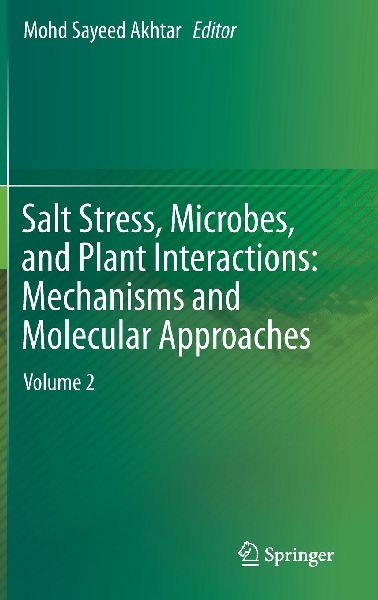
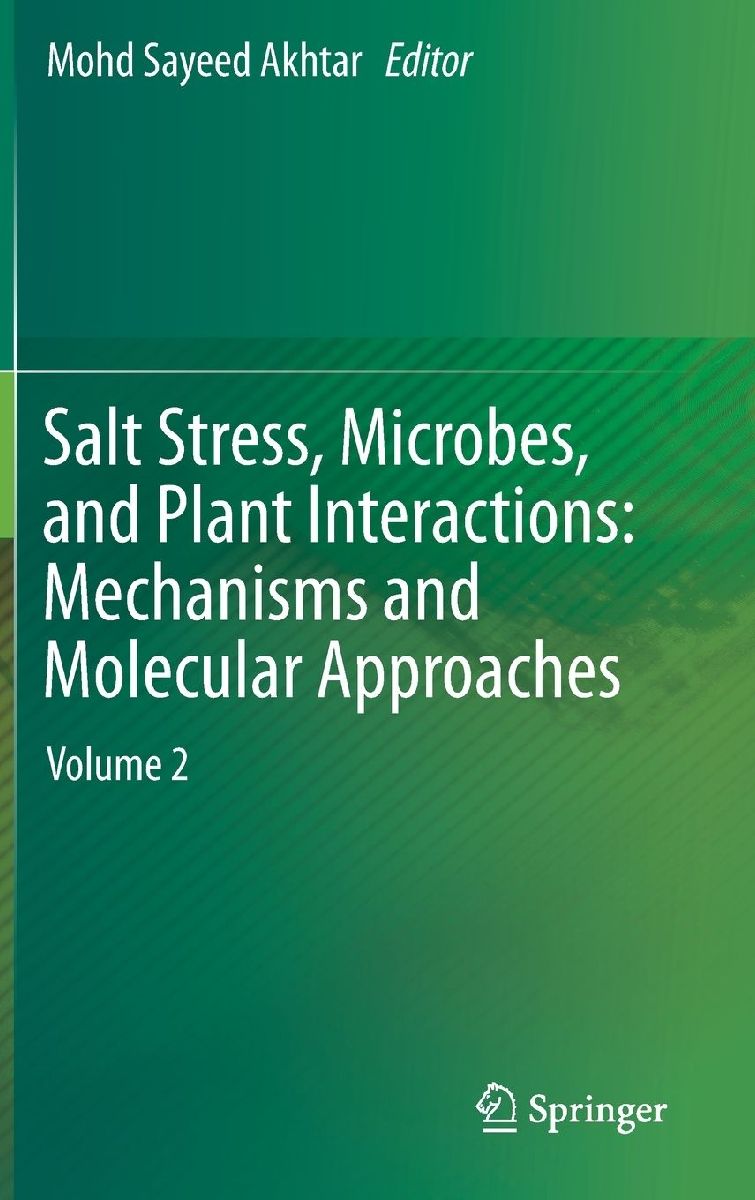
Salt Stress, Microbes, and Plant Interactions: Mechanisms and Molecular Approaches
Volume 2
von Mohd Sayeed Akhtar (Hrsg.)
Herausgegeben von: Mohd Sayeed Akhtar
- Einband
- Gebunden
- Seiten
- 316
- Sprache
- Englisch
- Erschienen
- November 2019
- Verlag
- Springer
Buchbeschreibung
This book offers an overview of salt stress, which has a devastating effect on the yields of various agricultural crops around the globe.
Excessive salts in soil reduce the availability of water, inhibit metabolic processes, and affect nutrient composition, osmotic balance, and hydraulic conductivity.
Ganze Beschreibung lesenWeniger anzeigen
Plants have developed a number of tolerance mechanisms, such as various compatible solutes, polyamines, reactive oxygen species and antioxidant defense mechanisms, ion transport and compartmentalization of injurious ions.
The exploitation of genetic variation, use of plant hormones, mineral nutrients, soil microbe interactions, and other mechanical practices are of prime importance in agriculture, and as such have been the subject of multidisciplinary research. Covering both theoretical and practical aspects, the book provides essential physiological, ecological, biochemical, environmental and molecular information as well as perspectives for future research.
It is a valuable resource for students, teachers and researchers and anyone interested in agronomy, ecology, stress physiology, environmental science, crop science and molecular biology.
Inhaltsverzeichnis
- Chapter 1. Microbial management of crop salinity stress: mechanisms, applications and prospects
- Chapter 2. Adaptive Mechanisms of Plants Against Salt Stress and Salt Shock
- Chapter 3. Molecular approaches and salt tolerance mechanisms in leguminous plants
- Chapter 4. Crop improvement through microbial biotechnology: A Crosstalk
- Chapter 5. Role of Phytohormones in Recuperating Salt Stress
- Chapter 6. An enigma in the genetic responses of plants to salt stresses
- Chapter 7. Application of microbial biotechnology in improving Salt stress and crop productivity
- Chapter 8. Consequences of bioinoculants and intercropping approach to alleviate plant drought and salinity stress for sustainable agriculture
Ganzes Inhaltsverzeichnis anzeigen (13 Einträge)Weniger anzeigen
- Chapter 9. Role of Signaling Pathways in Improving Salt Stress in Plants
- Chapter 10. Mechanisms and Molecular Approaches for Salt Tolerance Enhancement
- Chapter 11. Crops and Methods to Control Soil Salinity
- Chapter 12. Ameliorating plants salt stress through bacterial inoculation: Prospects and Challenges
- Chapter 13. Proline accumulation and oxidative stress: Diverse roles and mechanism of tolerance and adaptation under salinity stress
Details
- Erscheinungstermin
- November 2019
- Kategorie
- Fremdsprachige Bücher
- Einband
- Gebunden
- Seiten
- 316
- Sprache
- Englisch
- Verlag
- Springer
- Format
- 24,1 × 16,0 cm
- Dicke
- 2,3 cm
- Gewicht
- 589 g
- EAN / ISBN-13
- 9789811388040
Über Mohd Sayeed Akhtar (Hrsg.)
Dr. Mohd Sayeed Akhtar (PhD) is working as an Assistant Professor in Gandhi Faiz-e-Aam College, Shahjahanpur, U.P., India.
Mehr über Mohd Sayeed Akhtar (Hrsg.)Weniger anzeigen
He has received his PhD degree from Aligarh Muslim University (AMU), India in 2008, prior to conducting post-doctoral research at the Botanical Institute, University of Basel (BIB), Switzerland (2008-2010), and Chonbuk National University (CBNU), Republic of Korea in 2011. He was an Assistant Professor, Jimma University, Ethiopia (2011-2014), and a fellow researcher at the Institute of Tropical Agriculture, Universiti Putra Malaysia (UPM), (2014-2015). Dr. Akhtar has more than 15 years of research, and 10 years of teaching experience in soil microbiology, applied microbiology, environmental microbiology, molecular biology, plant pathology and plant nanobiotechnology. He is author and co-author of more than hundred articles in peer-reviewed journals, conference proceedings, and book chapters, and has edited 12 books with international publishers. He is serving the scientific community as editorial board member and reviewer of several high-impact international journals. His current research is focused on the rhizospheric plant-microbe interactions and their molecular biotechnology, bioremediation, biomineralization, nano-fertilizers and nanobiotechnology.
Versand und Rückgabe
Standardversand: 1 bis 3 Werktage, 3,99 €, kostenlos ab 35 €
Liefergebiet: Deutschland
Rücksendung: 14 Tage Widerrufsrecht. Bei einem Widerruf tragen Sie die Kosten der Rücksendung. Bei einer Falschlieferung oder einem Fehler von uns erstatten wir Ihnen das Rückporto. Den Widerruf erklären Sie über den Knopf „Vertrag widerrufen“ im Fuß der Seite.
Hersteller und ProduktsicherheitSpringer Nature Customer Service Center GmbH
Springer Nature Customer Service Center GmbH
Europaplatz 3
69115 Heidelberg
Deutschland
ProductSafety@springernature.com
Mehr von Mohd Sayeed Akhtar

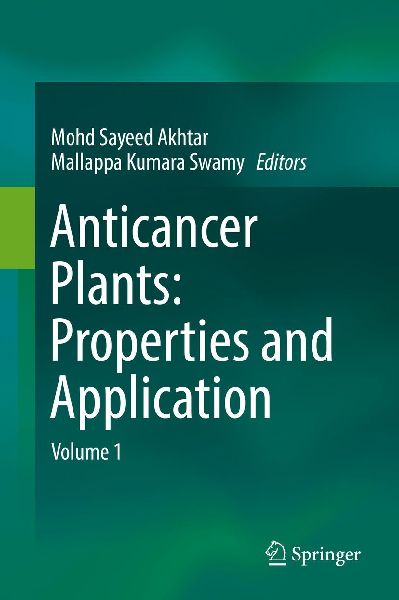
Anticancer plants: Properties and Application
Mohd Sayeed Akhtar (Hrsg.)
Gebunden, Englisch, 2 Ausgaben
ab 160,49 €
Salt Stress, Microbes, and Plant Interactions: Causes and Solution
Mohd Sayeed Akhtar (Hrsg.)
Gebunden, Englisch, 2 Ausgaben
ab 160,49 €
Ähnliche Titel
Plant Diseases and Food Security in the 21st Century
Peter Scott (Hrsg.)
Gebunden, Englisch, 2 Ausgaben
ab 139,09 €

Plant Genetic Resources (PGR) for Sustainable Crop Production
Tsukasa Nagamine (Hrsg.)
Kartoniert, Englisch, 2 Ausgaben
ab 139,09 €

Controlled Environment Horticulture
Christoph-Martin Geilfus
Kartoniert, Englisch, 2 Ausgaben
ab 64,19 €
Abiotic Stress Physiology of Horticultural Crops
N. K. Srinivasa Rao (Hrsg.)
Gebunden, Englisch, 2 Ausgaben
ab 160,49 €
Bewertungen
Zu diesem Titel gibt es noch keine Bewertung. Bewerten kann, wer ihn bei uns gekauft hat.
So prüfen wir Bewertungen
Eine Bewertung kann bei uns nur abgeben, wer den Titel über sein Kundenkonto bei uns gekauft hat. Jede Bewertung ist fest mit der zugehörigen Bestellung verknüpft; anders kommt sie technisch gar nicht zustande. Deshalb trägt jede angezeigte Bewertung den Hinweis „Verifizierter Kauf". Wir zeigen positive wie negative Bewertungen und löschen nur bei Rechtsverstößen. Für Bewertungen gibt es keine Gegenleistung.
160,49 €Voraussichtlich 4. bis 8. Dez.