Buch-OWLOnline-Buchhandel

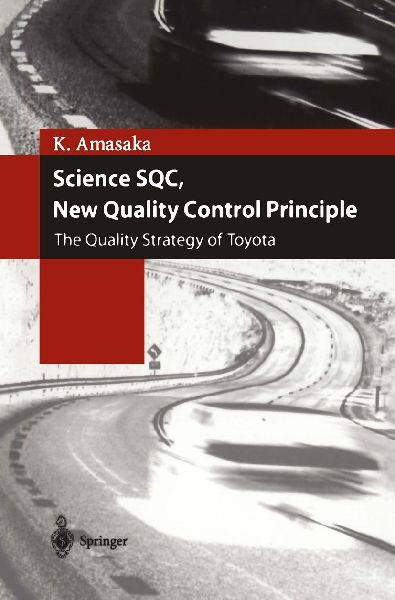
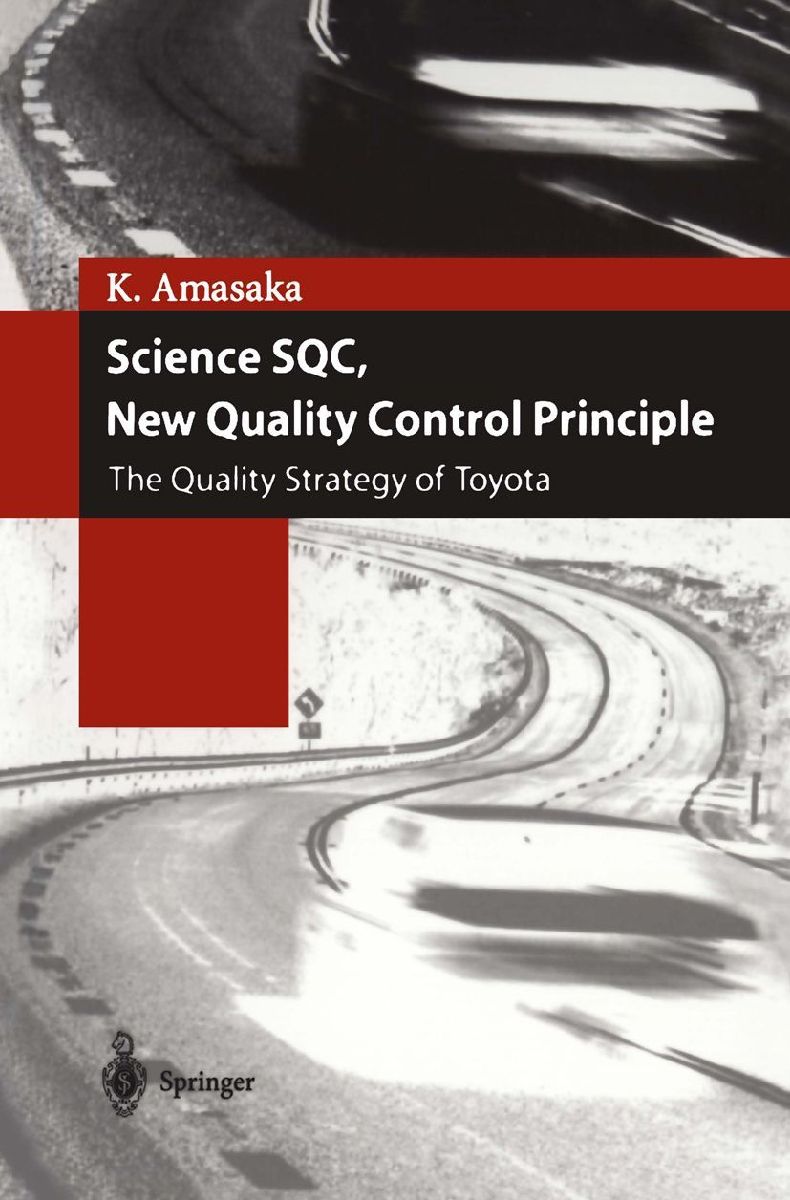
Science SQC, New Quality Control Principle

The Quality Strategy of Toyota

von Kakuro Amasaka

Einband
Kartoniert
Seiten
340
Sprache
Englisch
Erschienen
Oktober 2012
Verlag
Springer

Buchbeschreibung

As is represented by the world's top-level Japanese automotive manufacturers, Japanese manufacturers have been climbing to winning positions in global businesses.

The driving force of their success includes responsiveness to diversifying market needs and elevating quality requirements, clarification of development concepts that facilitate new technology, application of technology to product planning and design, advanced production control systems that elaborately utilize state-of-the-art manufacturing technologies, and flexible, efficient production.

Ganze Beschreibung lesenWeniger anzeigen

Many Japanese manufacturers succeeded in fulfilling these factors mainly because they utilize Japanese-style Lean Production Systems or the so-called Toyota Production System (TPS) and Japanese-style, scientific quality management approaches such as Statistical Quality Control (SQC) and Total Quality Management (TQM) in order to improve their corporate management technology.

As severe competition among manufacturers intensify both in Japan and overseas, action against quality problems that remarkably diminish customer satisfaction, and customer-first quality management, is becoming important. Scientific quality control methods that aim to optimize production processes for building in quality were undermined by the past expansion of quantity-oriented manufacturing through automation with massive and heavy equipment.

Inhaltsverzeichnis

  • Science SQC, New Quality Control Principle
  • 1: SQC Renaissance SQC Promotion Cycle Activities: SQC Promotion Activities under the Banner of "SQC Renaissance" in Toyota Motor Corporation
  • 2: Scientific SQC Approach Utilizing SQC Technical Methods: A New SQC Concept and Procedure in the Manufacturing Industry
  • 3: "Science SQC" Proposal Utilizing Management SQC: A Study on "Science SQC" for Improving the Job Quality
  • 4: "Science SQC" Implementation New SQC Internal Education: A Proposal of "Science SQC" for Improving Principle of TQM
  • 5: "Science SQC", A New Quality Control Principle A New Principle Science SQC: Proposal and Implementation of the "Science SQC", Quality Control Principle
  • Human Resource Development and Practical Outcomes of Science SQC in Toyota
  • 6: SQC Promotion Cycle Activities Improving Human Resource Development: SQC Development and Effects at Toyota
Ganzes Inhaltsverzeichnis anzeigen (21 Einträge)Weniger anzeigen
  • 7: Management SQC New SQC Education for Managers' Performance: A Proposal of the New SQC Internal Education for Management
  • 8: TSIS-QR System A Visualized SQC Report for Technical Wealth: A Construction of SQC Intelligence System for Quick Registration and Retrieval Library
  • Technological Quality Strategy in Toyota
  • 9: Product Plan Design The Validity of the Profile Design Support Tool: Studies on "Design SQC" with the Application of "Science SQC"- Improving of Business Process Method for Automotive Profile Design
  • 10: Development Design Verification of SFC Estimation Formula: Analysis of Factors for Specific Fuel Consumption Improvement
  • 11 : Reliability Design Understanding the Oil Leakage Mechanism: Reliability of Oil Seal for Transaxle -A Science SQC Approach
  • 12: CAE Design Improvement in CAE Analytic Precision: A Study of Estimating Coefficients ofLift at Vehicle -Using Neural Network and Multivariate Analysis Method Together
  • 13: Production Engineering Spring Back Control Measures Analysis of Total Curvature Spring Back in Stamped Parts with Large Curvature
  • 14: Process Design Improvement of Center-less Ground Surface Roughness: Studies on the Rust Preventive Quality Assurance of Rod Piston Plating Parts
  • 15: Production Preparation Improving Equipment Reliability: Improving the Reliability of Body Assembly Line Equipment
  • 16: Production Process Integration of "Inline-Online SQC": Availability and Reliability Information Administration System "ARM - BL"
  • 17: Process Control TPS Manufacturing Fundamentals: Applying Intelligence Control Charts by "TPS-QAS" with "Inline- Online SQC"
  • 5. Conclusion

Details

Erscheinungstermin
Oktober 2012
Kategorie
Fremdsprachige Bücher
Einband
Kartoniert
Seiten
340
Sprache
Englisch
Verlag
Springer
Format
23,5 × 15,5 cm
Dicke
1,9 cm
Gewicht
517 g
EAN / ISBN-13
9784431679714
Maßstabsgetreu: Deckel und Buchrücken neben einer Hand (18 cm).
Versand und Rückgabe

Standardversand: 1 bis 3 Werktage, 3,99 €, kostenlos ab 35 €

Liefergebiet: Deutschland

Rücksendung: 14 Tage Widerrufsrecht. Bei einem Widerruf tragen Sie die Kosten der Rücksendung. Bei einer Falschlieferung oder einem Fehler von uns erstatten wir Ihnen das Rückporto. Den Widerruf erklären Sie über den Knopf „Vertrag widerrufen“ im Fuß der Seite.

Hersteller und ProduktsicherheitSpringer Nature Customer Service Center GmbH
Springer Nature Customer Service Center GmbH
Europaplatz 3
69115 Heidelberg
Deutschland
ProductSafety@springernature.com

Mehr von Kakuro Amasaka

Ähnliche Titel

Bewertungen

Zu diesem Titel gibt es noch keine Bewertung. Bewerten kann, wer ihn bei uns gekauft hat.
So prüfen wir Bewertungen
Eine Bewertung kann bei uns nur abgeben, wer den Titel über sein Kundenkonto bei uns gekauft hat. Jede Bewertung ist fest mit der zugehörigen Bestellung verknüpft; anders kommt sie technisch gar nicht zustande. Deshalb trägt jede angezeigte Bewertung den Hinweis „Verifizierter Kauf". Wir zeigen positive wie negative Bewertungen und löschen nur bei Rechtsverstößen. Für Bewertungen gibt es keine Gegenleistung.
117,69 €Voraussichtlich 1. bis 3. Dez.

Inhalte ab 18

Cover von Titeln für Erwachsene, etwa erotische Romane, Manga oder Comics, bleiben unscharf, bis Sie bestätigen. Die Bestätigung gilt für alle Seiten und Tabs, bis Sie den Browser schließen.

Zurück zum Katalog