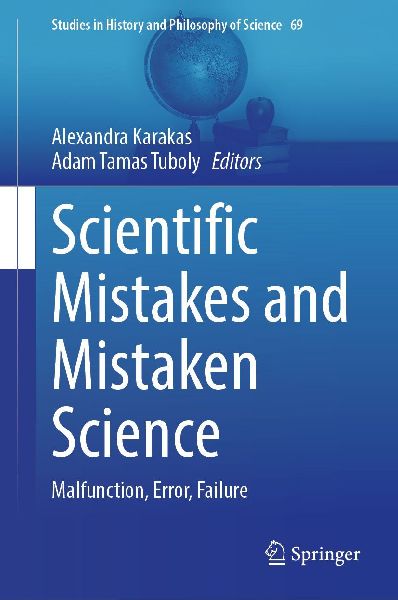
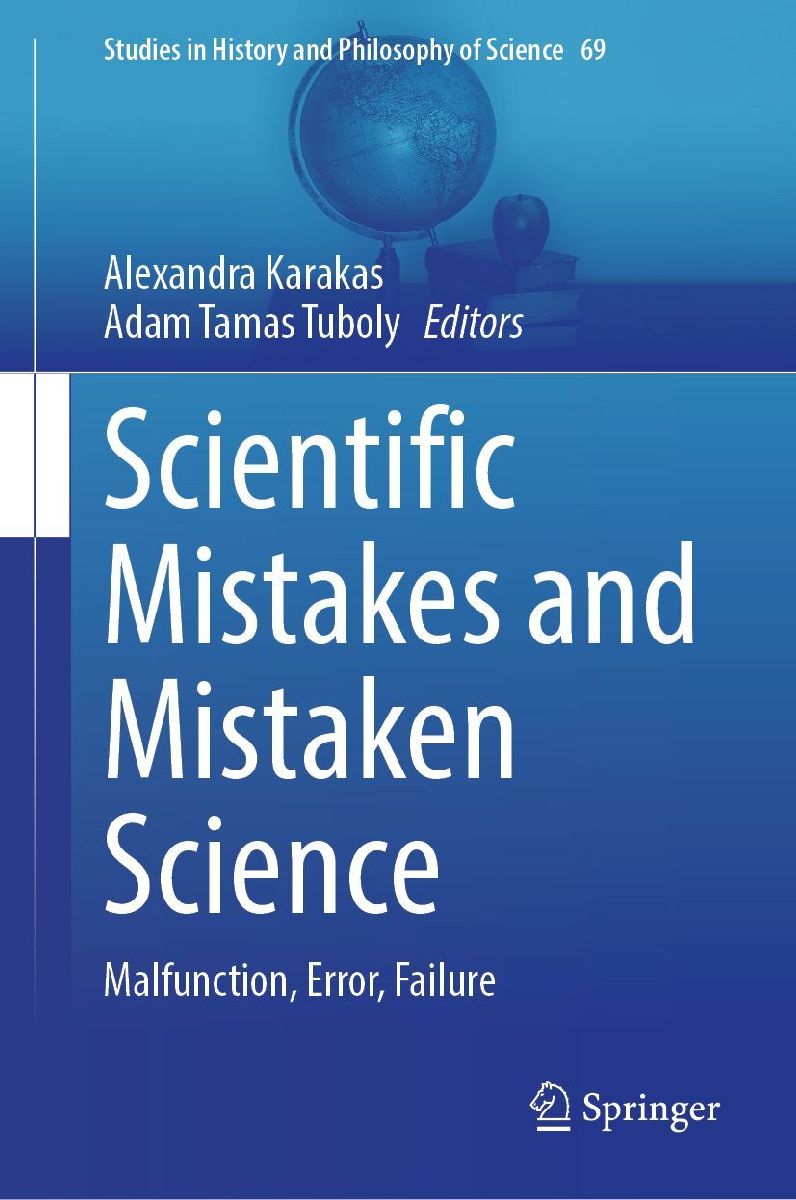
Scientific Mistakes and Mistaken Science
Malfunction, Error, Failure
Herausgegeben von: Alexandra Karakas, Herausgegeben von: Adam Tamas Tuboly
Aus der Reihe Studies in History and Philosophy of Science
- Einband
- Gebunden
- Seiten
- 256
- Sprache
- Englisch
- Erschienen
- August 2026
- Verlag
- Springer
Buchbeschreibung
The book is designed to show that the public and professional understanding of science is somewhat biased, and error, failure and mistake play a more substantial role than usually conceived.
Trust in science should be grounded in acknowledging that only through repeated experiments, trial and error, research and development scientists can produce reliable knowledge.
Ganze Beschreibung lesenWeniger anzeigen
This book presents cases that are considered dead ends, failures, and not only points out the heuristic value of failure but also emphasizes the nonlinearity of knowledge production in different domains and perspectives.
It focuses on the epistemic, philosophical, practical, theoretical, and institutional consequences of error and fosters dialogues between philosophers, historians, and scientists, representing contemporary thinking about science. This book is thus of great interest to philosophers, sociologists, and historians.
Inhaltsverzeichnis
- Chapter 1. Science through Errors: Why Mistakes Matter? (Alexandra Karakas and Adam Tamas Tuboly)
- Part I: Conceptual and Typological Issues
- Chapter 2. Error Repertories: Transforming Missteps into Knowledge (Douglas Allchin)
- Chapter 3. Failure in Practice and Dialectic in Theory: More Value, Context, Relativity and Plurality in Science (Jordi Cat)
- Chapter 4. Failure in Science: A Conceptual and Systematic Exploration (Sebastian Schoul)
- Chapter 5. On the Conditions of Error and What Can be Learnt from It (Giora Hon)
- Chapter 6. Ignorance and Error are at the Heart of Scientific Knowledge Production (Hans-Jörg Rheinberger)
- Chapter 7. The gap and the error arguments for values in science: Structure and mutual relationship (Philippe Stamenkovic)
Ganzes Inhaltsverzeichnis anzeigen (16 Einträge)Weniger anzeigen
- Part II: Case Studies of Mistakes and Malfunction
- Chapter 8. Good and Bad Scientific Mistakes (Harry Collins)
- Chapter 9. Detecting Phenomena in Datasets: Is the Rest Noise? (David Colaço)
- Chapter 10. Measuring versus Mismeasuring: Precision and Accuracy in the Eudiometer (Alexandra Karakas)
- Chapter 11. The Development of the GM Counter: Cosmic Rays and Contexts of Equipment 1928-1950 (Mark T. Young)
- Chapter 12. The ’Geneticists’ Nightmare’: The Promises and Pitfalls of the Common Disease, Common Variant Hypothesis and Common Disease Genetic Epidemiology (Christopher R. Donohue)
- Chapter 13. How Can Art Fail? (Ruth Lorand)
- Index
Details
- Erscheinungstermin
- August 2026
- Kategorie
- Fremdsprachige Bücher
- Einband
- Gebunden
- Seiten
- 256
- Sprache
- Englisch
- Verlag
- Springer
- Reihe
- Studies in History and Philosophy of Science
- Format
- 24,1 × 16,0 cm
- Dicke
- 2,0 cm
- Gewicht
- 501 g
- EAN / ISBN-13
- 9783032259240
Über Alexandra Karakas (Hrsg.)
Alexandra Karakas is an assistant lecturer in the Department of Philosophy and History of Science at the Budapest University of Technology and Economics.
Mehr über Alexandra Karakas (Hrsg.)Weniger anzeigen
She received her PhD in 2023 with a dissertation titled Technical Artefacts and the Problem of Malfunction, which examines the meaning, significance, and typology of malfunction in scientific practice. She is currently working on a monograph on malfunction. Her research interests lie in the history and philosophy of science, with a particular focus on the material and visual culture of science.
Adam Tamas Tuboly was leader of the MTA Lendület Values and Science Research Group, and he is senior researcher at the Department of Behavioural Sciences at the Medical School of the University of Pécs. He is interested in the history of philosophy of science, and in the relations between science and pseudoscience. He has edited and written several volumes on these topics.
Versand und Rückgabe
Standardversand: 1 bis 3 Werktage, 3,99 €, kostenlos ab 35 €
Liefergebiet: Deutschland
Rücksendung: 14 Tage Widerrufsrecht. Bei einem Widerruf tragen Sie die Kosten der Rücksendung. Bei einer Falschlieferung oder einem Fehler von uns erstatten wir Ihnen das Rückporto. Den Widerruf erklären Sie über den Knopf „Vertrag widerrufen“ im Fuß der Seite.
Hersteller und ProduktsicherheitSpringer Nature Customer Service Center GmbH
Springer Nature Customer Service Center GmbH
Europaplatz 3
69115 Heidelberg
Deutschland
ProductSafety@springernature.com
Mehr aus der Reihe Studies in History and Philosophy of Science


The Forgotten Giants: Overlooked Revolutions in Natural Philosophy
El¿bieta Jung (Hrsg.)
Gebunden, Englisch
160,49 €

History of Mathematical Sciences: Portugal and East Asia VI
Luís Saraiva (Hrsg.)
Gebunden, Englisch
160,49 €

Ähnliche Titel


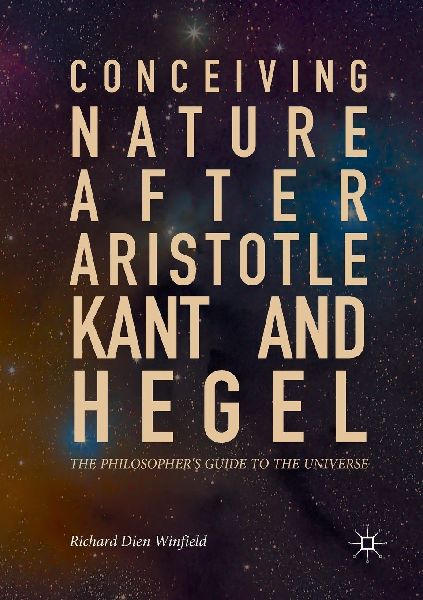
Conceiving Nature after Aristotle, Kant, and Hegel
Richard Dien Winfield
Kartoniert, Englisch, 2 Ausgaben
ab 128,39 €
Bewertungen
Zu diesem Titel gibt es noch keine Bewertung. Bewerten kann, wer ihn bei uns gekauft hat.
So prüfen wir Bewertungen
Eine Bewertung kann bei uns nur abgeben, wer den Titel über sein Kundenkonto bei uns gekauft hat. Jede Bewertung ist fest mit der zugehörigen Bestellung verknüpft; anders kommt sie technisch gar nicht zustande. Deshalb trägt jede angezeigte Bewertung den Hinweis „Verifizierter Kauf". Wir zeigen positive wie negative Bewertungen und löschen nur bei Rechtsverstößen. Für Bewertungen gibt es keine Gegenleistung.
139,09 €Voraussichtlich 4. bis 8. Dez.