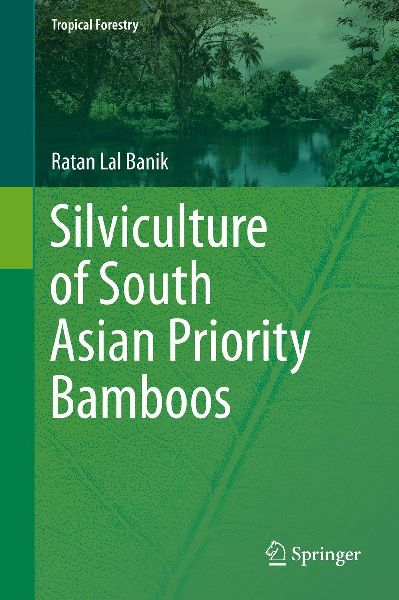
Silviculture of South Asian Priority Bamboos
von Ratan Lal Banik
Aus der Reihe Tropical Forestry
- Einband
- Gebunden
- Seiten
- 360
- Sprache
- Englisch
- Erschienen
- Oktober 2016
- Verlag
- Springer
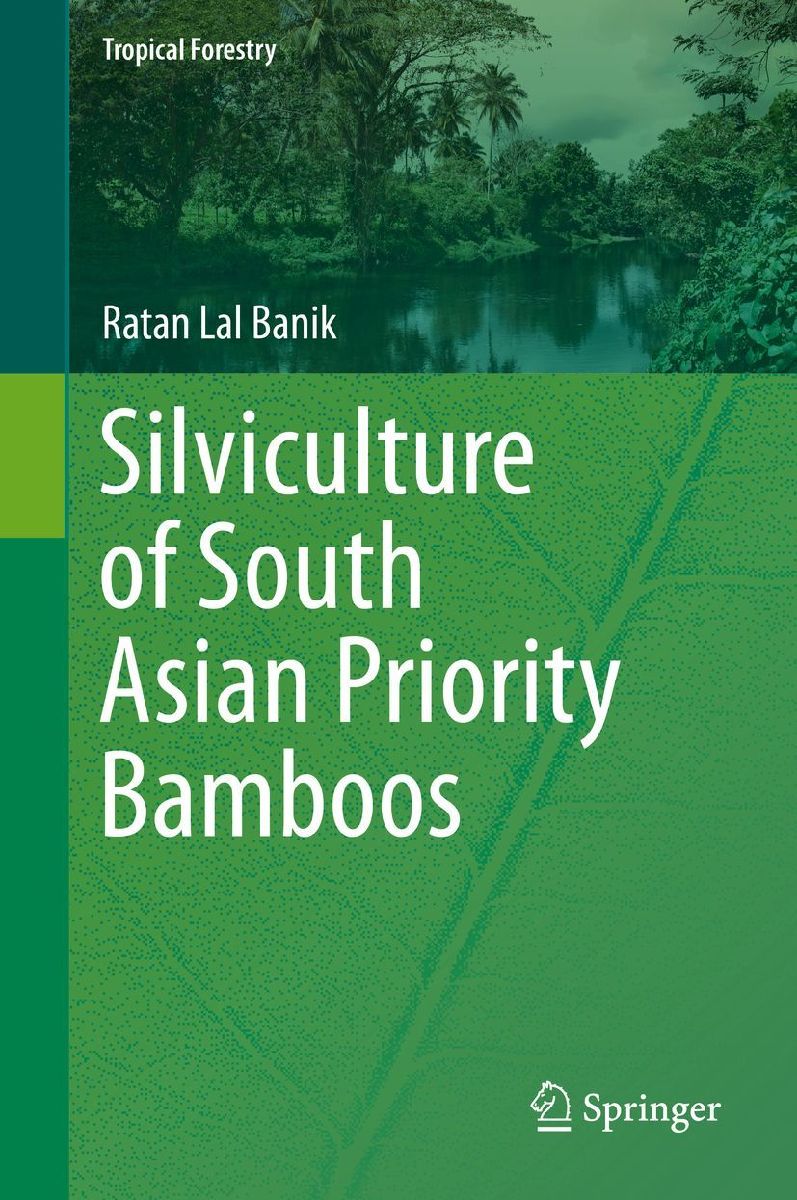
Buchbeschreibung
This monograph aims at bringing out a comprehensive collection of information on bamboo varieties in South Asia.
The main focus of this book is to address the ecological and economic significance of bamboos. Bamboo is a versatile group of plants, capable of providing ecological, economic and livelihood security to the people. In the tropics, especially the rural areas in different countries of South Asia, most of the houses are made of bamboos.
Ganze Beschreibung lesenWeniger anzeigen
In the hilly areas of Bangladesh, Bhutan, Nepal and India, the tribal people take bamboo shoots as one of their major food items since prehistoric days. With palatable shoots and grass like leaves bamboo plants have also been liked by many herbivore animals, such as, elephants, the wild cattle, Indian Bison, and some species of deer.
The red-panda in the Himalayas, and primates, pigs, rats and mice, porcupines, and squirrels are also incidental feeders on southeast Asian bamboos.
There has been a growing awareness in recent years about the values of bamboo being an important means of economic growth and for improving the socio-economic conditions of the rural poor. Bamboo as an industrial material can substitute wood and that to at low cost. Due to increasing demand and squeezing of bamboo area the plants have been overexploited and the quality and quantity of resource alarmingly getting depleted.
Besides many new bamboo based industries have come up which also urgently require uninterrupted supply of species wise bamboo resource. The south Asia region has bestowed with more than 300 bamboo species with enormous diversities at species, ecological and genetical level. A number of bamboo species are found common among countries of the region selected for various utilization potentials having wide range of ability to adjust environmental conditions of these countries and thus prioritized for cultivation.
Both government and private planters inthe region have started allocating funds, land and other logistics to raise large scale plantation of desired bamboo species.
This book has been drafted to find out answers of the most pertinent queries based on the field observations on each of the bamboo species and knowledge learnt from the indigenous people living with bamboos in different parts of south-east and south Asian countries.
This monograph would be interesting and useful to bamboo professionals, foresters, horticulturists, field level extension workers, nurserymen, planters, industrial entrepreneurs, ecologists, and valuable source of reference to the relevant researchers and students in the region.
Inhaltsverzeichnis
- Part I : Introduction
- Introduction to South Asian Bamboos
- Some Priority Bamboo Species For South Asian Region
- Part II: Species Silviculture
- Bambusa
- Dendrocalamus Nees
- Gigantochloa
- Melocalamus
Ganzes Inhaltsverzeichnis anzeigen (16 Einträge)Weniger anzeigen
- Melocanna Trin
- Ochlandra Thwaites
- Schizostachyum Nees
- Thyrsostachys Gamble
- Ringal bamboos of the Himalayas
- Appendix
- References
- Index
Details
- Erscheinungstermin
- Oktober 2016
- Kategorie
- Fremdsprachige Bücher
- Einband
- Gebunden
- Seiten
- 360
- Sprache
- Englisch
- Verlag
- Springer
- Reihe
- Tropical Forestry
- Format
- 24,1 × 16,0 cm
- Dicke
- 2,4 cm
- Gewicht
- 719 g
- EAN / ISBN-13
- 9789811005688
Über Ratan Lal Banik
Dr. Ratan Lal Banik is currently retired and worked as CöChairperson from International Network for Bamboo & Rattan, New Delhi, India.
Mehr über Ratan Lal BanikWeniger anzeigen
His field of specialization:a) Bamboo & Rattan silviculture and management, propagation and nursery management, Plantation raising & management, Tissue culture and Improvement, Species Diversity and Germplasm conservation at Bambusetum.b) Homestead & farm forestry, MPTs including medicinal plants, Horticulture and Agroforestry.c) Tree improvement, Seed orchard, Biodiversity and Conservation, Ethnobotany and Community Role His publications:1. Physiological studies on the adventitious roots formation in Jute Plants. Pakistan Journal Sc. Res. 21 (3) : 81¿87., 1969.2. Clearfelling systems for Sunderban Forests. Forest Dale News. 1970. Vol. III (1&2): 44¿70.3. High sensitivity to monochromatic lights in seed germination of Pinus resinosa. Proc. of the Second. Inter. Symp. on Physiology of seed germination. Tokyo, Japan., 1976. Page 133¿140.4. Studies on grading of teak fruits. I, fruit size is a factor in germination of teak seed. Bano Biggyan Patrika (Bang Journal of Forest Science), 6(1) : 1¿7., 1977.5. Studies on grading of teak fruits. II. Combined effect of fruit weight and size in the production of seedlings. Bano Biggyan Patrika(Bang Journal of Forest Science),7(1&2): 20¿29.,1978.6. Ban Abong Paribash ¿ in Bengali. (Forest and Environment, in English). Booklet, 1978. The Art Press. Printed by the D.F.O. Chittagong, Bangladesh. Page 6¿8).
Versand und Rückgabe
Standardversand: 1 bis 3 Werktage, 3,99 €, kostenlos ab 35 €
Liefergebiet: Deutschland
Rücksendung: 14 Tage Widerrufsrecht. Bei einem Widerruf tragen Sie die Kosten der Rücksendung. Bei einer Falschlieferung oder einem Fehler von uns erstatten wir Ihnen das Rückporto. Den Widerruf erklären Sie über den Knopf „Vertrag widerrufen“ im Fuß der Seite.
Hersteller und ProduktsicherheitSpringer Nature Customer Service Center GmbH
Springer Nature Customer Service Center GmbH
Europaplatz 3
69115 Heidelberg
Deutschland
ProductSafety@springernature.com
Mehr aus der Reihe Tropical Forestry

Ähnliche Titel



Bewertungen
Zu diesem Titel gibt es noch keine Bewertung. Bewerten kann, wer ihn bei uns gekauft hat.
So prüfen wir Bewertungen
Eine Bewertung kann bei uns nur abgeben, wer den Titel über sein Kundenkonto bei uns gekauft hat. Jede Bewertung ist fest mit der zugehörigen Bestellung verknüpft; anders kommt sie technisch gar nicht zustande. Deshalb trägt jede angezeigte Bewertung den Hinweis „Verifizierter Kauf". Wir zeigen positive wie negative Bewertungen und löschen nur bei Rechtsverstößen. Für Bewertungen gibt es keine Gegenleistung.
160,49 €Voraussichtlich 7. bis 9. Dez.