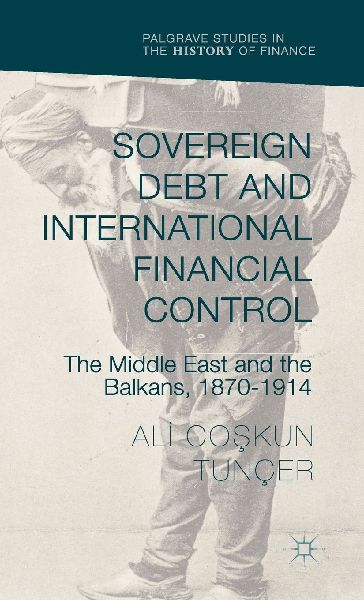
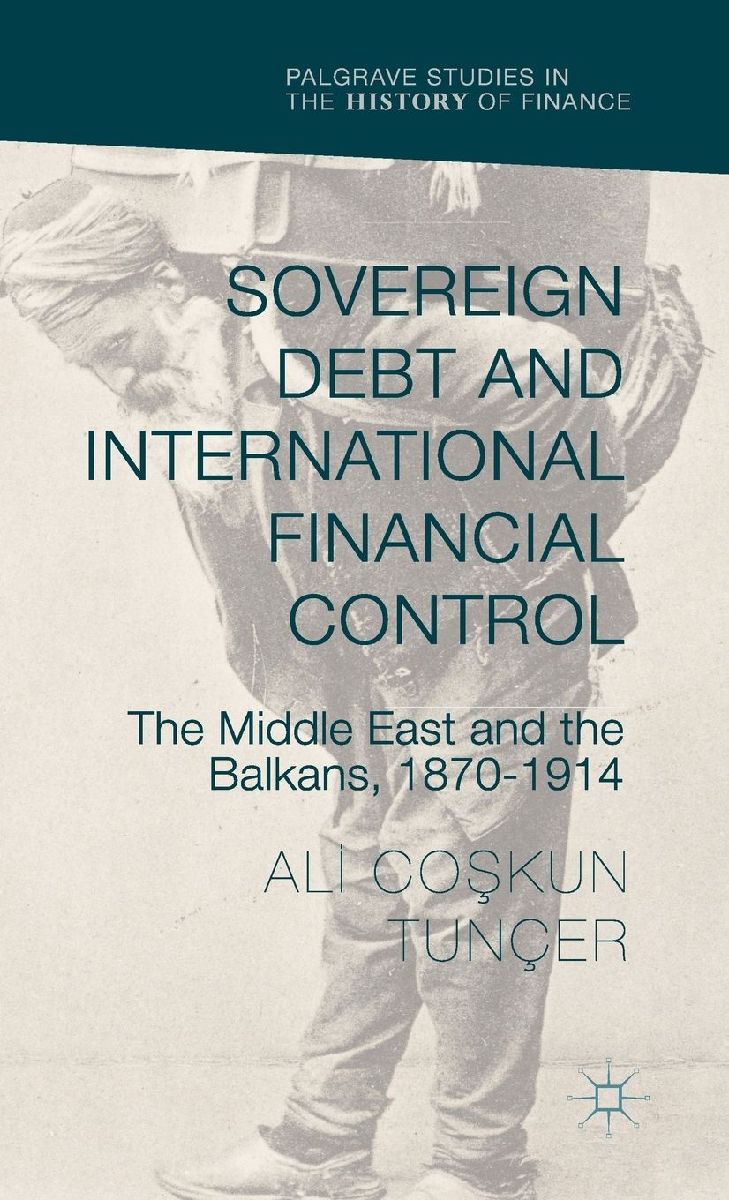
Sovereign Debt and International Financial Control
The Middle East and the Balkans, 1870-1914
Aus der Reihe Palgrave Studies in the History of Finance
- Einband
- Gebunden
- Seiten
- 264
- Sprache
- Englisch
- Erschienen
- August 2015
- Verlag
- Palgrave Macmillan
Buchbeschreibung
This book revisits an important chapter of financial history in the Middle East and the Balkans from 1870 1914. During this period, capital flows in the form of sovereign debt increased rapidly throughout the region.
The spiral of heavy government borrowing eventually culminated in defaults on foreign obligations in the Ottoman Empire (1875), Egypt (1876), Greece (1893) and Serbia (1895).
Ganze Beschreibung lesenWeniger anzeigen
In all four cases, introducing international financial control over the finances of the debtor states became the prevalent form of dealing with defaults.
The different cases of international financial control became increasingly refined and they marked important milestones in the evolution of the global governance of sovereign debt before 1914. For the defaulting states however, the immediate impact of international financial control was infringement of sovereignty.
The extent of international financial control and the borrowing capacity of debtor states varied in each case as well as the degree of resistance towards it. This book documents the characteristics of international financial control in a comparative perspective. It relates sovereign debt, default and international financial control to political and fiscal systems, and raises questions about the tension between national sovereignty and global capital.
It sheds light on the impact of international financial control on the long-term credibility and fiscal capacity of the debtor states in question. The author demonstrates that the governments' decisions to borrow internationally, and their attitudes towards international financial control, were heavily influenced by domestic political and fiscal factors.
Inhaltsverzeichnis
- 1 Introduction
- 2 Governing Sovereign Debt: Defaults And Enforcement, 1870-1914
- 2.1 Origins Of Defaults: Financial And Monetary Constraints
- 2.2 Costs Of Defaults: Enforcement And Conditionality
- 2.2.1 Direct Sanctions And Preventing Access To Future Credit
- 2.2.2 Protective Clauses And Bondholder Committees
- 2.2.3 Assignment And Control Of Future Revenues
- 2.3 Summary And Conclusions
Ganzes Inhaltsverzeichnis anzeigen (43 Einträge)Weniger anzeigen
- 3 From Financial Control To Colonisation: Egypt, 1862-1914
- 3.1 Khedives As Borrowers: Crisis, Default And Punishment
- 3.2 The Loss Of Political Sovereignty And Imperial Rivalry
- 3.3 Summary And Conclusions
- 4 From ''Financial Barbarism'' To Cooperation: The Ottoman Empire, 1854-1914
- 4.1 Lending To The Sick Man Of Bond Markets
- 4.2 The Loss Of Fiscal Sovereignty And Cooperation
- 4.3 Summary And Conclusions
- 5 From Fiscal Control To Financial Supervision: Serbia, 1878-1914
- 5.1 A Newborn State Surrounded By Foreign Creditors
- 5.2 Financial Control In A ''Land
- Of Monopolies''
- 5.3 Summary And Conclusions
- 6 From Financial Supervision To Political Resistance: Greece, 1879-1914
- 6.1 Financial Isolation And Settlement: A History Of Defaults
- 6.2 Refining The Control And ''Mistrust'' To Creditors
- 6.3 Summary And Conclusions
- 7 International Financial Control And Sovereign Risk
- 7.1 Determinants Of Sovereign Risk Before 1914: A Critical Review
- 7.2 Measuring Sovereign Risk: Sources And Methodology
- 7.3 Structural Breaks In Spread: The Bai-Perron Test
- 7.4 Summary And Conclusions
- 8 Debt, Default And Resistance: Political Economy Of Ifcs
- 8.1 Fiscal Capacity, Political Regimes And Tax Systems: A Review
- 8.1.1 Taxation Vs Representation
- 8.1.2 Direct Vs Indirect Taxes
- 8.1.3 Political Regime Type And Public Debt
- 8.1.4 Foreign Rule: Resistance Vs Cooperation
- 8.1.5 Conclusion
- 8.2 Varying Degrees Of Success And The Extent Of Control
- 8.3 Political Institutions And Tax Systems In The Middle East And The Balkans
- 8.4 Summary And Conclusions
- 9 Conclusion
- Bibliography
- Data Appendix
Details
- Erscheinungstermin
- August 2015
- Kategorie
- Fremdsprachige Bücher
- Einband
- Gebunden
- Seiten
- 264
- Sprache
- Englisch
- Verlag
- Palgrave Macmillan
- Reihe
- Palgrave Studies in the History of Finance
- Format
- 22,2 × 14,5 cm
- Dicke
- 1,9 cm
- Gewicht
- 408 g
- EAN / ISBN-13
- 9781137378538
Über Ali Co?kun Tunçer
Ali Co?kun Tunçer is Lecturer in Modern Economic History at the Department of History, University College London (UCL).
Mehr über Ali Co?kun TunçerWeniger anzeigen
Previously he taught and conducted research in economic history at the London School of Economics and the European University Institute, Italy. His research focuses on the economic and financial history of the late Ottoman Empire, long-term economic change in the Middle East and Southeast Europe, the history of financial markets from the early modern era to the present, and long-term market integration in Europe and the Mediterranean.
Versand und Rückgabe
Standardversand: 1 bis 3 Werktage, 3,99 €, kostenlos ab 35 €
Liefergebiet: Deutschland
Rücksendung: 14 Tage Widerrufsrecht. Bei einem Widerruf tragen Sie die Kosten der Rücksendung. Bei einer Falschlieferung oder einem Fehler von uns erstatten wir Ihnen das Rückporto. Den Widerruf erklären Sie über den Knopf „Vertrag widerrufen“ im Fuß der Seite.
Hersteller und ProduktsicherheitSpringer Nature Customer Service Center GmbH
Springer Nature Customer Service Center GmbH
Europaplatz 3
69115 Heidelberg
Deutschland
ProductSafety@springernature.com
Mehr aus der Reihe Palgrave Studies in the History of Finance


Credit Networks in The Preindustrial World
Elise M. Dermineur (Hrsg.)
Kartoniert, Englisch, 2 Ausgaben
ab 42,79 €
Ähnliche Titel


The Institutions of Land Property Rights in China
Denggao Long
Gebunden, Englisch, 2 Ausgaben
ab 139,09 €

Bewertungen
Zu diesem Titel gibt es noch keine Bewertung. Bewerten kann, wer ihn bei uns gekauft hat.
So prüfen wir Bewertungen
Eine Bewertung kann bei uns nur abgeben, wer den Titel über sein Kundenkonto bei uns gekauft hat. Jede Bewertung ist fest mit der zugehörigen Bestellung verknüpft; anders kommt sie technisch gar nicht zustande. Deshalb trägt jede angezeigte Bewertung den Hinweis „Verifizierter Kauf". Wir zeigen positive wie negative Bewertungen und löschen nur bei Rechtsverstößen. Für Bewertungen gibt es keine Gegenleistung.
149,79 €Voraussichtlich 4. bis 8. Dez.