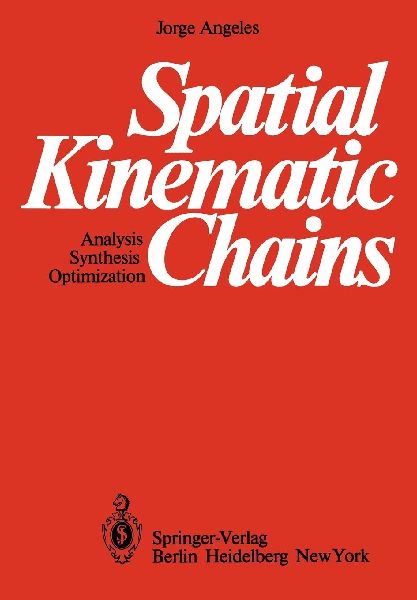
Spatial Kinematic Chains
Analysis - Synthesis - Optimization
von Jorge Angeles
- Einband
- Kartoniert
- Seiten
- 384
- Sprache
- Englisch
- Erschienen
- April 2012
- Verlag
- Springer

Buchbeschreibung
1 Mathematical Preliminaries.- 1.0 Introduction.- 1.1 Vector space, linear dependence and basis of a vector space.- 1.2 Linear transformation and its matrix representation.- 1.3 Range and null space of a linear transformation.- 1.4 Eigenvalues and eigenvectors of a linear transformation.- 1.5 Change of basis.- 1.6 Diagonalization of matrices.- 1.7 Bilinear forms and sign definition of matrices.- 1.8 Norms, isometries, orthogonal and unitary matrices.- 1.9 Properties of unitary and orthogonal matrices.- 1.10 Stationary points of scalar functions of a vector argument.- 1.11 Linear algebraic systems.- 1.12 Numerical solution of linear algebraic systems.- 1.13 Numerical solution of nonlinear algebraic systems.
Ganze Beschreibung lesenWeniger anzeigen
- References.- 2. Fundamentals of Rigid-Body Three-Dimensional Kinematics.- 2.1 Introduction.- 2.2 Motion of a rigid body.- 2.3 The Theorem of Euler and the revolute matrix.- 2.4 Groups of rotations.- 2.5 Rodrigues' formula and the Cartesian decomposition of the rotation matrix.- 2.6 General motion of a rigid body and Chasles' Theorem.- 2.7 Velocity of a point of a rigid body rotating about a fixed point.- 2.8 Velocity of a moving point referred to a moving observer.- 2.9 General motion of a rigid body.- 2.10 Theorems related to the velocity distribution in a moving rigid body.- 2.11 Acceleration distribution in a rigid body moving about a fixed point.- 2.12 Acceleration distribution in a rigid body under general motion.- 2.13 Acceleration of a moving point referred to a moving observer.
- References.- 3. Generalities on Lower-Pair Kinematic Chains.- 3.1 Introduction.- 3.2 Kinematic pairs.- 3.3 Degree of freedom.- 3.4 Classification of lower pairs.- 3.5 Classification of kinematic chains.- 3.6 Linkage problems in the Theory of Machines and Mechanisms.
- References.-4. Analysis of Motions of Kinematic Chains.- 4.1 Introduction.- 4.2 The method of Denavit and Hartenberg.- 4.3 An alternate method of analysis.- 4.4 Applications to open kinematic chains.
- References.- 5. Synthesis of Linkages.- 5.1 Introduction.- 5.2 Synthesis for function generation.- 5.3 Mechanism synthesis for rigid-body guidance.- 5.4 A different approach to the synthesis problem for rigid-body guidance.- 5.5 Linkage synthesis for path generation.- 5.6 Epilogue.
- References.- 6. An Introduction to the Optimal Synthesis of Linkages.- 6.1 Introduction.- 6.2 The optimisation problem.- 6.3 Overdetermined problems of linkage synthesis.- 6.4 Underdetermined problems of linkage synthesis subject to no inequality constraints.- 6.5 Linkage optimisation subject to inequality constraints. Penalty function methods.- 6.6 Linkage optimisation subject to inequality constraints. Direct methods.
- References.
- Appendix 1 Algebra of dyadics.
- Appendix 2 Derivative of a determinant with respect to a scalar argument.
- Appendix 4 Synthesis of plane linkages for rigid-body guidance.
Inhaltsverzeichnis
- 1 Mathematical Preliminaries
- 1.0 Introduction
- 1.1 Vector space, linear dependence and basis of a vector space
- 1.2 Linear transformation and its matrix representation
- 1.3 Range and null space of a linear transformation
- 1.4 Eigenvalues and eigenvectors of a linear transformation
- 1.5 Change of basis
- 1.6 Diagonalization of matrices
Ganzes Inhaltsverzeichnis anzeigen (66 Einträge)Weniger anzeigen
- 1.7 Bilinear forms and sign definition of matrices
- 1.8 Norms, isometries, orthogonal and unitary matrices
- 1.9 Properties of unitary and orthogonal matrices
- 1.10 Stationary points of scalar functions of a vector argument
- 1.11 Linear algebraic systems
- 1.12 Numerical solution of linear algebraic systems
- 1.13 Numerical solution of nonlinear algebraic systems
- References
- 2. Fundamentals of Rigid-Body Three-Dimensional Kinematics
- 2.1 Introduction
- 2.2 Motion of a rigid body
- 2.3 The Theorem of Euler and the revolute matrix
- 2.4 Groups of rotations
- 2.5 Rodrigues' formula and the Cartesian decomposition of the rotation matrix
- 2.6 General motion of a rigid body and Chasles' Theorem
- 2.7 Velocity of a point of a rigid body rotating about a fixed point
- 2.8 Velocity of a moving point referred to a moving observer
- 2.9 General motion of a rigid body
- 2.10 Theorems related to the velocity distribution in a moving rigid body
- 2.11 Acceleration distribution in a rigid body moving about a fixed point
- 2.12 Acceleration distribution in a rigid body under general motion
- 2.13 Acceleration of a moving point referred to a moving observer
- References
- 3. Generalities on Lower-Pair Kinematic Chains
- 3.1 Introduction
- 3.2 Kinematic pairs
- 3.3 Degree of freedom
- 3.4 Classification of lower pairs
- 3.5 Classification of kinematic chains
- 3.6 Linkage problems in the Theory of Machines and Mechanisms
- References.-4
- Analysis of Motions of Kinematic Chains
- 4.1 Introduction
- 4.2 The method of Denavit and Hartenberg
- 4.3 An alternate method of analysis
- 4.4 Applications to open kinematic chains
- References
- 5. Synthesis of Linkages
- 5.1 Introduction
- 5.2 Synthesis for function generation
- 5.3 Mechanism synthesis for rigid-body guidance
- 5.4 A different approach to the synthesis problem for rigid-body guidance
- 5.5 Linkage synthesis for path generation
- 5.6 Epilogue
- References
- 6. An Introduction to the Optimal Synthesis of Linkages
- 6.1 Introduction
- 6.2 The optimisation problem
- 6.3 Overdetermined problems of linkage synthesis
- 6.4 Underdetermined problems of linkage synthesis subject to no inequality constraints
- 6.5 Linkage optimisation subject to inequality constraints
- Penalty function methods
- 6.6 Linkage optimisation subject to inequality constraints
- Direct methods
- References
- Appendix 1 Algebra of dyadics
- Appendix 2 Derivative of a determinant with respect to a scalar argument
- Appendix 4 Synthesis of plane linkages for rigid-body guidance
Details
- Erscheinungstermin
- April 2012
- Kategorie
- Fremdsprachige Bücher
- Einband
- Kartoniert
- Seiten
- 384
- Sprache
- Englisch
- Verlag
- Springer
- Format
- 24,4 × 17,0 cm
- Dicke
- 2,1 cm
- Gewicht
- 661 g
- EAN / ISBN-13
- 9783642488214
Versand und Rückgabe
Standardversand: 1 bis 3 Werktage, 3,99 €, kostenlos ab 35 €
Liefergebiet: Deutschland
Rücksendung: 14 Tage Widerrufsrecht. Bei einem Widerruf tragen Sie die Kosten der Rücksendung. Bei einer Falschlieferung oder einem Fehler von uns erstatten wir Ihnen das Rückporto. Den Widerruf erklären Sie über den Knopf „Vertrag widerrufen“ im Fuß der Seite.
Hersteller und ProduktsicherheitSpringer Nature Customer Service Center GmbH
Springer Nature Customer Service Center GmbH
Europaplatz 3
69115 Heidelberg
Deutschland
ProductSafety@springernature.com
Mehr von Jorge Angeles

Ähnliche Titel
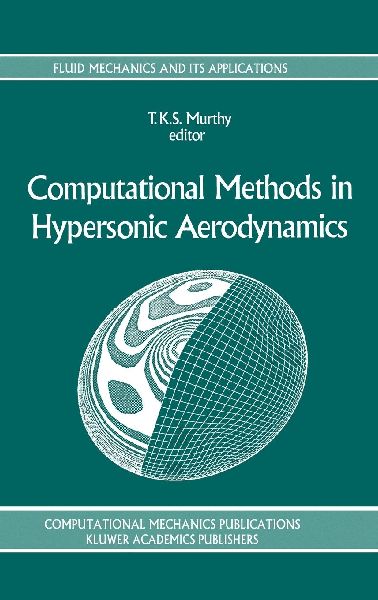
Computational Methods in Hypersonic Aerodynamics
T. K. S. Murthy
Gebunden, Englisch, 2 Ausgaben
ab 213,99 €

IUTAM Symposium on Waves in Liquid/Gas and Liquid/Vapour Two-Phase Systems
Shigeki Morioka (Hrsg.)
Gebunden, Englisch, 2 Ausgaben
ab 213,99 €
An Introduction to Modern Variational Techniques in Mechanics and Engineering
Bozidar D. Vujanovic
Gebunden, Englisch, 2 Ausgaben
ab 53,49 €
Bewertungen
Zu diesem Titel gibt es noch keine Bewertung. Bewerten kann, wer ihn bei uns gekauft hat.
So prüfen wir Bewertungen
Eine Bewertung kann bei uns nur abgeben, wer den Titel über sein Kundenkonto bei uns gekauft hat. Jede Bewertung ist fest mit der zugehörigen Bestellung verknüpft; anders kommt sie technisch gar nicht zustande. Deshalb trägt jede angezeigte Bewertung den Hinweis „Verifizierter Kauf". Wir zeigen positive wie negative Bewertungen und löschen nur bei Rechtsverstößen. Für Bewertungen gibt es keine Gegenleistung.
106,99 €Voraussichtlich 1. bis 3. Dez.