
Buch-OWLOnline-Buchhandel

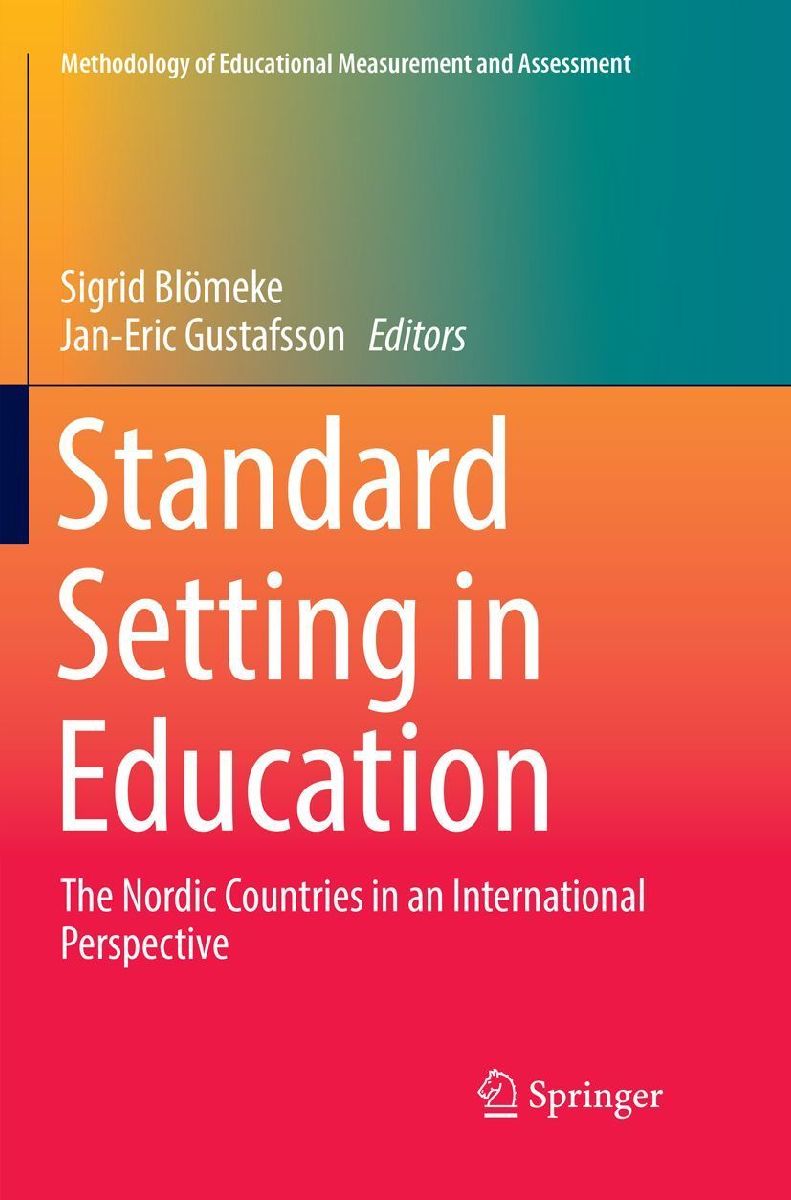
Standard Setting in Education

The Nordic Countries in an International Perspective

von Sigrid Blömeke (Hrsg.)

Herausgegeben von: Sigrid Blömeke, Herausgegeben von: Jan-Eric Gustafsson

Aus der Reihe Methodology of Educational Measurement and Assessment

Einband
Kartoniert
Seiten
348
Sprache
Englisch
Erschienen
August 2018
Verlag
Springer

Buchbeschreibung

This book summarizes the international evidence on methodological issues in standard setting in education.

By critically discussing the standard-setting practices implemented in the Nordic countries and by presenting new methodological approaches, it offers fresh perspectives on the current research.

Ganze Beschreibung lesenWeniger anzeigen

Standard setting targets crucial societal objectives by defining educational benchmarks at different achievement levels, and provides feedback to policy makers, schools and teachers about the strengths and weaknesses of a school system.

Given that the consequences of standard setting can be dramatic, the quality of standard setting is a prime concern. If it fails, repercussions can be expected in terms of arbitrary evaluations of educational policy, wrong turns in school or teacher development or misplacement of individual students. Standard setting therefore needs to be accurate, reliable, valid, useful, and defensible.

However, specific evidence on the benefits and limits of different approaches to standard setting is rare and scattered, and there is a particular lack with respect to standard setting in the Nordic countries, where the number of national tests is increasing and there are concerns about the time and effort spent on testing at schools without feedback being provided.

Addressing this gap, the book offers a discussion on standard setting by respected experts as well as profound and innovative insights into fundamental aspects of standard setting including conclusions for future methodological and policy-related research.

Inhaltsverzeichnis

  • 1. Introduction; Sigrid Blömeke and Jan-Eric Gustafsson
  • PART 1: Fundamental Questions in Standard Setting
  • 2. Using Empirical Results to Validate Performance Standards; Michael Kane
  • 3. Weaknesses of the Traditional View of Standard Setting and a Suggested Alternative; Mark Wilson and Maria Veronica Santelices
  • 4. Standard Setting: Bridging the World of Research and Policy Making; Hans Anand Pant, Simon P. Tiffin-Richards and Petra Stanat
  • 5. Standard Setting in PISA and TIMSS and How these Procedures Can Be Used Nationally; Rolf Vegar Olsen and Trude Nilsen
  • 6. In the Science and Practice of Standard Setting: Where is the Science?? Barbara S. Plake
  • PART 2: Standard Setting in the Nordic Countries
Ganzes Inhaltsverzeichnis anzeigen (21 Einträge)Weniger anzeigen
  • 7. Standard Setting in Denmark: Challenges through Computer-based Adaptive Testing; Peter Allerup and Christian Christrup Kjeldsen
  • 8. Experiences with Standards and Criteria in Sweden; Gudrun Erickson
  • 9. Validating Standard Setting in Sweden: Comparing Judgmental and Statistical Linking; Anna Lind Pantzare
  • 10. National Tests in Norway: An Undeclared Standard in Education? Idunn Seland and Elisabeth Hovdhaugen
  • 11. Setting Standards for Multistage Tests of Norwegian for Adult Immigrants; Eli Moe and Norman Verhelst
  • 12. Standard Setting in a Formative Assessment of Digital Responsibility Among Norwegian Eighth Graders; Ove Edvard Hatlevik and Ingrid Radtke
  • 13. Assessment for Learning and Standards: A Norwegian Strategy and Its Challenges; Gustaf B. Skar, Ragnar Thygesen, and Lars Sigfred Evensen
  • 14. How Do Finns Know? Educational Monitoring without Inspection and Comprehensive Testing; Mari-Pauliina Vainikainen, Helena Thuneberg, Jukka Marjanen, Jarkko Hautamäki, Sirkku Kupiainen and Risto Hotulainen
  • PART 3: New Methodological Approaches to Standard Setting
  • 15. The Data-Driven Direct Consensus (3DC) Procedure: A New Approach to Standard Setting; Jos Keuning, J. Hendrik Straat, Remco C.W. Feskens and Karen Keune
  • 16. Using Professional Judgement: A New Approach to Equating Exam Standards; Allistair Pollitt
  • 17. Closing the Loop: Providing Test Developers with Performance Level Descriptors So Standard Setters Can Do Their Job; Amanda A. Wolkowitz, James C. Impara and Chad W. Buckendahl
  • 18. Setting Standards to a Scientific Literacy Test for Adults<; Linda I. Haschke, Nele N. Kampa, Inga Hahn, and Olaf Köller

Details

Erscheinungstermin
August 2018
Kategorie
Fremdsprachige Bücher
Einband
Kartoniert
Seiten
348
Sprache
Englisch
Verlag
Springer
Reihe
Methodology of Educational Measurement and Assessment
Format
23,5 × 15,5 cm
Dicke
1,9 cm
Gewicht
528 g
EAN / ISBN-13
9783319845081
Maßstabsgetreu: Deckel und Buchrücken neben einer Hand (18 cm).
Versand und Rückgabe

Standardversand: 1 bis 3 Werktage, 3,99 €, kostenlos ab 35 €

Liefergebiet: Deutschland

Rücksendung: 14 Tage Widerrufsrecht. Bei einem Widerruf tragen Sie die Kosten der Rücksendung. Bei einer Falschlieferung oder einem Fehler von uns erstatten wir Ihnen das Rückporto. Den Widerruf erklären Sie über den Knopf „Vertrag widerrufen“ im Fuß der Seite.

Hersteller und ProduktsicherheitSpringer Nature Customer Service Center GmbH
Springer Nature Customer Service Center GmbH
Europaplatz 3
69115 Heidelberg
Deutschland
ProductSafety@springernature.com

Mehr von Sigrid Blömeke

Mehr aus der Reihe Methodology of Educational Measurement and Assessment

Ähnliche Titel

Bewertungen

Zu diesem Titel gibt es noch keine Bewertung. Bewerten kann, wer ihn bei uns gekauft hat.

So prüfen wir Bewertungen
Eine Bewertung kann bei uns nur abgeben, wer den Titel über sein Kundenkonto bei uns gekauft hat. Jede Bewertung ist fest mit der zugehörigen Bestellung verknüpft; anders kommt sie technisch gar nicht zustande. Deshalb trägt jede angezeigte Bewertung den Hinweis „Verifizierter Kauf". Wir zeigen positive wie negative Bewertungen und löschen nur bei Rechtsverstößen. Für Bewertungen gibt es keine Gegenleistung.
149,79 €Voraussichtlich 2. bis 4. Dez.

Inhalte ab 18

Cover von Titeln für Erwachsene, etwa erotische Romane, Manga oder Comics, bleiben unscharf, bis Sie bestätigen. Die Bestätigung gilt für alle Seiten und Tabs, bis Sie den Browser schließen.

Zurück zum Katalog