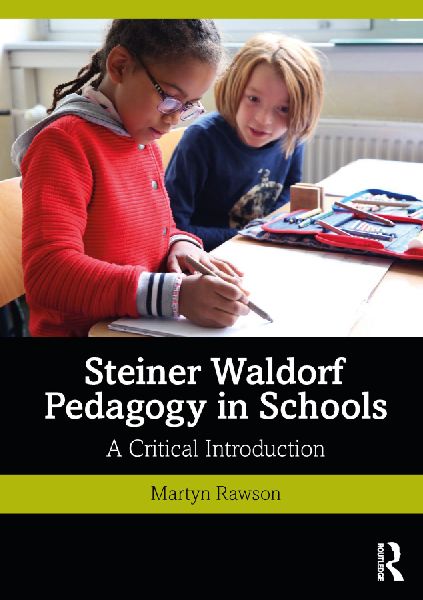
Steiner Waldorf Pedagogy in Schools
A Critical Introduction
von Martyn Rawson
- Einband
- Kartoniert
- Seiten
- 214
- Sprache
- Englisch
- Erschienen
- Mai 2021
- Verlag
- Routledge
Buchbeschreibung
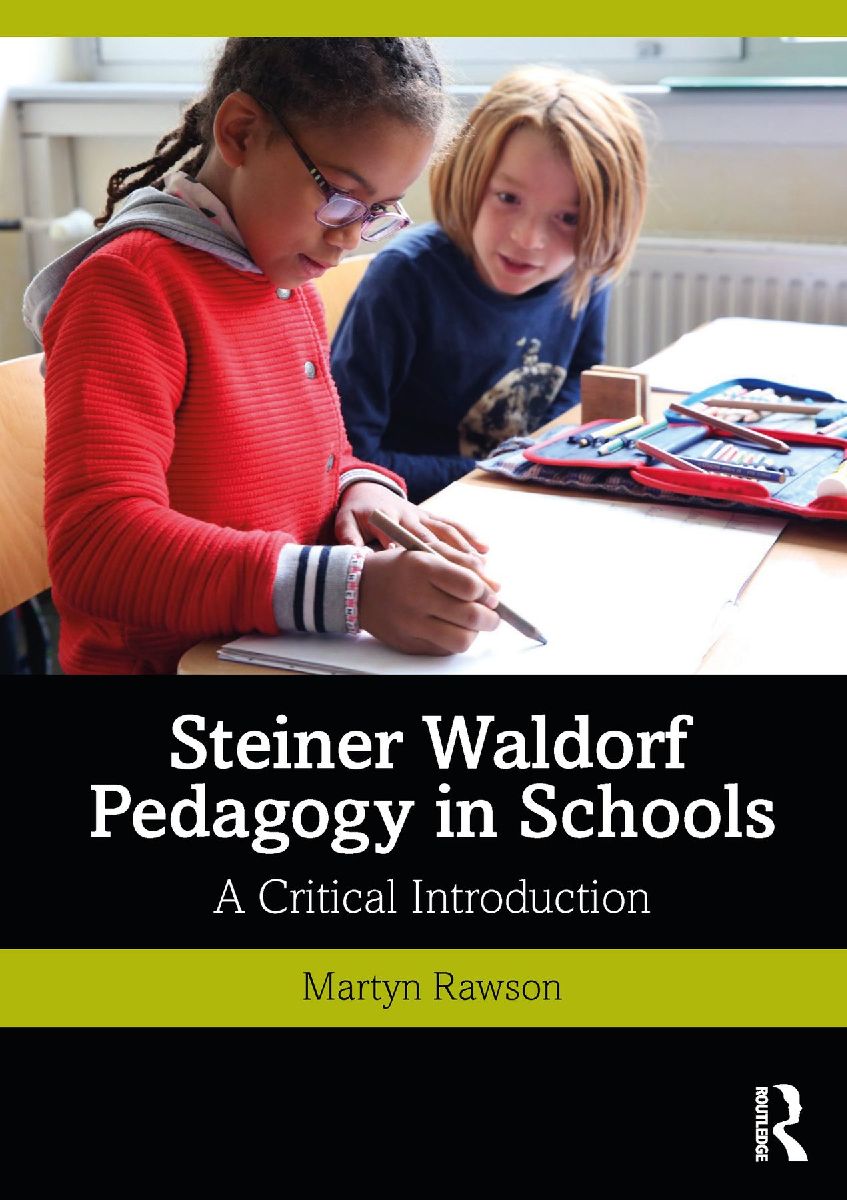
This book offers a comprehensive exploration of Steiner or Waldorf pedagogy and practice in schools.
Drawing on key research, it traces the origins of Steiner education from the original Waldorf school and shows how this approach has since been adapted and applied in educational settings around the world.
Ganze Beschreibung lesenWeniger anzeigen
Outlining the educational philosophy of Steiner education, the book considers its unique features, such as its commitment to a pedagogical anthropology that takes the whole developing human being into account - body, mind and spirit - and the developmental approach that arises out of this.
It sets out the specific curriculum and teaching approach alongside vignettes of teaching and learning situations adopted in Steiner educational settings to show how the approach works in practice. Offering a critical perspective on this teaching style, Rawson examines the contributions that Steiner education has made in different cultures and looks towards future developments in China and other Asian countries.
Considering all aspects of Steiner education, this book is essential reading for anyone wanting to understand the fundamental elements of this approach and its continuing relevance within the educational landscape.
Inhaltsverzeichnis
- Foreword (Gert Biesta).
- Acknowledgements
- About the Author
- Introduction
- Birthdays
- Good practice-dubious theory
- The authors position
- Steiner and/or Waldorf
Ganzes Inhaltsverzeichnis anzeigen (63 Einträge)Weniger anzeigen
- References
- Part 1 Rudolf Steiner and the origins of his educational ideas . Rudolf Steiner: "Stranger in a strange land".
- Biography and biographical mythos
- Key stages in a varied career What motivated Steiner? Grand narrative or grand narratives? An epistemological and philosophical basis for Waldorf education
- Who thinks? Knowledge as a productive activity
- Working with a spiritual perspective
- Steiner's experiences as a teacher and tutor
- Education as part of the cultural domain, free from political or economic determination
- The Education of the Child 1907
- Steiner's spiritual anthropology
- References
- Part 2 Generative principles of teaching and learning
- Generative principles and how to work with them
- Five vignettes: The lower school main lesson
- Optics in grade 7. A craft project
- Art history grade 10. A foreign language lesson in grade 12. Generative principles for teaching and learning
- 1.Waldorf education takes the spiritual dimension seriously
- 2. Sense of coherence is the basis for healthy learning and well-being
- 3. The quality of learning depends on the quality of the teacher's preparation
- 4. Children and young people need to be ready to learn and they need time to learn
- 5. Learning is a rhythmical process
- 6. The learning processes are structured over time
- 7. Block teaching strengthens learning dispositions
- 8. Direct experience is the basis for good learning
- 9. Activating the imagination through vivid pictorial descriptions and images is another powerful starting point for learning
- 10. A phenomenological approach enables the organic growth of knowledge
- 11. The teaching must be artistic
- 12. The self-activity of the students is essential to learning
- 13. Good teaching and learning depends on the development of the senses
- References
- Part 3 Communities of Learning: generative principles
- 14. The Waldorf class is a learning community
- 15. Teachers support their pupils' learning and development by generating knowledge of them using assessment for learning
- 16. The teachers are a collegial learning community with responsibility for the educational leadership of the school
- 17. Curriculum presents the entire pedagogy including content, methods and learning outcomes in the form of competences
- 18. There are a number of pathways to becoming a Waldorf teacher
- References
- Part 4 Waldorf education and the academy: positions, research and outlook
- Introduction
- Reception problems
- Critique as polemic
- Some key perspectives on Waldorf education
- Alumni research
- Studies of pupils in schools
- References
- Part 5 Waldorf schools around the world
- The literature
- Overview of the phases
- After the wall came down
- Waldorf inspired ideas in the world
- Emergency education
- References
- Conclusions
- References
- Index
Details
- Erscheinungstermin
- Mai 2021
- Kategorie
- Fremdsprachige Bücher
- Einband
- Kartoniert
- Seiten
- 214
- Sprache
- Englisch
- Verlag
- Routledge
- Format
- 24,6 × 17,4 cm
- Dicke
- 1,2 cm
- Gewicht
- 391 g
- EAN / ISBN-13
- 9780367333980
Über Martyn Rawson
Martyn Rawson currently works on the Waldorf Master Programme at the Waldorlehrerseminar Kiel and at the Freie Hochschule Stuttgart on the International Master Programme in Germany.
Mehr über Martyn RawsonWeniger anzeigen
He is currently Honorary Professor at the National Tsing Hua University, Taiwan and is an alumni research fellow at Plymouth University. His research focusses on curriculum development in Steiner/Waldorf education, teacher education and learning as well as learning and development in students of all ages.
Versand und Rückgabe
Standardversand: 1 bis 3 Werktage, 3,99 €, kostenlos ab 35 €
Liefergebiet: Deutschland
Rücksendung: 14 Tage Widerrufsrecht. Bei einem Widerruf tragen Sie die Kosten der Rücksendung. Bei einer Falschlieferung oder einem Fehler von uns erstatten wir Ihnen das Rückporto. Den Widerruf erklären Sie über den Knopf „Vertrag widerrufen“ im Fuß der Seite.
Hersteller und ProduktsicherheitRoutledge
Routledge
Europaallee 1
36244 Bad Hersfeld
Deutschland
gpsr@libri.de
Verantwortliche Person in der EU
Libri GmbHEuropaallee 1
36244 Bad Hersfeld
Deutschland
gpsr@libri.de
Mehr von Martyn Rawson

Ähnliche Titel


Bewertungen
Zu diesem Titel gibt es noch keine Bewertung. Bewerten kann, wer ihn bei uns gekauft hat.
So prüfen wir Bewertungen
Eine Bewertung kann bei uns nur abgeben, wer den Titel über sein Kundenkonto bei uns gekauft hat. Jede Bewertung ist fest mit der zugehörigen Bestellung verknüpft; anders kommt sie technisch gar nicht zustande. Deshalb trägt jede angezeigte Bewertung den Hinweis „Verifizierter Kauf". Wir zeigen positive wie negative Bewertungen und löschen nur bei Rechtsverstößen. Für Bewertungen gibt es keine Gegenleistung.
58,30 €Voraussichtlich 4. bis 8. Dez.