Buch-OWLOnline-Buchhandel

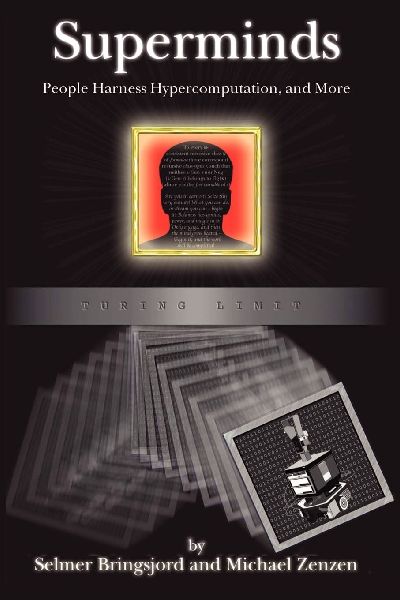
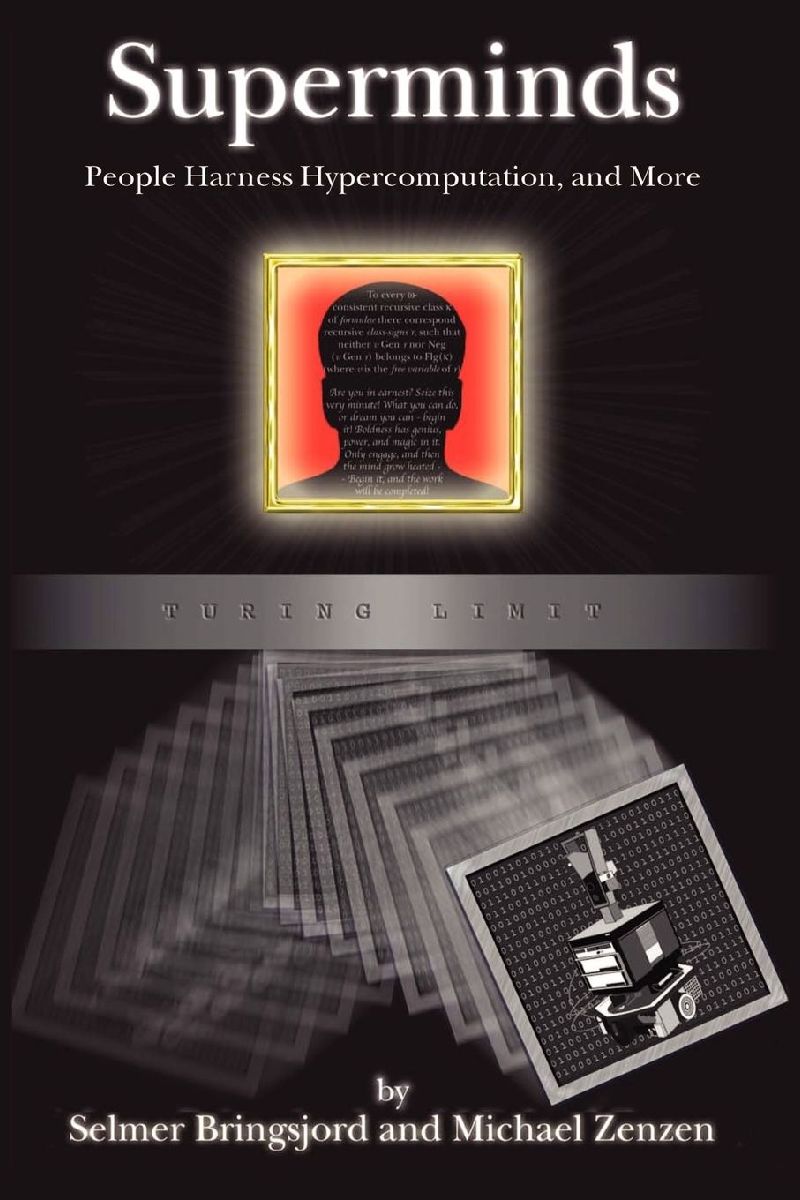
Superminds

People Harness Hypercomputation, and More

von Selmer Bringsjord und M. Zenzen

Aus der Reihe Studies in Cognitive Systems

Einband
Kartoniert
Seiten
376
Sprache
Englisch
Erschienen
März 2003
Verlag
Springer

Buchbeschreibung

This is the first book-length presentation and defense of a new theory of human and machine cognition, according to which human persons are superminds.

Superminds are capable of processing information not only at and below the level of Turing machines (standard computers), but above that level (the "Turing Limit"), as information processing devices that have not yet been (and perhaps can never be) built, but have been mathematically specified; these devices are known as super-Turing machines or hypercomputers.

Ganze Beschreibung lesenWeniger anzeigen

Superminds, as explained herein, also have properties no machine, whether above or below the Turing Limit, can have. The present book is the third and pivotal volume in Bringsjord's supermind quartet; the first two books were What Robots Can and Can't Be (Kluwer) and AI and Literary Creativity (Lawrence Erlbaum).

The final chapter of this book offers eight prescriptions for the concrete practice of AI and cognitive science in light of the fact that we are superminds.

Inhaltsverzeichnis

  • 1 What is Supermentalism
  • 1.1 Computationalism is Dead
  • 1.2 Are We Serious
  • 1.3 What is Dead? - Propositional Answer
  • 1.4 The Centrality and Logic of Personhood and Cognition in the Present Project
  • 1.5 The Turing Test
  • 1.6 Pictorial Overview of Supermentalism
  • 1.7 Propositional Overview of Supermentalism
Ganzes Inhaltsverzeichnis anzeigen (73 Einträge)Weniger anzeigen
  • 1.8 A Primer on Hypercomputation
  • 1.9 An Alternative Characterization of Supermentalism
  • 1.10 Classifying Supermachines/Superminds
  • 1.11 Previewing What's To Come
  • 2 A Refutation of Penrose's Gödelian Case
  • 2.1 Introduction
  • 2.2 The Main Positions on AI
  • 2.3 Why "Weak" AI is Invulnerable
  • 2.4 Background for Penrose's New Gödelian Case
  • 2.5 The Core Diagonal Argument
  • 2.6 Formal Machinery
  • 2.7 Formalizing Penrose's Diagonal Argument
  • 2.8 Penrose's Dilemma: Either Way a Fallacy
  • 2.9 Possible Replies
  • 2.10 Given G, The Other Possibilities
  • 2.11 Penrose's Last Chance
  • 2.12 Conclusion; The Future
  • 2.13 Distilling Penrose's Promising Intuitions
  • 3 The Argument from Infinitary Reasoning
  • 3.1 Introduction
  • 3.2 Discarding Some Initial Objections
  • 3.3 The Need for Open-Mindedness
  • 3.4 Plan of the Chapter
  • 3.5 Reasoning as Computation in First-Order Logic
  • 3.6 Sharpening Infinitary Reasoning
  • 3.7 The Argument from Infinitary Reasoning
  • 3.8 Dialectic
  • 3.9 Simon's Dream and Mental Metalogic
  • 3.10 Mental Meta
  • Logic: A Glimpse
  • 4 Supermentalism and the Fall of Church's Thesis
  • 4.1 Background
  • 4.2 Mendelson's Attack
  • 4.3 Mendelson's Rebuttal
  • 4.4 Attacking Church's Thesis
  • 4.5 Objections
  • 4.6 Our Arg3 in Context: Other Attacks on CT
  • 5 The Zombie Attack on Computationalism
  • 5.1 Introduction
  • 5.2 Dennett's Dilemma
  • 5.3 Targeting Computationalism
  • 5.4 Can Dennett Dodge His Dilemma
  • 5.5 Two Final Moves.-5.6 Conclusion
  • 6 The Argument from Irreversibility
  • 6.1 Introduction
  • 6.2 The Computational Conception of Mind
  • 6.3 Rudiments of Reversibility
  • 6.4 The Argument from Irreversibility
  • 6.5 Dialectic
  • 7 What are We? Where'd We Come From
  • 7.1 What, at Bottom, Are We
  • 7.2 Perhaps Superminds are Simple Souls
  • 7.3 How'd We Get Here
  • 7.4 Toward the Second Argument for Doubting that Evolution Produced Us
  • 8 Supermentalism and the Practice of AI
  • 8.1 Toward the Final Stage of the Project
  • 8.2 The Eight-fold Prescription for the Practice of AI
  • 8.3 P1: Building Consciously Harnessable Hypercomputers is Hard, but Push Ahead Anyway
  • 8.4 P2: Focus on Building Artificial Animals (Zombanimals)
  • 8.5 P3: Pursue What We have Dubbed "Psychometric AI"
  • 8.6 P4: Take Experimental Psychology of Reasoning Seriously
  • 8.7 P5: Be Brutally Honest about the Limitations of Standard Schemes for Knowledge Representation and Reasoning
  • 8.8 P6: Investigate Language Acquisition
  • 8.9 P7: Pursue the Mathematical Modeling of Mentation, Independent of Even Future Implementation
  • 8.10 P8: Put Connectionism in its Place

Details

Erscheinungstermin
März 2003
Kategorie
Fremdsprachige Bücher
Einband
Kartoniert
Seiten
376
Sprache
Englisch
Verlag
Springer
Reihe
Studies in Cognitive Systems
Format
29,7 × 21,0 cm
Dicke
2,1 cm
Gewicht
974 g
EAN / ISBN-13
9781402010958
Maßstabsgetreu: Deckel und Buchrücken neben einer Hand (18 cm).
Versand und Rückgabe

Standardversand: 1 bis 3 Werktage, 3,99 €, kostenlos ab 35 €

Liefergebiet: Deutschland

Rücksendung: 14 Tage Widerrufsrecht. Bei einem Widerruf tragen Sie die Kosten der Rücksendung. Bei einer Falschlieferung oder einem Fehler von uns erstatten wir Ihnen das Rückporto. Den Widerruf erklären Sie über den Knopf „Vertrag widerrufen“ im Fuß der Seite.

Hersteller und ProduktsicherheitSpringer Nature Customer Service Center GmbH
Springer Nature Customer Service Center GmbH
Europaplatz 3
69115 Heidelberg
Deutschland
ProductSafety@springernature.com

Mehr von Selmer Bringsjord

Mehr aus der Reihe Studies in Cognitive Systems

Ähnliche Titel

Bewertungen

Zu diesem Titel gibt es noch keine Bewertung. Bewerten kann, wer ihn bei uns gekauft hat.
So prüfen wir Bewertungen
Eine Bewertung kann bei uns nur abgeben, wer den Titel über sein Kundenkonto bei uns gekauft hat. Jede Bewertung ist fest mit der zugehörigen Bestellung verknüpft; anders kommt sie technisch gar nicht zustande. Deshalb trägt jede angezeigte Bewertung den Hinweis „Verifizierter Kauf". Wir zeigen positive wie negative Bewertungen und löschen nur bei Rechtsverstößen. Für Bewertungen gibt es keine Gegenleistung.
106,99 €Voraussichtlich 1. bis 3. Dez.

Inhalte ab 18

Cover von Titeln für Erwachsene, etwa erotische Romane, Manga oder Comics, bleiben unscharf, bis Sie bestätigen. Die Bestätigung gilt für alle Seiten und Tabs, bis Sie den Browser schließen.

Zurück zum Katalog