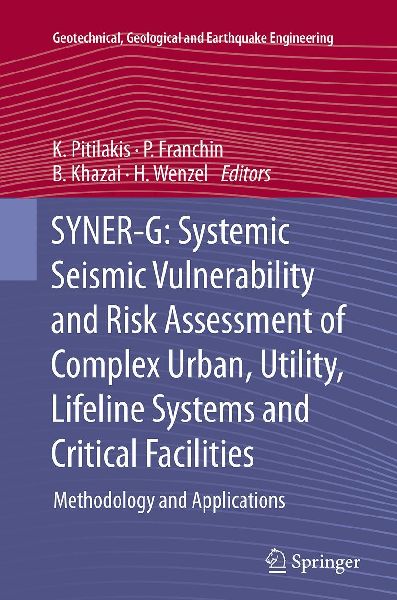
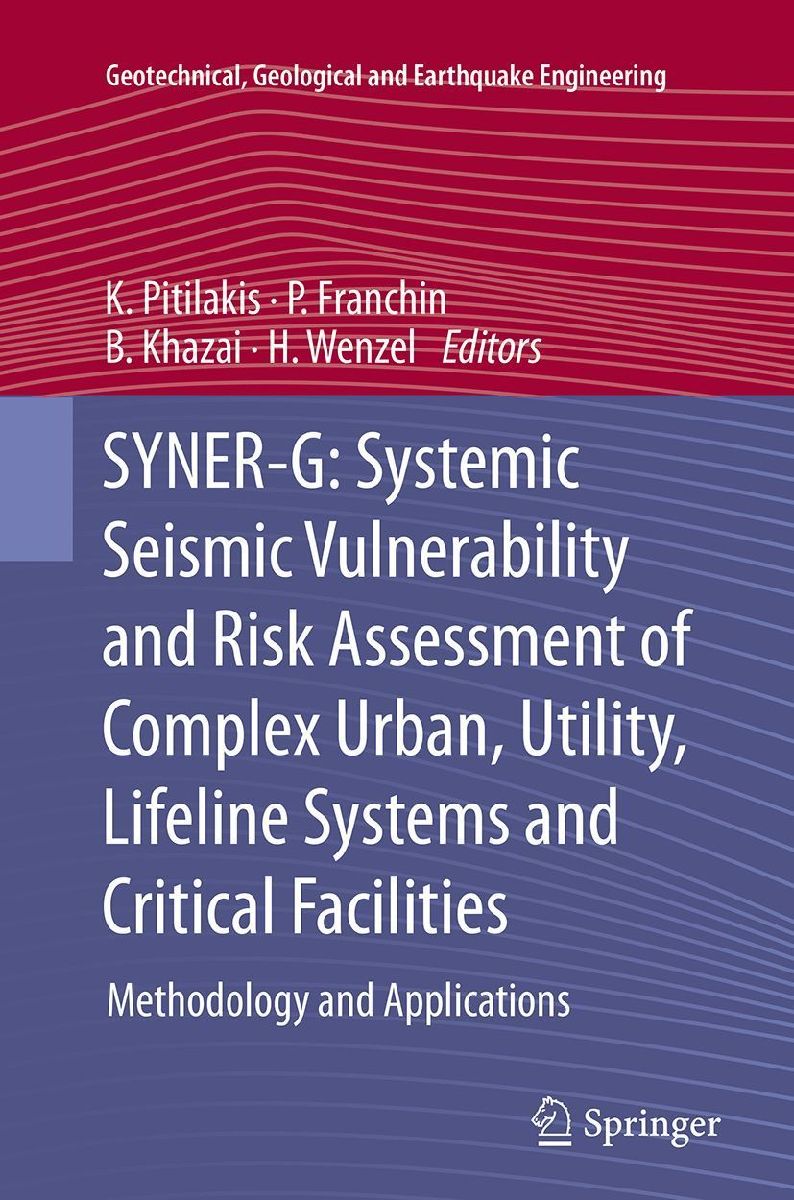
SYNER-G: Systemic Seismic Vulnerability and Risk Assessment of Complex Urban, Utility, Lifeline Systems and Critical Facilities
Methodology and Applications
Herausgegeben von: K. Pitilakis, Herausgegeben von: P. Franchin, Herausgegeben von: B. Khazai, und weitere
Aus der Reihe Geotechnical, Geological and Earthquake Engineering
- Einband
- Kartoniert
- Seiten
- 412
- Sprache
- Englisch
- Erschienen
- September 2016
- Verlag
- Springer Netherlands
Buchbeschreibung
SYNER-G, a multidisciplinary effort funded by the European Union, allowed the development of an innovative methodological framework for the assessment of physical as well as socio-economic seismic vulnerability and risk at urban and regional level.
The results of SYNER-G are presented in two books both published by Springer, the present and a second one, entitled "SYNER-G: Typology Definition and Fragility Functions for Physical Elements at Seismic Risk: Buildings, Lifelines, Transportation Networks and Critical Facilities" (
Ganze Beschreibung lesenWeniger anzeigen
), which provides a comprehensive state-of-the-art of the fragility curves, an alternative way to express physical vulnerability of elements at risk. In this second volume of SYNER-G, the focus has been on presenting a unified holistic methodology for assessing vulnerability at systems level considering interactions between elements at risk (physical and non-physical) and between different systems. The proposed methodology and tool encompasses in an integrated fashion all aspects in the chain, from hazard to the vulnerability assessment of components and systems and to the socio-economic impacts of an earthquake, accounting for most relevant uncertainties within an efficient quantitative simulation scheme. It systematically integrates the most advanced fragility functions to assess the vulnerability of physical assets for buildings, utility systems, transportation networks and complex infrastructures such as harbours and hospitals. The increasing impact due to interactions between different components and systems is treated in a comprehensive way, providing specifications for each network and infrastructure. The proposed socio-economic model integrates social vulnerability into the physical systems modelling approaches providing to decision makers with a dynamic platform to capture post disaster emergency issues like shelter demand and health impact decisions. Application examples at city and regional scale have provided thenecessary validation of the methodology and are also included in the book. The present volume, with its companion volume on fragility functions, represent a significant step forward in the seismic vulnerability and risk assessment of complex interacting urban and regional systems and infrastructures. These volumes are not only of interest to scientists and engineers but also to the insurance industry, decision makers and practitioners in the sector of civil protection and seismic risk management.(
) Pitilakis K, Crowley E, Kaynia A (eds) (2014) SYNER-G: Typology definition and fragility functions for physical elements at seismic risk, Series: Geotechnical, Geological and Earthquake Engineering 27, ISBN 978-94-007-7872-6, Springer Science+Business Media, Dordrecht.
Inhaltsverzeichnis
- Introduction
- A Computational Framework for Systemic Seismic Risk Analysis of Civil Infrastructural Systems
- Framework for Seismic Hazard Analysis of Spatially Distributed Systems
- Framework for Systemic Socio-Economic Vulnerability and Loss Assessment
- Specification of the Vulnerability of Physical Systems
- Introduction to the Applications of the SYNER-G Methodology and Tools
- Application to the City of Thessaloniki
- Application to the City of Vienna
Ganzes Inhaltsverzeichnis anzeigen (13 Einträge)Weniger anzeigen
- Application to L'Aquila Gas Network
- Application to Selected Transportation and Electric Networks in Italy
- Application to a Network of Hospitals at Regional Scale
- Application in the Harbor of Thessaloniki
- Conclusions and Recommendations
Details
- Erscheinungstermin
- September 2016
- Kategorie
- Fremdsprachige Bücher
- Einband
- Kartoniert
- Seiten
- 412
- Sprache
- Englisch
- Verlag
- Springer Netherlands
- Reihe
- Geotechnical, Geological and Earthquake Engineering
- Format
- 23,5 × 15,5 cm
- Dicke
- 2,1 cm
- Gewicht
- 697 g
- EAN / ISBN-13
- 9789402401134
Versand und Rückgabe
Standardversand: 1 bis 3 Werktage, 3,99 €, kostenlos ab 35 €
Liefergebiet: Deutschland
Rücksendung: 14 Tage Widerrufsrecht. Bei einem Widerruf tragen Sie die Kosten der Rücksendung. Bei einer Falschlieferung oder einem Fehler von uns erstatten wir Ihnen das Rückporto. Den Widerruf erklären Sie über den Knopf „Vertrag widerrufen“ im Fuß der Seite.
Hersteller und ProduktsicherheitSpringer Nature Customer Service Center GmbH
Springer Nature Customer Service Center GmbH
Europaplatz 3
69115 Heidelberg
Deutschland
ProductSafety@springernature.com
Mehr aus der Reihe Geotechnical, Geological and Earthquake Engineering
Seismic Behaviour and Design of Irregular and Complex Civil Structures V
Edoardo M. Marino (Hrsg.)
Gebunden, Englisch, 2 Ausgaben
ab 299,59 €
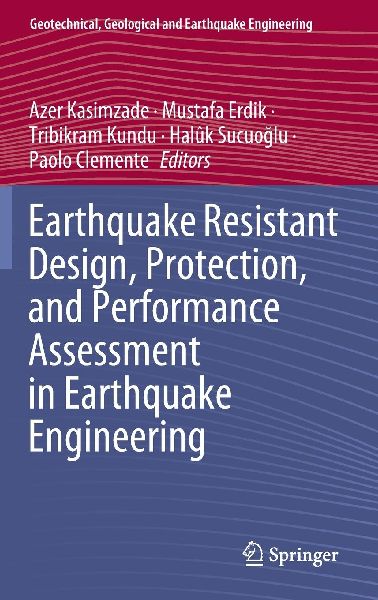
Earthquake Resistant Design, Protection, and Performance Assessment in Earthquake Engineering
Azer Kasimzade (Hrsg.)
Gebunden, Englisch, 2 Ausgaben
ab 246,09 €
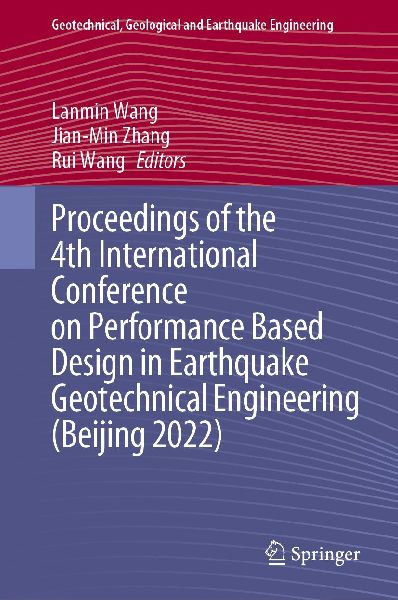
Proceedings of the 4th International Conference on Performance Based Design in Earthquake Geotechnical Engineering (Beijing 2022)
Lanmin Wang (Hrsg.)
Gebunden, Englisch, 2 Ausgaben
ab 320,99 €
Ähnliche Titel


Regional Visionaries and Metropolitan Boosters
Matthew Dalbey
Kartoniert, Englisch, 2 Ausgaben
ab 106,99 €

Seismic Behaviour and Design of Irregular and Complex Civil Structures III
Dietlinde Köber (Hrsg.)
Gebunden, Englisch, 2 Ausgaben
ab 106,99 €
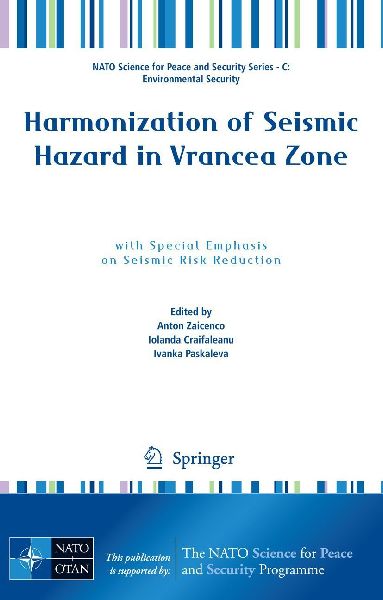
Harmonization of Seismic Hazard in Vrancea Zone
Anton Zaicenco (Hrsg.)
Gebunden, Englisch, 2 Ausgaben
ab 106,99 €
Bewertungen
Zu diesem Titel gibt es noch keine Bewertung. Bewerten kann, wer ihn bei uns gekauft hat.
So prüfen wir Bewertungen
Eine Bewertung kann bei uns nur abgeben, wer den Titel über sein Kundenkonto bei uns gekauft hat. Jede Bewertung ist fest mit der zugehörigen Bestellung verknüpft; anders kommt sie technisch gar nicht zustande. Deshalb trägt jede angezeigte Bewertung den Hinweis „Verifizierter Kauf". Wir zeigen positive wie negative Bewertungen und löschen nur bei Rechtsverstößen. Für Bewertungen gibt es keine Gegenleistung.
106,99 €Voraussichtlich 2. bis 4. Dez.