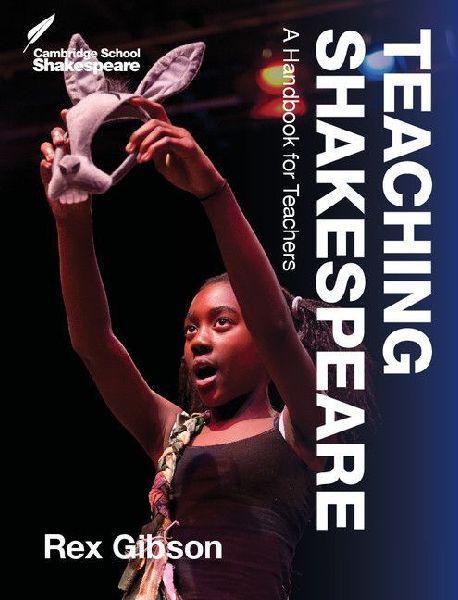
Teaching Shakespeare
A Handbook for Teachers
von Rex Gibson
Aus der Reihe Cambridge School Shakespeare
- Einband
- Kartoniert
- Seiten
- 237
- Sprache
- Englisch
- Erschienen
- April 2016
- Verlag
- Cambridge University Press
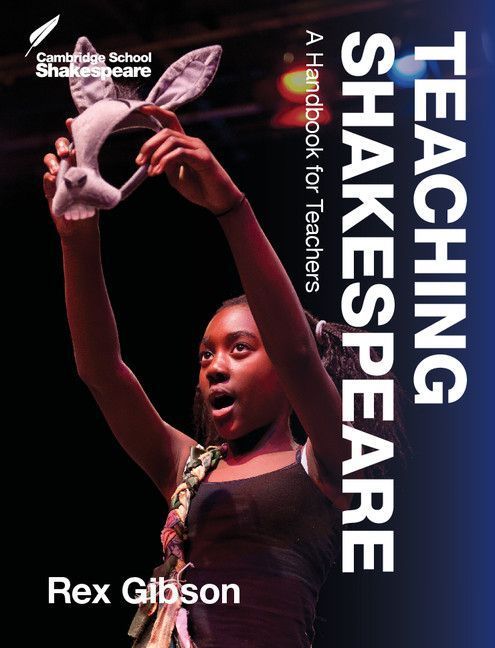
Buchbeschreibung
Teaching Shakespeare has been a major contribution to the knowledge and expertise of all teachers of Shakespeare from primary upwards for two decades.
This full-colour second edition is in a larger format, updated to reflect modern classroom practice. It includes new contributions by leading practitioners from Shakespeare's Globe, the Shakespeare Schools Festival, the Shakespeare Birthplace Trust and the Cambridge School Shakespeare editorial team.
Ganze Beschreibung lesenWeniger anzeigen
Teaching Shakespeare makes explicit the 'Active Shakespeare' principles which underpin Cambridge School Shakespeare and includes activities and advice to help teachers develop their existing good practice, making the learning of Shakespeare valuable and enjoyable for all involved.
Inhaltsverzeichnis
- Foreword
- Introduction: Active methods
- Teaching Shakespeare: an overview
- 1. Why teach Shakespeare?: Abiding and familiar concerns
- Student development
- Language
- Otherness
- 2. Principles: Treat Shakespeare as a script
Ganzes Inhaltsverzeichnis anzeigen (134 Einträge)Weniger anzeigen
- Make Shakespeare learner-centred
- Shakespeare is social
- Shakespeare celebrates imagination
- Shakespeare is physical
- Make Shakespeare exploratory
- Address the distinctive qualities of the play
- Choice and variety
- Shakespeare and plurality
- Negative capability
- Shakespeare is about enjoyment
- 3. Perspectives: Feminism
- Psychoanalysis
- Structuralism
- Deconstruction
- Political perspectives
- Reception theory
- Using perspectives
- 4. Shakespeare's language: Introduction
- Dramatic language
- Imagery
- Personification
- Antithesis
- Repetition
- Rhyme
- Lists
- Verse
- Prose
- Rhetoric
- Bombast
- Hyperbole
- Irony
- Oxymoron
- Puns
- Malapropism
- Monosyllables
- Pronouns
- Changing language
- Inventing language
- Everyday language
- Two types of language
- The development of Shakespeare's language
- The Sonnets
- 5. Story: The Story of the play
- Enacting the story
- Stories in the play
- Recapitulating the story
- Point of view narratives
- Ariel's story
- 6. Character: Introduction
- Fundamental questions
- Complexity of character
- Language and character
- Introduction to activities
- Cast the play
- Job interviews
- Absent characters
- This is your life
- Obituaries
- Point of view
- Hot-seating
- Public and private
- Props
- Free-wheeling associations
- List of characters
- Ranking characters
- Journeys through the play
- Relationships
- Exploring character
- Character types
- Character names
- 7. Themes: Introduction
- Four common themes
- Levels
- Particular themes
- Fathers and daughters
- Acting and theatre
- 8. Stagecraft: Introduction
- Stage directions
- Critical incidents
- Creating atmosphere
- Opening scenes
- 9. Active methods: Content
- The teacher's role
- Organising the classroom
- Introduction to activities
- Acting a scene
- Beginning the play
- Sense units
- Speaking Shakespeare
- Teacher leading
- Five investigations
- Sections and headlines
- Student as director
- Point of view: theory
- Improvisations
- Warm-ups
- A memory game
- Tableaux
- Chroal speaking
- Insults
- Using films
- Trials and inquiries
- Writing and design
- Sequencing
- Shakespeare's life and times
- Theatre visits
- Staging a Shakespeare play
- Shakespeare festivals
- Researching the classics
- Other resources
- 10. Shakespeare for younger students: Introduction
- Shakespeare's life and times
- Storytelling
- Dramatic storytelling
- A co-ordinated approach across the curriculum
- A Shakespeare term
- A puppet Macbeth
- 11. Assessment: Process or product? Principles
- Student self-assessment
- Assessment of performance
- Essays
- Assessment tasks
- Examinations
- Evaluating a lesson
- Quotations used in the text
- Index
Details
- Erscheinungstermin
- April 2016
- Kategorie
- Fremdsprachige Bücher
- Einband
- Kartoniert
- Seiten
- 237
- Sprache
- Englisch
- Verlag
- Cambridge University Press
- Reihe
- Cambridge School Shakespeare
- Format
- 24,4 × 18,7 cm
- Dicke
- 1,2 cm
- Gewicht
- 467 g
- EAN / ISBN-13
- 9781316609873
Versand und Rückgabe
Standardversand: 1 bis 3 Werktage, 3,99 €, kostenlos ab 35 €
Versandbeginn: in der Regel am selben oder am nächsten Werktag
Liefergebiet: Deutschland
Rücksendung: 14 Tage Widerrufsrecht. Bei einem Widerruf tragen Sie die Kosten der Rücksendung. Bei einer Falschlieferung oder einem Fehler von uns erstatten wir Ihnen das Rückporto. Den Widerruf erklären Sie über den Knopf „Vertrag widerrufen“ im Fuß der Seite.
Hersteller und ProduktsicherheitMare Nostrum Group B.V.
Mehr aus der Reihe Cambridge School Shakespeare

Bewertungen
Zu diesem Titel gibt es noch keine Bewertung. Bewerten kann, wer ihn bei uns gekauft hat.
So prüfen wir Bewertungen
Eine Bewertung kann bei uns nur abgeben, wer den Titel über sein Kundenkonto bei uns gekauft hat. Jede Bewertung ist fest mit der zugehörigen Bestellung verknüpft; anders kommt sie technisch gar nicht zustande. Deshalb trägt jede angezeigte Bewertung den Hinweis „Verifizierter Kauf". Wir zeigen positive wie negative Bewertungen und löschen nur bei Rechtsverstößen. Für Bewertungen gibt es keine Gegenleistung.
34,00 €Voraussichtlich 27. Nov. bis 1. Dez.