
Buch-OWLOnline-Buchhandel

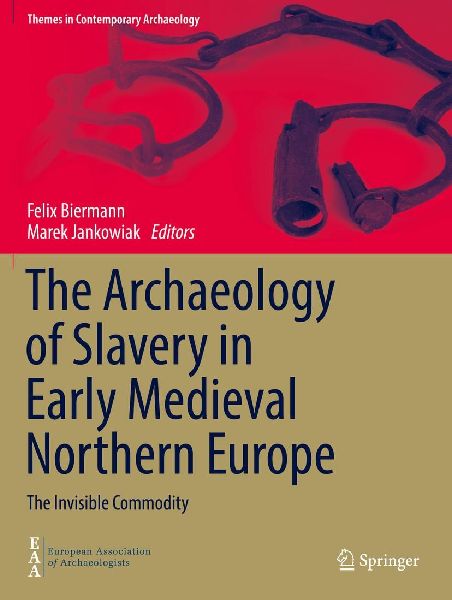
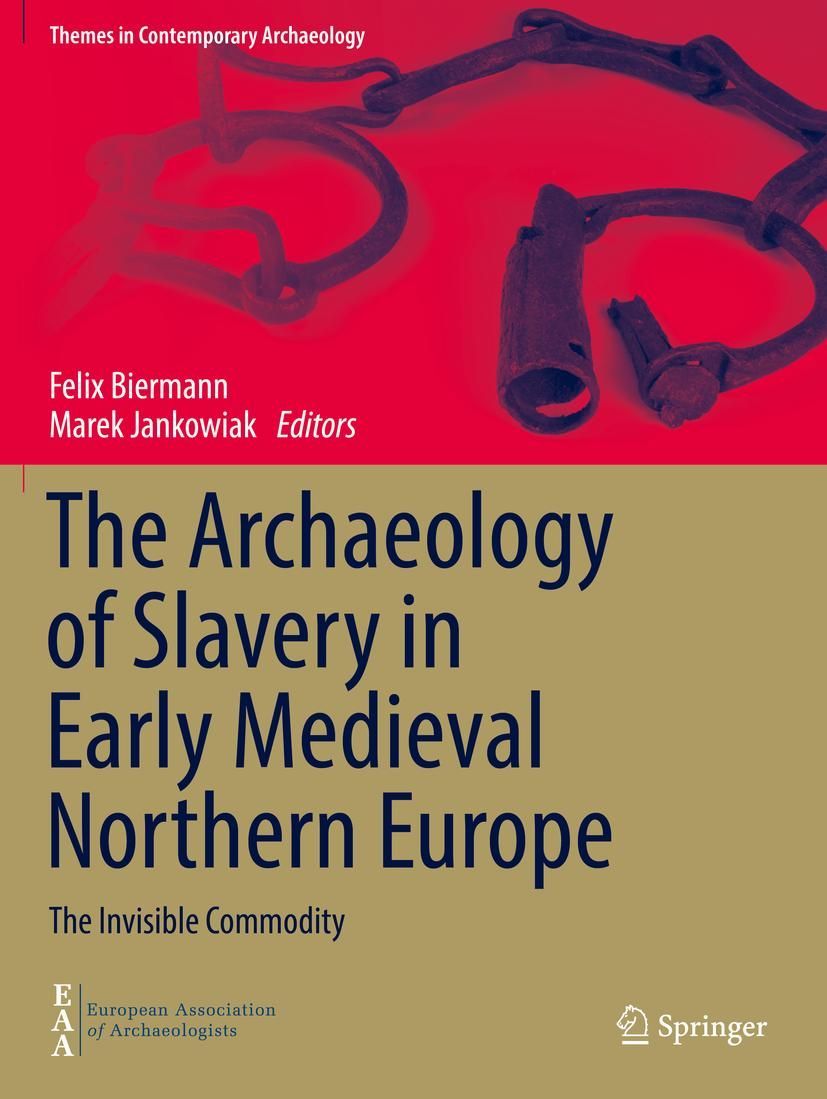
The Archaeology of Slavery in Early Medieval Northern Europe

The Invisible Commodity

von Felix Biermann (Hrsg.)

Herausgegeben von: Felix Biermann, Herausgegeben von: Marek Jankowiak

Aus der Reihe Themes in Contemporary Archaeology

Einband
Kartoniert
Seiten
204
Sprache
Englisch
Erschienen
November 2022
Verlag
Palgrave Macmillan

Buchbeschreibung

Introduction: An 'invisible commodity'?; Marek Jankowiak and Felix Biermann.

Ganze Beschreibung lesenWeniger anzeigen
  • Part One: Comparative perspectives.
  • Chapter 1. The arrogation of slavery: Prehistory, archaeology, and pre-theoretical commitments concerning people as property; Timothy Taylor.
  • Chapter 2. Recent approaches to the archaeological investigation of slavery in Africa; Paul Lane.
  • Part Two: The British Isles.
  • Chapter 3. To tread the paths, and traverse the moors: Investigating slavery in early medieval western Britain; Katie Hemer.
  • Chapter 4. The archaeology of slave trading in Viking Age Britain and Ireland: A methodological approach; Janel Fontaine.
  • Part Three: Scandinavia.
  • Chapter 5. The norm and the subaltern. Identifying slaves in an early medieval Scandinavian society; Anna Kjellström.
  • Chapter 6. Legacy of the disowned. Finding ambátts in high medieval Scania and Östergötland through ceramic production; Mats Roslund.
  • Chapter 7. Bonded people. Making thralls visible in Viking-Age and early medieval Sweden; Torun Zachrisson.
  • Part Four: Central Europe.
  • Chapter 8. The slave trade in Great Moravia: reality or fiction?; Ji¿í Machá¿ek.
  • Chapter 9. Slavery and slave trade in early medieval Czech duchy: Archaeology of slavery or slavery of archaeology?; Ivo ¿tefan.
  • Chapter 10. Archaeological evidence for slavery among the early medieval north-western Slavs; Felix Biermann.
  • Chapter 11.Tracing the Saqaliba: slave trade and the archaeology of tenth-century northern Europe; Marek Jankowiak.
  • Index.

Inhaltsverzeichnis

  • Introduction: An 'invisible commodity'?; Marek Jankowiak and Felix Biermann
  • Part One: Comparative perspectives
  • Chapter 1. The arrogation of slavery: Prehistory, archaeology, and pre-theoretical commitments concerning people as property; Timothy Taylor
  • Chapter 2. Recent approaches to the archaeological investigation of slavery in Africa; Paul Lane
  • Part Two: The British Isles
  • Chapter 3. To tread the paths, and traverse the moors: Investigating slavery in early medieval western Britain; Katie Hemer
  • Chapter 4. The archaeology of slave trading in Viking Age Britain and Ireland: A methodological approach; Janel Fontaine
  • Part Three: Scandinavia
Ganzes Inhaltsverzeichnis anzeigen (20 Einträge)Weniger anzeigen
  • Chapter 5. The norm and the subaltern
  • Identifying slaves in an early medieval Scandinavian society; Anna Kjellström
  • Chapter 6. Legacy of the disowned
  • Finding ambátts in high medieval Scania and Östergötland through ceramic production; Mats Roslund
  • Chapter 7. Bonded people
  • Making thralls visible in Viking-Age and early medieval Sweden; Torun Zachrisson
  • Part Four: Central Europe
  • Chapter 8. The slave trade in Great Moravia: reality or fiction?; Ji¿í Machá¿ek
  • Chapter 9. Slavery and slave trade in early medieval Czech duchy: Archaeology of slavery or slavery of archaeology?; Ivo ¿tefan
  • Chapter 10. Archaeological evidence for slavery among the early medieval north-western Slavs; Felix Biermann
  • Chapter 11.Tracing the Saqaliba: slave trade and the archaeology of tenth-century northern Europe; Marek Jankowiak
  • Index

Details

Erscheinungstermin
November 2022
Kategorie
Fremdsprachige Bücher
Einband
Kartoniert
Seiten
204
Sprache
Englisch
Verlag
Palgrave Macmillan
Reihe
Themes in Contemporary Archaeology
Format
27,9 × 21,0 cm
Dicke
1,1 cm
Gewicht
571 g
EAN / ISBN-13
9783030732936
Maßstabsgetreu: Deckel und Buchrücken neben einer Hand (18 cm).

Über Felix Biermann (Hrsg.)

Felix Biermann is an Associate Professor of early medieval archaeology at the University of Szczecin, Poland. His research interests include the archaeology and history of the Baltic Sea area, Middle and Eastern Europe from c.

Mehr über Felix Biermann (Hrsg.)Weniger anzeigen

500-1500, with special emphasis on social and economic structures, interregional contacts and the archaeology of fortified settlements.

Marek Jankowiak is an Associate Professor of Byzantine history at the University of Oxford. In addition to his interests in Byzantine social and economic history, he works on the slave trade system that connected the Islamic world and northern Europe in the ninth and tenth centuries. He was the co-investigator of the AHRC project "Dirhams for Slaves" and co-edited "Viking-Age Trade: Silver, Slaves and Gotland" (2020).

Versand und Rückgabe

Standardversand: 1 bis 3 Werktage, 3,99 €, kostenlos ab 35 €

Liefergebiet: Deutschland

Rücksendung: 14 Tage Widerrufsrecht. Bei einem Widerruf tragen Sie die Kosten der Rücksendung. Bei einer Falschlieferung oder einem Fehler von uns erstatten wir Ihnen das Rückporto. Den Widerruf erklären Sie über den Knopf „Vertrag widerrufen“ im Fuß der Seite.

Hersteller und ProduktsicherheitSpringer Nature Customer Service Center GmbH
Springer Nature Customer Service Center GmbH
Europaplatz 3
69115 Heidelberg
Deutschland
ProductSafety@springernature.com

Mehr von Felix Biermann

Mehr aus der Reihe Themes in Contemporary Archaeology

Ähnliche Titel

Bewertungen

Zu diesem Titel gibt es noch keine Bewertung. Bewerten kann, wer ihn bei uns gekauft hat.
So prüfen wir Bewertungen
Eine Bewertung kann bei uns nur abgeben, wer den Titel über sein Kundenkonto bei uns gekauft hat. Jede Bewertung ist fest mit der zugehörigen Bestellung verknüpft; anders kommt sie technisch gar nicht zustande. Deshalb trägt jede angezeigte Bewertung den Hinweis „Verifizierter Kauf". Wir zeigen positive wie negative Bewertungen und löschen nur bei Rechtsverstößen. Für Bewertungen gibt es keine Gegenleistung.
171,19 €Voraussichtlich 3. bis 7. Dez.

Inhalte ab 18

Cover von Titeln für Erwachsene, etwa erotische Romane, Manga oder Comics, bleiben unscharf, bis Sie bestätigen. Die Bestätigung gilt für alle Seiten und Tabs, bis Sie den Browser schließen.

Zurück zum Katalog