Buch-OWLOnline-Buchhandel

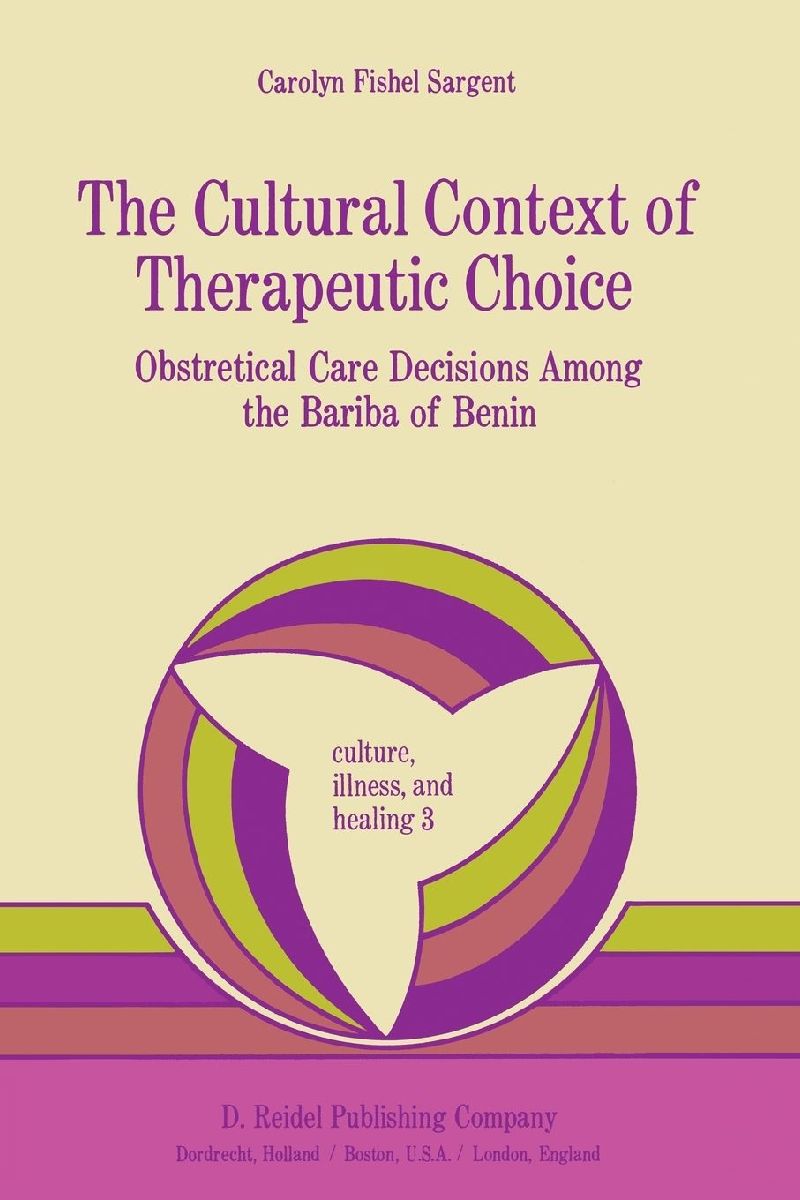
The Cultural Context of Therapeutic Choice

Obstetrical Care Decisions Among the Bariba of Benin

von C. Sargent

Aus der Reihe Culture, Illness and Healing

Einband
Kartoniert
Seiten
208
Sprache
Englisch
Erschienen
Dezember 2011
Verlag
Springer

Buchbeschreibung

This book examines the factors influencing women's choices of obstetrical care in a Bariba community in the People's Republic of Benin, West Africa.

When selecting a research topic, I decided to investigate health care among the Bariba for several reasons. First, I had served as a Peace Corps Volunteer in northern Benin (then Dahomey) and had established a network of contacts in the region.

Ganze Beschreibung lesenWeniger anzeigen

In addition, I had worked for a year as assistant manager of a pharmacy in a northern town and had become interested in the pattern of utilization of health care services by urban residents.

This three-year residence proved an invaluable asset in preparing and conducting research in the northern region. In particular, I was able to establish relationships with several indigenous midwives whose families I already knew both from prior research experience and mutual friend­ ships. These relationships enabled me to obtain detailed information regarding obstetrical practice and thus form the foundation of this book.

The fieldwork upon which the book is directly based was conducted between June 1976 and December 1977 and sponsored by the F ord-Rockefeller Popula­ tion Policy Program, the Social Science Research Council, the National Science Foundation, and the FUlbright-Hays Doctoral Dissertation Research Program.

The Ford-Rockefeller Population Policy Program funded the project as a collab­ oration between myself and Professor Eusebe Alihonou, Professor Agrege (Gynecologie-Obstetrique) at the National University of Benin.

Inhaltsverzeichnis

  • 1: Introduction
  • 1.1. The Study
  • 1.2. The Setting
  • 1.3. Methodology
  • 1.4. Theoretical Perspectives on Health Care Decisions
  • 2: The Cultural Context of Therapeutic Choice
  • 2.1. Bariba Conceptions of the Order of the Universe
  • 2.2. Diagnosis and Treatment
Ganzes Inhaltsverzeichnis anzeigen (68 Einträge)Weniger anzeigen
  • 2.3. Divination
  • 2.4. The Use of Substances
  • 2.5. Medicines
  • 3: Beliefs and Practices Surrounding Reproductive Processes
  • 3.1. Menstruation and Clitoridectomy
  • 3.2. Conception
  • 3.3. Development of Fetus
  • 3.4. Contraception
  • 3.5. Abortion
  • 3.6. Sterility
  • 4: Status Among the Bariba: The Roles and Responsibilities of Women
  • 4.1. Status in Bariba Society
  • 4.2. Position of Women
  • 4.3. Economic Subsistence
  • 4.4. Political Arena
  • 4.5. Domestic Relations
  • 4.6. Household Responsibilities
  • 5: Sociological and Career Attributes of Midwives
  • 5.1. Healers: Midwives and Medicine People
  • 5.2. Implications of Role Expectations for Birth Assistance
  • 5.3. Recruitment of Matrones and Method of Skill Acquisition
  • 5.4. Sources of Medical Knowledge
  • 5.5. Matrones Own Reproductive Histories
  • 5.6. Age at Unsupervised Delivery
  • 5.7. Assistance at Own Child's Delivery
  • 5.8. Remuneration
  • 5.9. Comprehensive Care by Matrones
  • 5.10. Pregnancy Counseling
  • 5.11. Matrone's Role Variability
  • 5.12. Spirit Possession
  • 5.13. Inheritance of Spirits
  • 5.14. Healing and Sambani
  • 5.15. The Matrone Prototype
  • 6: The Meaning of Efficacy in Relation to Obstetrical Care Preferences
  • 7: Birth Assistance in the Rural Area: Patterns of Delivery Assistance
  • 7.1. Delivery Assistance: Patterns of Selection in the Rural Area
  • 7.2. Midwifery as a Therapeutic System
  • 7.3. Structured Interviews with Matrones
  • 8: Client-Practitioner Encounters
  • 8.1.1. The Case of Adama
  • 8.1.2. The Case of Sako
  • 8.1.3. The Case of the Prolapsed Cord
  • 8.1.4. The Case of the Terrifying Breech 120
  • 8.1.5 The Case of Bona
  • 8.2. Pain as a Cultural Phenomenon
  • 8.3. Pregnancy (by Nicole)
  • 8.4. Conclusion
  • 9: Utilization of National Health Services for Maternity Care in the District of Kouande
  • 9.1. Clinic vs. Home Delivery: A Pehunko Sample
  • 9.2. Utilization of the Pehunko Dispensary
  • 9.3. Pehunko Women at the Kouande Maternity Clinic
  • 9.4. The Kouande Maternity Clinic: General Utilization
  • 10: Conclusion
  • 10.1. Implications of the Bariba Study for the Cross-Cultural Study of Midwifery
  • 10.2. The Involvement of Indigenous Midwives in National Health Systems
  • 10.3. Training Programs
  • Appendices
  • Appendix A: Demographic Data
  • Appendix B: Female Circumcision Songs
  • Notes

Details

Erscheinungstermin
Dezember 2011
Kategorie
Fremdsprachige Bücher
Einband
Kartoniert
Seiten
208
Sprache
Englisch
Verlag
Springer
Reihe
Culture, Illness and Healing
Format
23,5 × 15,5 cm
Dicke
1,2 cm
Gewicht
324 g
EAN / ISBN-13
9789400977426
Maßstabsgetreu: Deckel und Buchrücken neben einer Hand (18 cm).
Versand und Rückgabe

Standardversand: 1 bis 3 Werktage, 3,99 €, kostenlos ab 35 €

Liefergebiet: Deutschland

Rücksendung: 14 Tage Widerrufsrecht. Bei einem Widerruf tragen Sie die Kosten der Rücksendung. Bei einer Falschlieferung oder einem Fehler von uns erstatten wir Ihnen das Rückporto. Den Widerruf erklären Sie über den Knopf „Vertrag widerrufen“ im Fuß der Seite.

Hersteller und ProduktsicherheitSpringer Nature Customer Service Center GmbH
Springer Nature Customer Service Center GmbH
Europaplatz 3
69115 Heidelberg
Deutschland
ProductSafety@springernature.com

Mehr aus der Reihe Culture, Illness and Healing

Bewertungen

Zu diesem Titel gibt es noch keine Bewertung. Bewerten kann, wer ihn bei uns gekauft hat.
So prüfen wir Bewertungen
Eine Bewertung kann bei uns nur abgeben, wer den Titel über sein Kundenkonto bei uns gekauft hat. Jede Bewertung ist fest mit der zugehörigen Bestellung verknüpft; anders kommt sie technisch gar nicht zustande. Deshalb trägt jede angezeigte Bewertung den Hinweis „Verifizierter Kauf". Wir zeigen positive wie negative Bewertungen und löschen nur bei Rechtsverstößen. Für Bewertungen gibt es keine Gegenleistung.
106,99 €Voraussichtlich 1. bis 3. Dez.

Inhalte ab 18

Cover von Titeln für Erwachsene, etwa erotische Romane, Manga oder Comics, bleiben unscharf, bis Sie bestätigen. Die Bestätigung gilt für alle Seiten und Tabs, bis Sie den Browser schließen.

Zurück zum Katalog