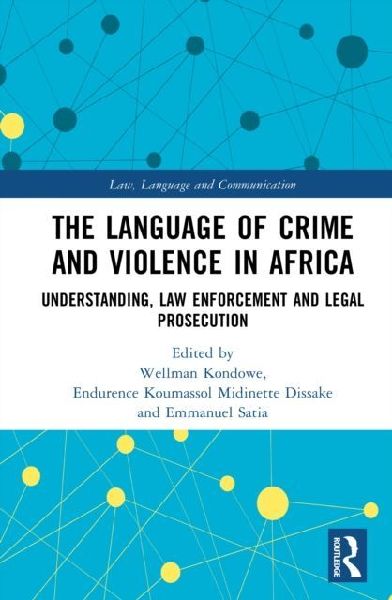
The Language of Crime and Violence in Africa
Understanding, Law Enforcement and Legal Prosecution
Herausgegeben von: Wellman Kondowe, Herausgegeben von: Endurence Koumassol Midinette Dissake, Herausgegeben von: Emmanuel Satia
- Einband
- Gebunden
- Seiten
- 326
- Sprache
- Englisch
- Erschienen
- März 2027
- Verlag
- Taylor & Francis Ltd
Buchbeschreibung
This collection presents an in-depth examination of linguistic strategies for identifying language-related crimes and acts of violence across various African contexts.
It highlights the essential role of both spoken and written language in the landscape of crime and violence.
Ganze Beschreibung lesenWeniger anzeigen
The content of the book is carefully organised around four thematic areas: Part I explores Language and Crime in Spoken, Written and Visual Discourse, analysing how spoken language operates in criminal contexts, including the ways that speech patterns and discourse can indicate intent or culpability.
Part II on the Language of Sexual Harassment and Gender-Based Violence, examines how language can both perpetuate and challenge gender-based violence, with a focus on the discourse surrounding female victims and male perpetrators. This section also addresses how language related to violence is depicted and disseminated in media, literature, songs, and other cultural expressions, shaping societal perceptions of crime.
Part III on Crime and Forensic Linguistic Analysis discusses the role of language as a form of evidence in legal cases, including how linguistic nuances can significantly influence judicial outcomes.
Contributions have been carefully selected from a diverse group of authors representing ten African countries: Malawi, Zambia, Namibia, Nigeria, Zimbabwe, South Africa, Kenya, Uganda, Mozambique, and Cameroon.
The volume draws on a wide range of disciplines, including Linguistics, Law, Forensic Linguistics, Gender Studies, Visual Arts, and Journalism, fostering a comprehensive dialogue on the intersections of Language, Law, and Social Sciences within the African context. It will be a valuable resource for academics, researchers and policy-makers working in these and related areas.
Inhaltsverzeichnis
- Foreword by John Gibbons Introduction Part I: Language and Crime in Spoken, Written and Visual Discourse 1. Speaking of Crime from Kenyan prisons, by Emmanuel Satia 2. Language and crime in the spoken discourse of Northern Mozambique, by Jenete Azizi by Liketso Dube 4. What's in a name? A study of lexical terms used for cannabis drug business in Malawi, by Patricia Mvava & Wellman Kondowe 5. 'HH Must Die': An autopsy of prima facie-inducing forensic semiotic exhibits in the failed witchcraft subterfuge against President Hichilema of Zambia in 2024, by Humphrey M. Kapa 6. Unknown gunmen, known suspects: Ethnic attribution and the politics of violence in Nigeria, by Kingsley Jima 7. The language of crime and violence in Wakalihood films in Uganda: The case of "who killed captain Alex" and "Bad Black" by Godfrey Nabwana, by Edith Natukunda Togboa Part II: Language of Sexual Harassment and Gender-Based Violence 8. Headline makers or headline shapers? A discursive news values analysis of gender¿based violence reporting in Ugandan tabloids, by Dora Musoke & Levis Mugumya 9. Normalisation of subtle gender-based violence in institutions of higher learning in Kenya, by Boke Joyce Wambura 10. Crime, language, and violence in paternity discourses: A case of language use in Tinashe Mugabe's Global DNA Show Season 9 Episode 4, by 11. Threat text messages addressed to gender-based violence victims in Windhoek, Namibia, by Part III: Language Crime and Forensic Linguistic Analysis 13. Angels of death: Language and corruption on Malawian roads, by Winfred Mkochi 14. Deception and impersonation in fake facebook accounts: A forensic linguistic analysis, by Precious Lungu 15. A linguistic analysis of suicide notes in Zimbabwe: Author-text-audience interaction and legal implications, by Paul Svongoro & Wellman Kondowe 16.Talking fraud: Interactional features in phishing calls in Malawi, by Fiud Kalimapadzala, Monwabisi Knowledge Ralarala & Deborah Ndalama-Mtawali 17. Violent lyrics and criminal evidence: The admissibility of rap lyrics in court, by Endurence Dissake
Details
- Erscheinungstermin
- März 2027
- Kategorie
- Fremdsprachige Bücher
- Einband
- Gebunden
- Seiten
- 326
- Sprache
- Englisch
- Verlag
- Taylor & Francis Ltd
- EAN / ISBN-13
- 9781041375319
Über Wellman Kondowe (Hrsg.)
Wellman Kondowe is a senior lecturer in the department of Language, Cultural and Creative studies at Mzuzu University in Malawi.
Mehr über Wellman Kondowe (Hrsg.)Weniger anzeigen
Endurence Koumassol Midinette Dissake is a Lecturer of Applied Linguistics at the Department of Linguistics and African Languages of the University of Bamenda, Cameroon.
Emmanuel Satia is a Commonwealth Scholar and Senior Lecturer at the Department of Literature, Linguistics, Foreign Languages & Film Studies, Moi University, Kenya.
Versand und Rückgabe
Standardversand: 1 bis 3 Werktage, 3,99 €, kostenlos ab 35 €
Liefergebiet: Deutschland
Rücksendung: 14 Tage Widerrufsrecht. Bei einem Widerruf tragen Sie die Kosten der Rücksendung. Bei einer Falschlieferung oder einem Fehler von uns erstatten wir Ihnen das Rückporto. Den Widerruf erklären Sie über den Knopf „Vertrag widerrufen“ im Fuß der Seite.
Hersteller und ProduktsicherheitTaylor & Francis Verlag GmbH
Mehr von Wellman Kondowe
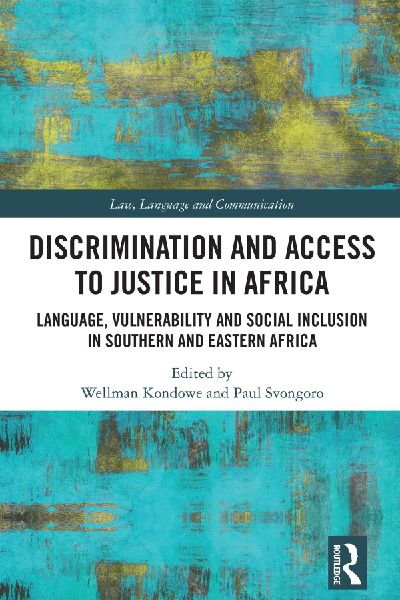
Discrimination and Access to Justice in Africa
Wellman Kondowe (Hrsg.)
Kartoniert, Englisch, 2 Ausgaben
ab 51,35 €
Ähnliche Titel

Languages of Science in the Eighteenth Century
Britt-Louise Gunnarsson (Hrsg.)
Gebunden, Englisch
119,95 €
Bewertungen
Zu diesem Titel gibt es noch keine Bewertung. Bewerten kann, wer ihn bei uns gekauft hat.
So prüfen wir Bewertungen
Eine Bewertung kann bei uns nur abgeben, wer den Titel über sein Kundenkonto bei uns gekauft hat. Jede Bewertung ist fest mit der zugehörigen Bestellung verknüpft; anders kommt sie technisch gar nicht zustande. Deshalb trägt jede angezeigte Bewertung den Hinweis „Verifizierter Kauf". Wir zeigen positive wie negative Bewertungen und löschen nur bei Rechtsverstößen. Für Bewertungen gibt es keine Gegenleistung.
220,50 €Erscheint 03/2027