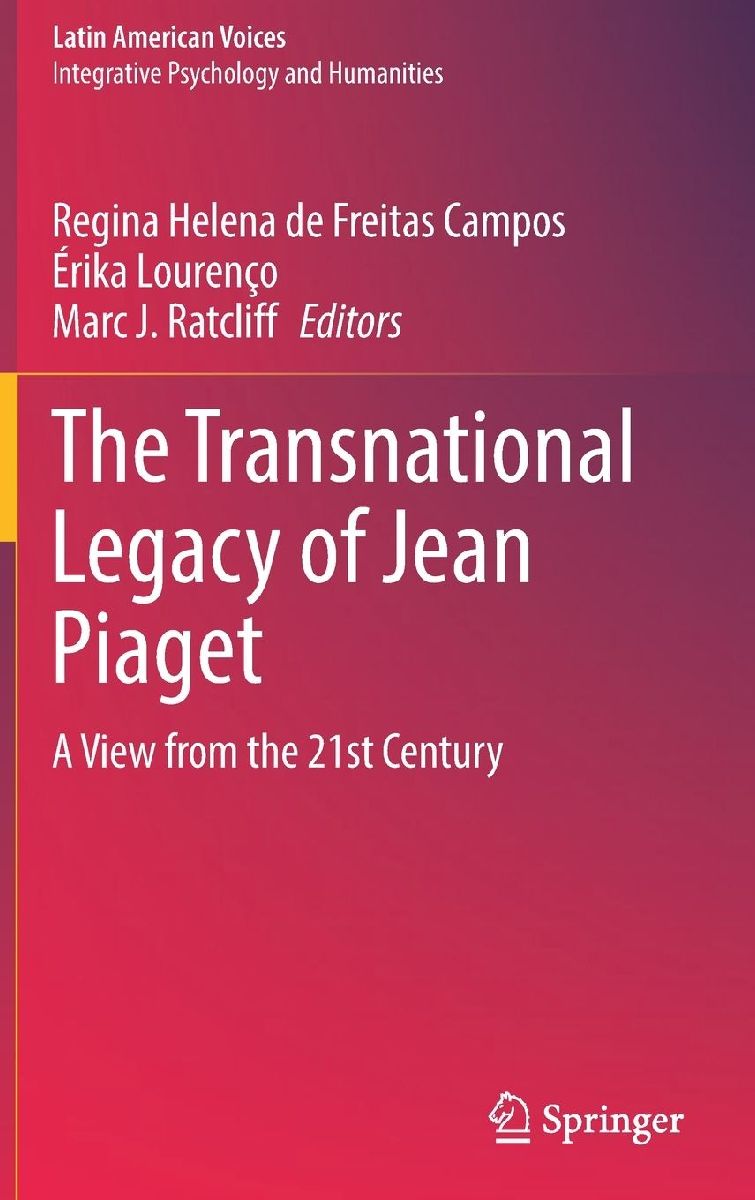
The Transnational Legacy of Jean Piaget
A View from the 21st Century
von Regina Helena de Freitas Campos (Hrsg.)
Herausgegeben von: Regina Helena de Freitas Campos, Herausgegeben von: Érika Lourenço, Herausgegeben von: Marc J. Ratcliff
Aus der Reihe Latin American Voices
- Einband
- Gebunden
- Seiten
- 336
- Sprache
- Englisch
- Erschienen
- Oktober 2023
- Verlag
- Palgrave Macmillan
Buchbeschreibung
This book presents a collection of studies on the circulation of Jean Piaget's ideas and works between Europe and Latin America, and how this transnational legacy influenced different fields of research and practice, such as psychology, education and philosophy.
Ganze Beschreibung lesenWeniger anzeigen
The volume brings together contributions presented at the International Colloquium Jean Piaget in Brazil and Latin America, held during the 38th Annual Helena Antipoff Meeting, organized by the Federal University of Minas Gerais, Brazil, in collaboration with the University of Geneva, Switzerland.
The book is organized in three parts. Chapters in the first part analyze Piaget's role as a builder of an international network in psychology, education and peace promotion in the 20th century, with a special focus on the circulation of his ideas and works between Switzerland and France.
The second part focuses on historical and contemporary dialogues, conflicts and controversies between Piaget and other authors, such as Henri Wallon, Carl Rogers, Jürgen Habermas, and, especially, Helena Antipoff, the Russian-Brazilian psychologist and educator who was one of the first researchers to introduce Piaget in Brazil and to establish a bridge between Latin America and the Geneva school of psychological and educational sciences.
Finally, chapters in the third part of the book explore different aspects of the reception and appropriation of Piaget's works and ideas in the Brazilian context. The Transnational Legacy of Jean Piaget: A View from the 21st Century will be of interest to researchers in different fields within the human and social sciences, such as developmental, educational and school psychologists; educators; philosophers and historians of psychology and education interested in understanding how Piaget's progressist ideas have contributed to the development of psychological and educational sciences in Europe and Latin America.
Some chapters ofthis book were originally written in Portuguese and French and translated into English with the help of artificial intelligence. A subsequent human revision was done primarily in terms of content.
Inhaltsverzeichnis
- Chapter 1 - Introduction
- PART I - JEAN PIAGET AS A BUILDER OF AN INTERNATIONAL NETWORK IN PSYCHOLOGY, EDUCATION AND PEACE PROMOTION IN THE 20TH CENTURY
- Chapter 2 - Why Piaget enchants me? The importance of Piaget's theory
- Chapter 3 - How to create a research method - Piaget from Neuchâtel to Paris 1920
- Chapter 4 - "The ascent from the individual to the universal". Piagetian theory applied to intergovernmental co-operation in education
- Chapter 5 - Piaget and Education: a contemporary view
- Chapter 6 - Peace education and integral ecology: inspiration in Piaget at the legacy of Pierre Weil
- Chapter 7 - How does an author become a classic? Exploring the reception of Piaget in France during the interwar period with a new methodology
Ganzes Inhaltsverzeichnis anzeigen (23 Einträge)Weniger anzeigen
- PART II - DIALOGUES, CONFLICTS AND CONTROVERSIES CONCERNING PIAGET'S RESEARCH IN HISTORY AND PRESENT DAYS
- Chapter 8 - Future directions: Beyond a "Psychosociology" integrating Piaget and Habermas
- Chapter 9 - Piaget-Wallon debate onthe origin and development of symbolic thought
- Chapter 10 - Helena Antipoff's education and work in intersection with Piagetian notions and curriculum internationalization concepts
- Chapter 11 - Piaget x Antipoff - child justice and morality under the mediation of Kant
- Chapter 12 - Jean Piaget's historical-critical method applied to an epistemological research on Carl Rogers
- Chapter 13 - Piaget's reading perspectives in Argentina: censorship effects during the last military dictatorship
- PART III - PRESENCE OF PIAGET'S WORK IN BRAZIL, AS A RESEARCHER AND EDUCATIONAL LEADER
- Chapter 14 - Variations of the pedagogical collaboration settled between the International Bureau of Education and Brazil: the role of international agents (1925 -1952)
- Chapter 15 - Appropriations of Jean Piaget's ideas by the culture of the print media in Minas Gerais State/Brazil (1930-1940): understanding children's thinking for the improvement of education
- Chapter 16 - Self-government and group workin search of a democratic education - dialogues of Helena Antipoff with Jean Piaget
- Chapter 17 - The appropriation of Jean Piaget's work in Rio de Janeiro in the '80s: the production of styles in singular networks
- Chapter 18 - The Reception of Piaget's Ideas: assimilations and contemporary views in Brazil
- PART IV - CONCLUDING REMARKS - PIAGET IN THE 21ST CENTURY
- Chapter 19 - Thinking about the future of Piaget studies in Latin America
Details
- Erscheinungstermin
- Oktober 2023
- Kategorie
- Fremdsprachige Bücher
- Einband
- Gebunden
- Seiten
- 336
- Sprache
- Englisch
- Verlag
- Palgrave Macmillan
- Reihe
- Latin American Voices
- Format
- 24,1 × 16,0 cm
- Dicke
- 2,4 cm
- Gewicht
- 618 g
- EAN / ISBN-13
- 9783031388811
Über Regina Helena de Freitas Campos (Hrsg.)
Regina Helena de Freitas Campos is a professor of psychology at the Federal University of Minas Gerais, Brazil, and president of the Helena Antipoff Research and Documentation Center.
Mehr über Regina Helena de Freitas Campos (Hrsg.)Weniger anzeigen
She is the leader of the Research Group on the History of Psychology and Socio-cultural Contexts and coordinates the Academic and Scientific Cooperation Agreement between the Federal University of Minas Gerais and the Centre Jean Piaget, University of Geneva. She holds a BA and a master's degree in education from the Federal University of Minas Gerais and a PhD in education from Stanford University. She has been a visiting researcher at the University of Geneva and at the École des Hautes Études en Sciences Sociales in Paris and was president of the Brazilian Society for the History of Psychology (2015-2017). She is a collaborating professor in the EICOS Program - Interdisciplinary Studies of Communities and Social Ecology - at the Federal University of Rio de Janeiro and a member of the research group on "Time, memory and pertaining" at the University of São Paulo Institute of Advanced Studies. In 2020 she was awarded the Career Achievement Award by the Society for the History of Psychology, Division 26, American Psychological Association.Érika Lourenço is a professor at the Department of Psychology at the Federal University of Minas Gerais, Brazil, and coordinator of the board of directors of the undergraduate program in psychology at the same institution between 2018 and 2022. She teaches subjects in the areas of history of psychology and inclusive education. She holds a BA in psychology from the Federal University of Minas Gerais, as well as a master's degree in social psychology and a PhD in education from the same institution, with a doctoral internship at the State University of Rio de Janeiro and a post-doctorate at the Pontifical Catholic University of São Paulo. She is a member of the Working Group on the History of Psychology at the Brazilian National Association of Psychology, of the Iberoamerican Network of Researchers in the History of Psychology, and of the Brazilian Society of the History of Psychology. Marc J. Ratcliff is a lecturer of history of psychology and epistemology at the Faculty of Psychology and Educational Sciences (FPSE) of the University of Geneva, Switzerland, a scientific collaborator at the Centre Jean Piaget and president of the Jean Piaget Foundation for psychological and epistemological research. He holds a PhD in psychology from the University of Geneva and a PhD in the history of science from the University College London. He has been a visiting researcher at Max Planck Institut für Wissenschaftsgeschichte in Berlin, Germany; at the Wellcome Institute for the History of Medicine in London, UK; and at the Jeantet Institute for the History of Medicine in Geneva, Switzerland.
Versand und Rückgabe
Standardversand: 1 bis 3 Werktage, 3,99 €, kostenlos ab 35 €
Liefergebiet: Deutschland
Rücksendung: 14 Tage Widerrufsrecht. Bei einem Widerruf tragen Sie die Kosten der Rücksendung. Bei einer Falschlieferung oder einem Fehler von uns erstatten wir Ihnen das Rückporto. Den Widerruf erklären Sie über den Knopf „Vertrag widerrufen“ im Fuß der Seite.
Hersteller und ProduktsicherheitSpringer Nature Customer Service Center GmbH
Springer Nature Customer Service Center GmbH
Europaplatz 3
69115 Heidelberg
Deutschland
ProductSafety@springernature.com
Mehr aus der Reihe Latin American Voices


Ähnliche Titel

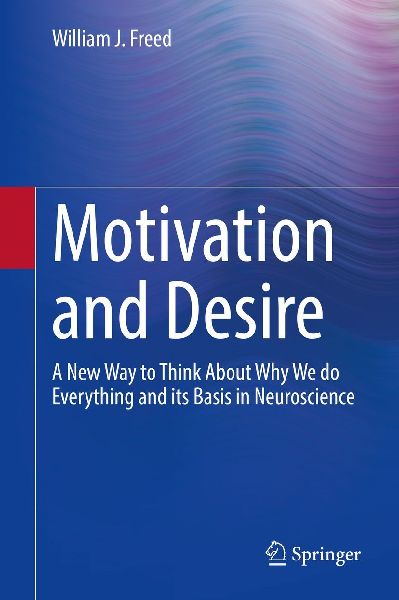

Applications of Flow in Human Development and Education
Mihaly Csikszentmihalyi
Kartoniert, Englisch, 2 Ausgaben
ab 139,09 €
Bewertungen
Zu diesem Titel gibt es noch keine Bewertung. Bewerten kann, wer ihn bei uns gekauft hat.
So prüfen wir Bewertungen
Eine Bewertung kann bei uns nur abgeben, wer den Titel über sein Kundenkonto bei uns gekauft hat. Jede Bewertung ist fest mit der zugehörigen Bestellung verknüpft; anders kommt sie technisch gar nicht zustande. Deshalb trägt jede angezeigte Bewertung den Hinweis „Verifizierter Kauf". Wir zeigen positive wie negative Bewertungen und löschen nur bei Rechtsverstößen. Für Bewertungen gibt es keine Gegenleistung.
160,49 €Voraussichtlich 7. bis 9. Dez.