The Variational Approach to Fracture
von Blaise Bourdin, Jean-Jacques Marigo und Gilles A. Francfort
- Einband
- Kartoniert
- Seiten
- 176
- Sprache
- Englisch
- Erschienen
- Oktober 2010
- Verlag
- Springer

Buchbeschreibung
One of the goals of the Journal of Elasticity: The Physical and Ma- ematical Science of Solids is to identify and to bring to the attention of the research community in the physical and mathematical sciences extensive expositions which contain creative ideas, new approaches and currentdevelopmentsinmodellingthebehaviourofmaterials.
Ganze Beschreibung lesenWeniger anzeigen
Fracture has enjoyed a long and fruitful evolution in engineering, but only in - cent years has this area been considered seriously by the mathematical science community. In particular, while the age-old Gri?th criterion is inherently energy based, treating fracture strictly from the point of view of variational calculus using ideas of minimization and accounting for the singular nature of the fracture ?elds and the various ways that fracture can initiate, is relatively new and fresh.
The variational theory of fracture is now in its formative stages of development and is far from complete, but several fundamental and important advances have been made. The energy-based approach described herein establishes a consistent groundwork setting in both theory and computation. While itisphysicallybased, thedevelopmentismathematicalinnatureandit carefully exposes the special considerations that logically arise rega- ing the very de?nition of a crack and the assignment of energy to its existence.
The fundamental idea of brittle fracture due to Gri?th plays a major role in this development, as does the additional dissipative feature of cohesiveness at crack surfaces, as introduced by Barenblatt. Thefollowinginvited, expositoryarticlebyB. Bourdin,G. Francfort and J. -J. Marigo represents a masterful and extensive glimpse into the fundamentalvariationalstructureoffracture.
Inhaltsverzeichnis
- 1 Introduction
- 2 Going variational
- 2.1 Griffith’s theory
- 2.2 The 1-homogeneous case ¿ A variational equivalence
- 2.3 Smoothness ¿ The soft belly of Griffith’s formulation
- 2.4 The non 1-homogeneous case ¿ A discrete variational evolution
- 2.5 Functional framework ¿ A weak variational evolution
- 2.6 Cohesiveness and the variational evolution
Ganzes Inhaltsverzeichnis anzeigen (52 Einträge)Weniger anzeigen
- 3 Stationarity versus local or global minimality ¿ A comparison
- 3.1 1d traction
- 3.1.1 The Griffith case ¿ Soft device
- 3.1.2 The Griffith case ¿ Hard device
- 3.1.3 Cohesive case ¿ Soft device
- 3.1.4 Cohesive case ¿ Hard device
- 3.2 A tearing experiment
- 4 Initiation
- 4.1 Initiation ¿ The Griffith case
- 4.1.1 Initiation ¿ The Griffith case ¿ Global minimality
- 4.1.2 Initiation ¿ The Griffith case ¿ Local minimality
- 4.2 Initiation ¿ The cohesive case
- 4.2.1 Initiation ¿ The cohesive 1d case ¿ Stationarity
- 4.2.2 Initiation ¿ The cohesive 3d case ¿ Stationarity
- 4.2.3 Initiation ¿ The cohesive case ¿ Global minimality
- 5 Irreversibility
- 5.1 Irreversibility ¿ The Griffith case ¿ Well-posedness of the variational evolution
- 5.1.1 Irreversibility ¿ The Griffith case ¿ Discrete evolution
- 5.1.2 Irreversibility ¿ The Griffith case ¿ Global minimality in the limit
- 5.1.3 Irreversibility ¿ The Griffith case ¿ Energy balance in the limit
- 5.1.4 Irreversibility ¿ The Griffith case ¿ The time-continuous evolution
- 5.2 Irreversibility ¿ The cohesive case
- 6 Path
- 7 Griffith vs. Barenblatt
- 8 Numerics and Griffith
- 8.1 Numerical approximation of the energy
- 8.1.1 The first time step
- 8.1.2 Quasi-static evolution
- 8.2 Minimization algorithm
- 8.2.1 The alternate minimization algorithm
- 8.2.2 The backtracking algorithm
- 8.3 Numerical experiments
- 8.3.1 The 1D traction (hard device)
- 8.3.2 The Tearing experiment
- 8.3.3 Revisiting the 2D traction experiment on a fiber reinforced matrix
- 9 Fatigue
- 9.1 Peeling Evolution
- 9.2 The limitfatigue law when d tends to 0
- 9.3 A variational formulation for fatigue
- 9.3.1 Peeling revisited
- 9.3.2 Generalization
- Appendix
- Glossary
- References.
Details
- Erscheinungstermin
- Oktober 2010
- Kategorie
- Fremdsprachige Bücher
- Einband
- Kartoniert
- Seiten
- 176
- Sprache
- Englisch
- Verlag
- Springer
- Format
- 23,5 × 15,5 cm
- Dicke
- 1,2 cm
- Gewicht
- 309 g
- EAN / ISBN-13
- 9789048176243
Versand und Rückgabe
Standardversand: 1 bis 3 Werktage, 3,99 €, kostenlos ab 35 €
Liefergebiet: Deutschland
Rücksendung: 14 Tage Widerrufsrecht. Bei einem Widerruf tragen Sie die Kosten der Rücksendung. Bei einer Falschlieferung oder einem Fehler von uns erstatten wir Ihnen das Rückporto. Den Widerruf erklären Sie über den Knopf „Vertrag widerrufen“ im Fuß der Seite.
Hersteller und ProduktsicherheitSpringer Nature Customer Service Center GmbH
Springer Nature Customer Service Center GmbH
Europaplatz 3
69115 Heidelberg
Deutschland
ProductSafety@springernature.com
Ähnliche Titel


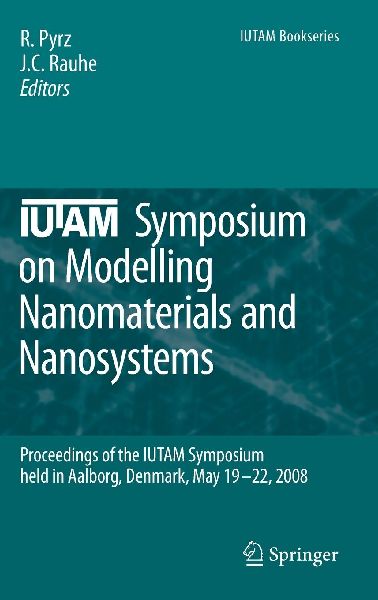
IUTAM Symposium on Modelling Nanomaterials and Nanosystems
R. Pyrz (Hrsg.)
Gebunden, Englisch, 2 Ausgaben
ab 160,49 €
Bewertungen
Zu diesem Titel gibt es noch keine Bewertung. Bewerten kann, wer ihn bei uns gekauft hat.
So prüfen wir Bewertungen
Eine Bewertung kann bei uns nur abgeben, wer den Titel über sein Kundenkonto bei uns gekauft hat. Jede Bewertung ist fest mit der zugehörigen Bestellung verknüpft; anders kommt sie technisch gar nicht zustande. Deshalb trägt jede angezeigte Bewertung den Hinweis „Verifizierter Kauf". Wir zeigen positive wie negative Bewertungen und löschen nur bei Rechtsverstößen. Für Bewertungen gibt es keine Gegenleistung.
53,49 €Voraussichtlich 1. bis 3. Dez.