The Varieties of Self-Knowledge
von Annalisa Coliva
Aus der Reihe Palgrave Innovations in Philosophy
- Einband
- Gebunden
- Seiten
- 304
- Sprache
- Englisch
- Erschienen
- Juli 2016
- Verlag
- Palgrave Macmillan

Buchbeschreibung
This book explores the idea that self-knowledge comes in many varieties.
We "know ourselves" through many different methods, depending on whether we attend to our propositional attitudes, our perceptions, sensations or emotions.
Ganze Beschreibung lesenWeniger anzeigen
Furthermore, sometimes what we call "self-knowledge" is not the result of any substantial cognitive achievement and the characteristic authority we grant to our psychological self-ascription is a conceptual necessity, redeemed by unravelling the structure of several interlocking concepts.
This book critically assesses the main contemporary positions held on the epistemology of self-knowledge. These include robust epistemic accounts such as inner sense views and theory-theories; weak epistemic accounts such as transparency theories and rational internalism and externalism; as well asexpressivist and constitutivist approaches.
The author offers an innovative "pluralist" position on self-knowledge, emphasizing the complexity of the phenomenon and its resistance to any "monistic" treatment, to pose new and intriguing philosophical challenges.
Inhaltsverzeichnis
- Acknowledgments
- Credits
- List of abbreviations.-Introduction
- Chapter one: Varieties of Mental States
- 1. Sensations andperceptions
- The objectivity of perceptual representation
- Perceptualcontents
- Sensory states and sensations
Ganzes Inhaltsverzeichnis anzeigen (68 Einträge)Weniger anzeigen
- 2. Twokinds of propositional attitudes: dispositions and commitments
- Propositionalattitudes as dispositions
- Propositionalattitudes as commitments
- 3. Emotions
- Emotions as sensations
- Emotions asevaluative judgments
- Emotions as felt bodily attitudes
- Emotions asperceptions of evaluative properties
- The borderline view of emotions
- 4. Summary
- Chapter two: Varieties of Self-Knowledge.-1. First personal self-knowledge
- Groundlessness
- Transparency
- Authority
- 2.Counterexamples from content externalism and cognitive science?
- 3. Third-personalself-knowledge
- 4. Summary
- Chapter three: Epistemically Robust Accounts
- 1.Inner sense theories: Armstrong and Lycan
- 2. Inferential theories: Gopnik and Cassam
- 3. Simulation-theories: Goldman and Gordon
- 4. Summary
- Chapter four: Epistemically Weak Accounts.-1. Peacocke's rational internalism
- 2. Burge's rational externalism
- 3. Evans' transparency method
- 3.1 Fernández' epistemic account
- 3.2 Moran's deliberative account
- 4. Summary.-Chapter five: Expressivism about Self-Knowledge
- 1. At the origins of expressivism:Wittgenstein
- 2. Bar-On's neo-expressivism
- 3. Summary
- Chapter six: Constitutive Theories
- 1. Theleft-to-right side of the Constitutive Thesis: Shoemaker
- 2. The right-to-leftside of the Constitutive Thesis: Wright
- 3. The two sides of the Constitutive
- Thesis: Bilgrami
- 4. A metaphysically robust kind of constitutivism: Coliva
- Thefirst half of the constitutive thesis: transparency
- Objections from empiricalpsychology
- The second half of the constitutive thesis: authority
- 5. Summary.-Chapter seven: Pluralism about Self-Knowledge
- 1. Propositional attitudes ascommitments: the limits of constitutive accounts
- 2. Sensations, basicemotions and perceptions and perceptual experiences: constitutivism meetsexpressivism
- Sensations
- Basic emotions
- Perceptions and perceptualexperiences
- 3. Propositional attitudes as dispositions and complex emotions:third-personal self-knowledge
- 4. Summary
- Appendix: Moore's Paradox
- 1. Mooreanand Wittgensteinian analyses
- 2. The constraints on any feasible account ofMoore's paradox
- 3. What Moore's paradox isn't about: Jane's off case
- 4. What
- Moore's paradox is about-first pass
- 5. What Moore's paradox is about-secondpass
- 6. An objection
- Notes
- Bibliography
- Name index
- Subject index
Details
- Erscheinungstermin
- Juli 2016
- Kategorie
- Fremdsprachige Bücher
- Einband
- Gebunden
- Seiten
- 304
- Sprache
- Englisch
- Verlag
- Palgrave Macmillan
- Reihe
- Palgrave Innovations in Philosophy
- Format
- 21,6 × 15,3 cm
- Dicke
- 2,1 cm
- Gewicht
- 469 g
- EAN / ISBN-13
- 9781137326126
Über Annalisa Coliva
Annalisa Coliva (PhD University of St Andrews, UK and Vercelli, Italy)is Full Professor in the Philosophy Department at the University of Californiaat Irvine.
Mehr über Annalisa ColivaWeniger anzeigen
She was previously Fulbright Fellow at Columbia University, US,Alexander von Humboldt Fellow at Heidelberg University, Germany, and Fellow ofthe Italian Academy at Columbia University. She has authored nine books, editedsix, and published several articles in international journals.
Versand und Rückgabe
Standardversand: 1 bis 3 Werktage, 3,99 €, kostenlos ab 35 €
Liefergebiet: Deutschland
Rücksendung: 14 Tage Widerrufsrecht. Bei einem Widerruf tragen Sie die Kosten der Rücksendung. Bei einer Falschlieferung oder einem Fehler von uns erstatten wir Ihnen das Rückporto. Den Widerruf erklären Sie über den Knopf „Vertrag widerrufen“ im Fuß der Seite.
Hersteller und ProduktsicherheitSpringer Nature Customer Service Center GmbH
Springer Nature Customer Service Center GmbH
Europaplatz 3
69115 Heidelberg
Deutschland
ProductSafety@springernature.com
Mehr von Annalisa Coliva




Mehr aus der Reihe Palgrave Innovations in Philosophy

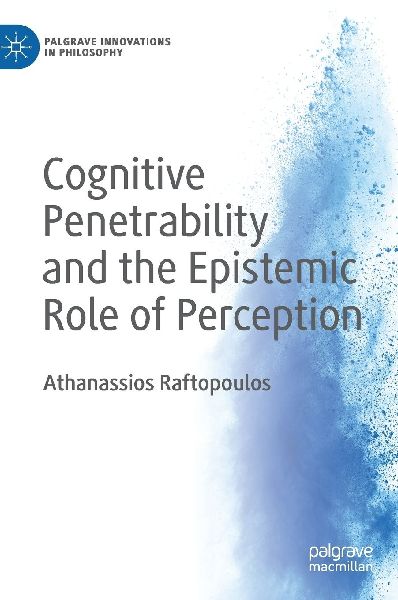
Cognitive Penetrability and the Epistemic Role of Perception
Athanassios Raftopoulos
Gebunden, Englisch
85,59 €
Ähnliche Titel


Bewertungen
Zu diesem Titel gibt es noch keine Bewertung. Bewerten kann, wer ihn bei uns gekauft hat.
So prüfen wir Bewertungen
Eine Bewertung kann bei uns nur abgeben, wer den Titel über sein Kundenkonto bei uns gekauft hat. Jede Bewertung ist fest mit der zugehörigen Bestellung verknüpft; anders kommt sie technisch gar nicht zustande. Deshalb trägt jede angezeigte Bewertung den Hinweis „Verifizierter Kauf". Wir zeigen positive wie negative Bewertungen und löschen nur bei Rechtsverstößen. Für Bewertungen gibt es keine Gegenleistung.
128,39 €Voraussichtlich 4. bis 8. Dez.