Judaisms and Their Messiahs at the Turn of the Christian Era
Jacob Neusner (Hrsg.)
Kartoniert, Englisch, 2 Ausgaben
ab 57,80 €
von Jacob Neusner
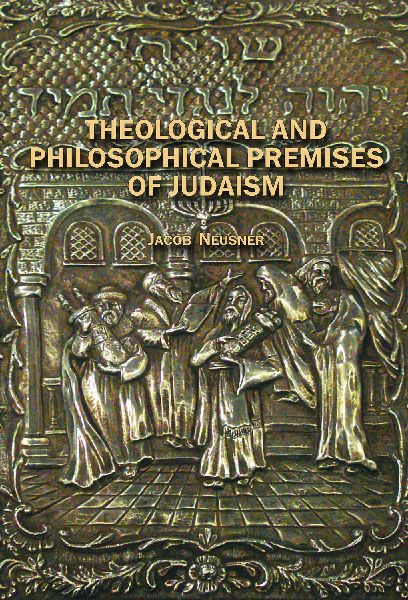
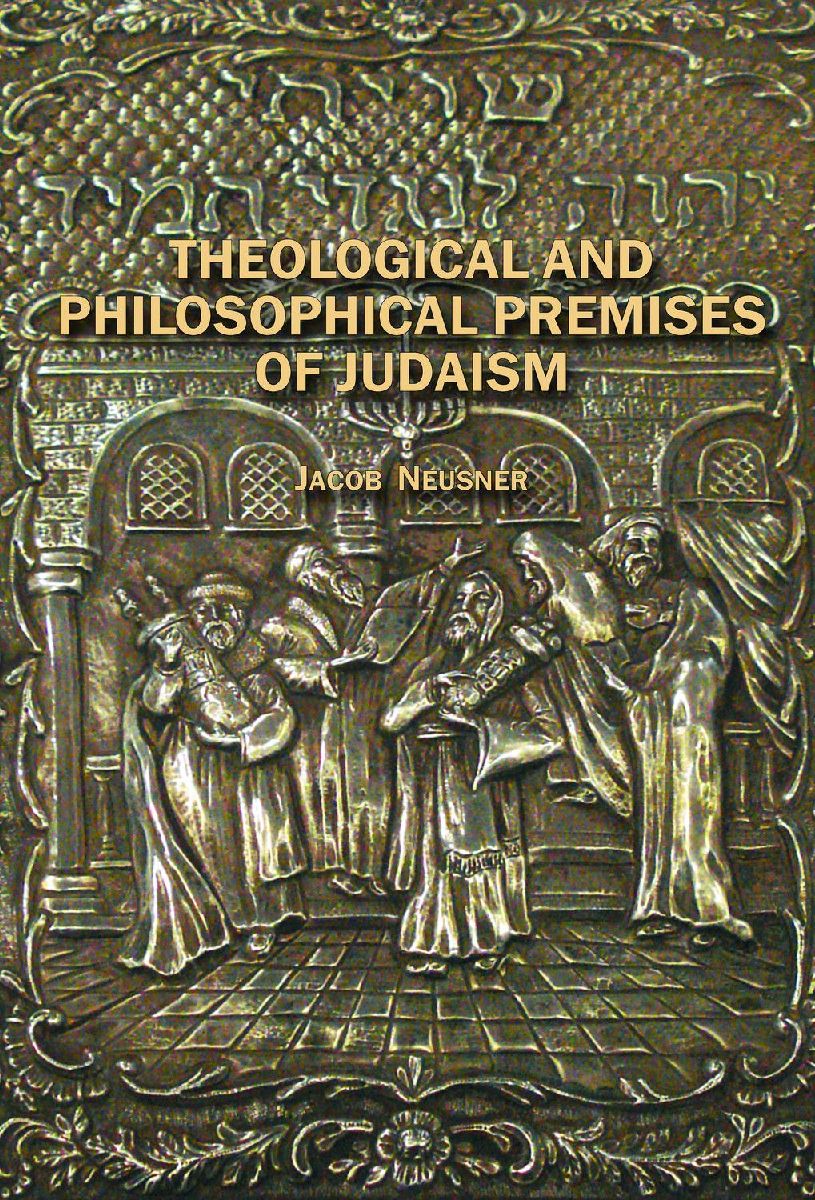
The sanctification of Israel, the people, endures [1] in the absence of the cult and [2] in alien, unclean territory and [3] whatever the source of the food that Israel eats.
Israel¹s sanctity is eternal, un-contingent, absolute. The sanctification that inheres in Israel, the people, transcends the Land and outlives the Temple and its cult.
Since the sanctity of Israel, the people, persists beyond the Temple and outside of the Land, that sanctity stands at a higher point in the hierarchy of domains of the holy that ascend from earth to heaven and from Man to God.
That theological construction (Chapters One, Two and Three) gained support from a science and a philosophy (Chapters Four, Five, and Six) that accomplished the hierarchical classification of nature and of the social order. Nature and society arose from the complex to the simple, and conversely the many descended from the one.
These represented thetheological givens, sustained by the philosophical premises, of Judaism. The law constructed its propositions upon generalizations that pertaineduniversally, so bringing the Israelite norms into accord with natural law.
This emerges in the way in which the law sorted out mixtures by their types, fully in line with the Stoic theory of mixtures. The philosophical categorization and classification of the power of intentionality, shaded over into the consideration of classes of causation and responsibility inthe Aristotelian manner from deliberate to inadvertent.
But how does Judaism integrate into a coherent system its premises, thetheological propositions, and its recurrent analytical protocols, the philosophical principles. The book sets forth the integrating conceptions in Chapters Seven and Eight. The philosophical and theological components are integrated in an encompassing composition.
Jacob Neusner is Research Professor of Religion and Theology at Bard College and Senior Fellow of the Institute of Advanced Theology at Bard.
He has published more than 900 books and unnumbered articles, both scholarly and academic, popular and journalistic, and is the most published humanities scholar in the world. He has been awarded nine honorary degrees, including seven US and European honorary doctorates. He received his A.B. from Harvard College in 1953, his Ph. D. from Columbia University and Union Theological Seminary in 1961, and Rabbinical Ordination and the degree of Master of Hebrew Letters from the Jewish Theological Seminary of America in 1960. Neusner is editor of the 'Encyclopedia of Judaism' (Brill, 1999. I-III) and its Supplements; Chair of the Editorial Board of 'The Review of Rabbinic Judaism,' and Editor in Chief of 'The Brill Reference Library of Judaism', both published by E. J. Brill, Leiden, The Netherlands. He is editor of 'Studies in Judaism', University Press of America. Neusner resides with his wife in Rhinebeck, New York. They have a daughter, three sons and three daughters-in-law, six granddaughters and two grandsons.
Standardversand: 1 bis 3 Werktage, 3,99 €, kostenlos ab 35 €
Liefergebiet: Deutschland
Rücksendung: 14 Tage Widerrufsrecht. Bei einem Widerruf tragen Sie die Kosten der Rücksendung. Bei einer Falschlieferung oder einem Fehler von uns erstatten wir Ihnen das Rückporto. Den Widerruf erklären Sie über den Knopf „Vertrag widerrufen“ im Fuß der Seite.
Jacob Neusner (Hrsg.)
Kartoniert, Englisch, 2 Ausgaben
ab 57,80 €
Jacob Neusner (Hrsg.)
Kartoniert, Englisch
34,00 €
Zu diesem Titel gibt es noch keine Bewertung. Bewerten kann, wer ihn bei uns gekauft hat.